
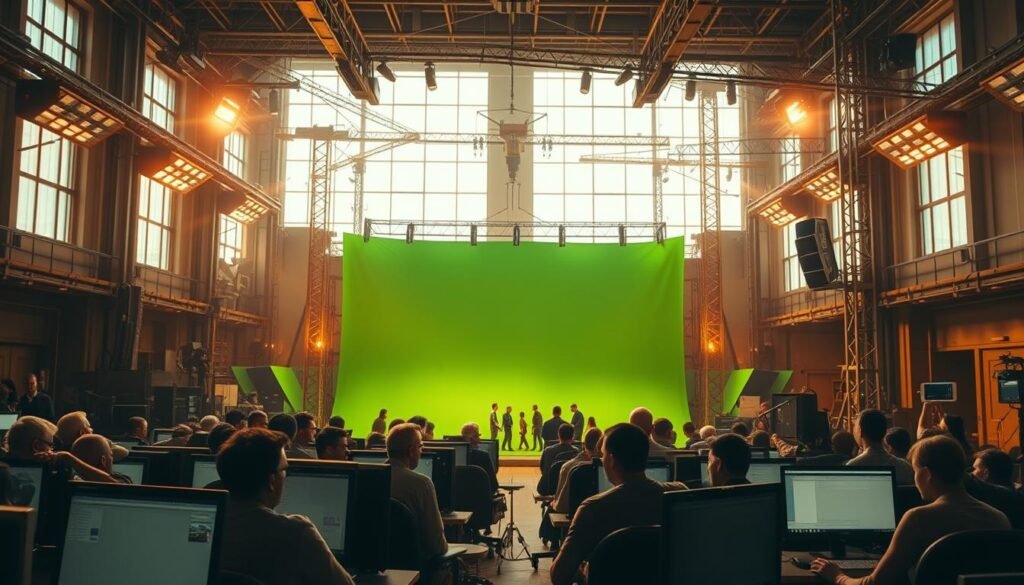
More than 80% of the highest-grossing films in the last decade use VFX to create impossible scenes.
Cinematic visual effects have become essential, not just a fancy add-on. They shape the story, how characters act, and how movies are made. In short, visual effects in movies are ways to create or change images that weren’t shot live.
We aim to make technical knowledge exciting and useful. We want engineers, students, and teachers to feel confident using movie visual effects. This article is a deep dive into how VFX changes storytelling and making movies.
VFX makes scenes look real, opens up creative possibilities, and can save money compared to big practical sets. It also changes how actors perform, allowing them to bring nonhuman characters to life. Plus, it drives progress in gaming, ads, AR, and VR. VFX is pushing tech forward and opening up new career paths.
For inquiries or collaboration, contact us at info@digiverse.studio.
The Evolution of VFX in Cinema
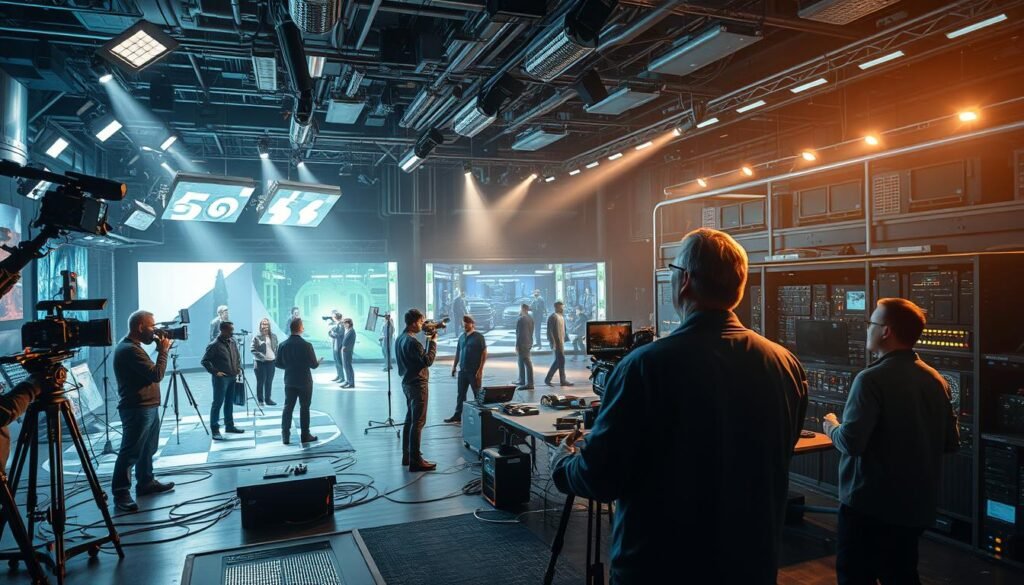
We explore how visual storytelling evolved from hands-on to computer-based. The journey of VFX started with Georges Méliès in 1902. His film Le Voyage dans la Lune introduced stop-motion tricks and miniatures. These innovations laid the groundwork for special effects in movies.
Early Beginnings: From Practical Effects to CGI
Ray Harryhausen made stop-motion popular with The 7th Voyage of Sinbad. He mixed creatures with live action. Stanley Kubrick used miniatures in 2001: A Space Odyssey to create vast environments on small stages.
The Technological Revolution
In the 1970s and 1980s, George Lucas pushed the limits with Star Wars. He used large models and camera rigs. Early digital work, like Tron, set the stage for CGI in films.
Jurassic Park in 1993 combined computer creatures with animatronics. This changed how movies were planned and budgeted.
Motion capture brought depth to digital characters. Andy Serkis’s roles as Gollum and Caesar showed the power of CGI in acting. New tools and stages changed how movies were made.
Milestone Films That Changed the Game
The Matrix introduced bullet time, a visual and technical breakthrough. James Cameron’s Avatar showed virtual worlds and performance capture. Peter Jackson’s The Lord of the Rings blended practical and digital effects.
These films changed how movies were made. They influenced tools, aesthetics, and budgets.
| Era | Representative Films | Key Innovation | Effect on Production |
|---|---|---|---|
| Early 1900s–1960s | Le Voyage dans la Lune, The 7th Voyage of Sinbad, 2001: A Space Odyssey | Stop-motion, miniatures, in-camera effects | Hands-on craftsmanship; practical teams on set; low digital tooling |
| 1970s–1980s | Star Wars trilogy, Tron | Advanced model work; early CGI experiments | Expanded studio pipelines; specialized camera rigs; hybrid workflows |
| 1990s | Jurassic Park, The Matrix | Photoreal CGI; bullet time | Integration of digital teams; render farms; new scheduling models |
| 2000s–2010s | The Lord of the Rings, Avatar | Performance capture; virtual production; large-scale compositing | Cross-disciplinary pipelines; higher budgets for VFX technology in movies; faster iteration cycles |
Understanding the Types of VFX
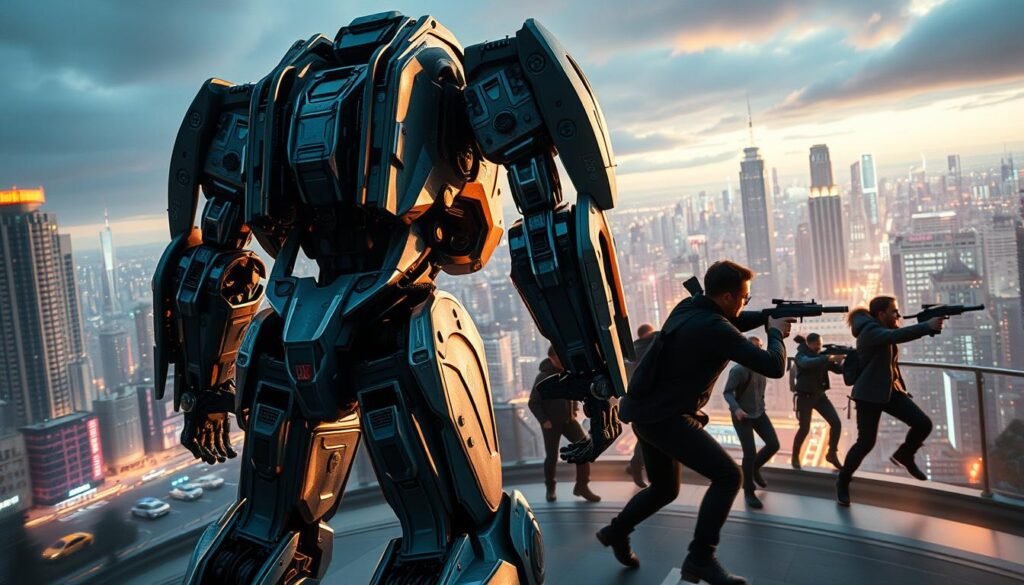
We explore the main areas of film VFX to help engineers and creators. Each method, from CGI to live-action mixing, changes how we see movies. This guide links technical steps to real examples used by filmmakers.
Computer-Generated Imagery (CGI)
CGI in movies means making everything with computers. The process includes modeling, texturing, rigging, animation, lighting, and rendering. Each step needs special tools and careful planning.
Modeling sets the shape and structure. Texturing adds details and materials. Rigging allows for movement. Animation brings life and emotion. Lighting and rendering make the scene look real.
Examples like Jurassic Park and Avatar show CGI’s power. They mix practical and digital elements for a realistic feel. These films show how VFX can enhance stories.
Compositing and Digital Effects
Compositing mixes live-action, CGI, and other elements into one frame. Artists use Nuke for this, separating motion and backgrounds. They also match colors and add textures to blend everything smoothly.
Digital effects involve many steps, like beauty and depth passes. Compositors blend these, adjusting colors and adding textures. This makes digital and real elements look like they belong together.
Render farms and version control help speed up work. Compositing is key to making visual effects believable.
Motion Capture Technology
Motion capture systems track actors to animate digital characters. They use suits and facial rigs to capture detailed movements. This keeps the character’s performance true to the actor.
Andy Serkis’s performances as Gollum and Caesar are great examples. Motion capture helps keep the character’s emotions and movements natural. It makes animation feel more real.
Tools like Unreal Engine allow for virtual production. They show actors live backgrounds and lighting. AI helps with tasks like rotoscoping and texture creation. Render farms handle the complex calculations needed for final images.
These methods together create visual effects that feel real and engage audiences. We use both technical skill and creativity to improve VFX in movies.
The Role of VFX Artists
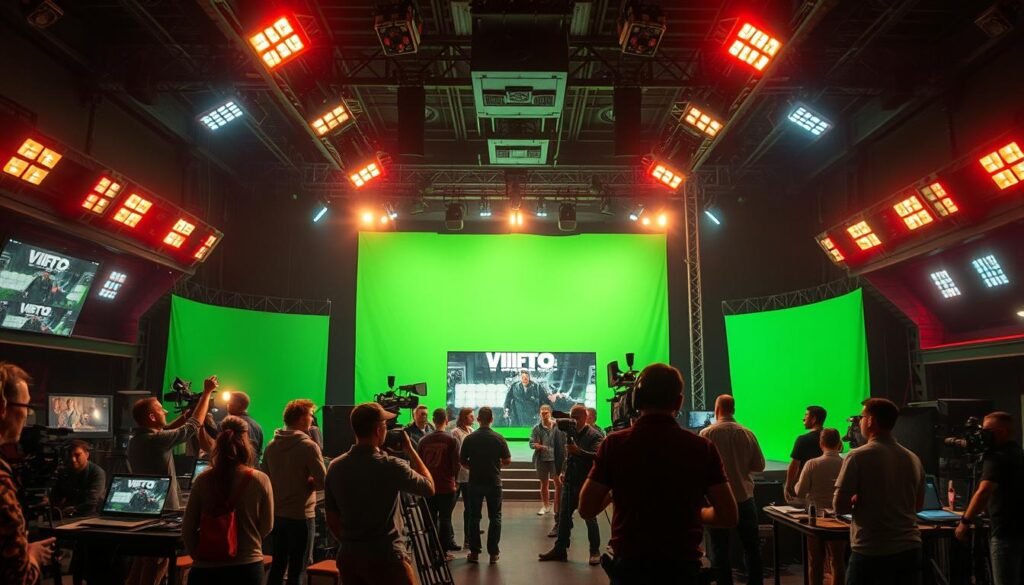
We explore the art and science behind movie visual effects. VFX artists blend creativity with technical skills to bring scripts to life. Their work starts early and touches every part of the movie-making process.
Key Skills Required for VFX Artists
Technical skills are key: using Autodesk Maya, SideFX Houdini, Foundry Nuke, and Unreal Engine. Knowing Python helps speed up work and automate tasks.
Artistic skills are just as important. Understanding lighting, composition, and physics is essential. Good communication and teamwork skills are also vital for success.
Collaboration with Directors and Producers
VFX supervisors connect creative ideas with practical production needs. They work closely from the start, using tools like Filmustage to plan and budget VFX shots.
On set, they oversee green-screen setups and reference capture. This ensures the visual effects match the director’s vision. After filming, they focus on compositing, color, and managing render passes to meet deadlines.
A Day in the Life of a VFX Artist
Days start with dailies, reviewing shots and logging issues. Artists then work on simulations, look-development, and managing the render queue.
Meetings with supervisors and directors guide the refinement process. Time is also spent optimizing assets, fixing geometry, and fine-tuning lighting. This ensures shots meet creative goals and stay within budget.
Career paths vary from training programs to studio mentorships. Courses teach software and pipeline thinking. Hands-on projects help artists develop their skills, supporting long-term growth in the field.
Popular VFX Techniques in Blockbusters
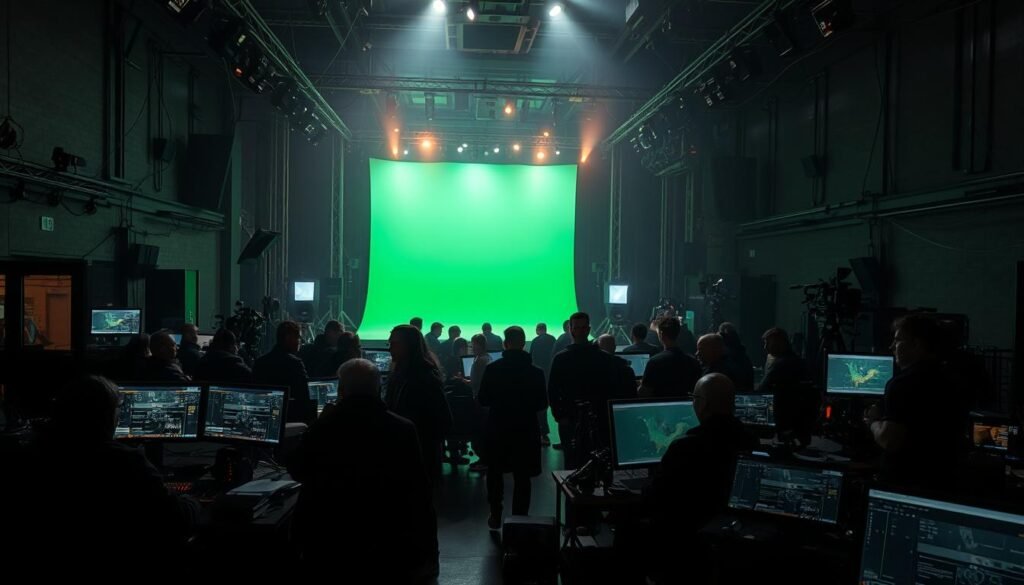
We explore the core tools and workflows that make cinematic visual effects. These methods change how we see movie visual effects. They also shape the special effects in film industry pipelines. Here are quick tips for on-set and post teams.
Green Screen and Blue Screen Techniques
Chroma key setups start with even lighting on the screen and talent. It’s important to control spill and keep the subject and backdrop far apart.
A well-shot plate makes compositing easier. The Matrix used green-screen compositing with multi-camera rigs for complex action. Proper lighting and camera settings help blend digital effects with live-action.
3D Modeling and Animation
Asset creation begins with high-res sculpting in ZBrush. Then, it moves to retopology and UV layout for animation. Texturing follows PBR workflows for realistic materials under cinematic lighting.
Rigging and skin weighting allow for realistic motion. Maya handles animation pipelines. 3D modeling in cinema creates characters and environments. Avatar and Marvel films showcase these techniques.
Simulation Effects and Particle Systems
Simulations handle fluids, fire, smoke, and destruction. Houdini is often used for procedural control. Particle systems create dust, debris, and crowds.
Large scenes in The Avengers show how destruction sims work with CG environments. Solver settings and caching strategies manage compute costs. This keeps visual effects quality high.
Render strategies use render farms and optimization. Tile sizes, BVH tuning, and denoising reduce render time. Producers balance passes for motion blur, depth, and light bounces to meet deadlines.
| Technique | Primary Tools | Key Considerations | Blockbuster Examples |
|---|---|---|---|
| Chroma Key (Green/Blue) | ARRI/RED cameras, Nuke, After Effects | Even lighting, spill suppression, clean plates | The Matrix |
| 3D Modeling & Animation | ZBrush, Maya, Substance Painter | High-res sculpt, retopo, UVs, PBR textures | Avatar; Marvel films |
| Simulations & Particles | Houdini, Phoenix FD, RealFlow | Solver tuning, caching, LOD for particles | The Avengers |
| Rendering & Optimization | V-Ray, RenderMan, Arnold, Render farms | Tile sizing, denoise, pass separation | Large-scale VFX in Films |
These practices are key to digital effects in movies. They help visual effects teams create believable moments. Our goal is to blend VFX technology with creative intent, making audiences feel part of the story.
Iconic VFX Moments in Film History
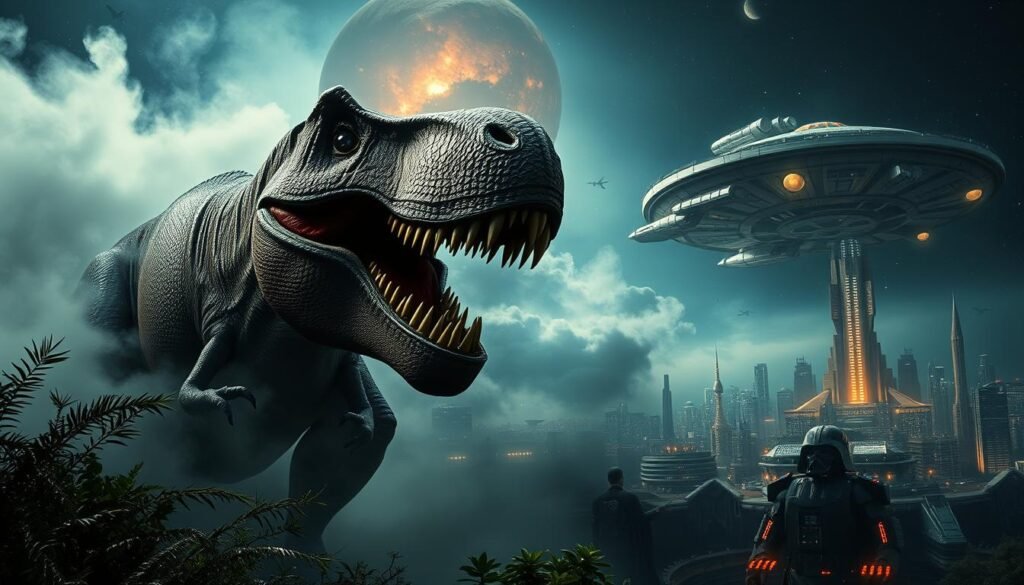
We look at three key moments that changed CGI in movies. They set new standards for visual effects. These moments pushed the limits of what was possible in film.
Jurassic Park (1993) used a mix of real and digital dinosaurs. Industrial Light & Magic worked hard to make the dinosaurs look real. They used detailed animation and lighting to achieve this.
The film also used real animatronics for the actors to interact with. This made the dinosaurs feel real and added to the movie’s magic.
The Matrix (1999) introduced a new way of showing action called bullet time. It used a lot of cameras to capture slow-motion scenes. Then, digital magic made it look smooth.
This technique changed how action scenes were made. It inspired many to try new things in their movies.
The Marvel Cinematic Universe showed how big teams can work together. Studios like ILM, Weta, and Framestore worked on big projects. They used advanced technology to bring characters like the Hulk to life.
These efforts allowed for huge scenes like the Battle of New York in The Avengers (2012). They showed what’s possible with teamwork and technology.
These moments changed the tools and ways of working in the industry. Faster computers and better software made it easier to create amazing effects. Studios started to hire more experts to meet the audience’s high expectations.
These iconic moments did more than just entertain. They taught artists new skills and inspired software updates. They also shaped how we learn about visual effects in movies.
The Impact of VFX on Storytelling
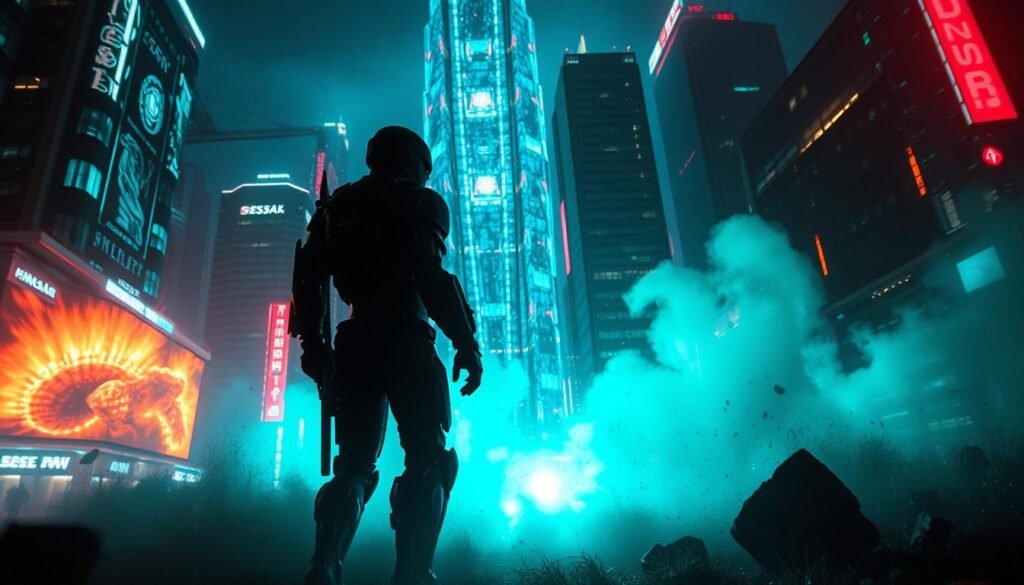
Visual effects in movies change how stories are told and connect with viewers. They turn simple ideas into stunning scenes. This includes impossible landscapes, changed physics, and deep symbolism.
When done right, these effects help us understand characters better. They also push the story forward.
Enhancing Visual Narratives
Digital effects make scenes safe and possible that wouldn’t be in real life. Filmmakers use these techniques to speed up time, expand scenes, and make abstract ideas real. For example, Inception’s dreamscapes show how CGI shapes our view of the story.
Creating Believable Worlds
We create believable worlds with careful lighting, color, and realistic rendering. On-set LED volumes, like in The Mandalorian, help directors see a complete scene. Mixing real props with CGI keeps the story grounded and real.
Emotional Engagement Through VFX
We build empathy through detailed digital performances and motion capture. Andy Serkis’s work shows how VFX can show deep emotions in non-human characters. This makes us care more about the story.
But, too much or bad use of visual effects can ruin the story. It’s important to balance the visuals with the story. This way, CGI enhances the tale without overwhelming it.
Challenges in the VFX Industry
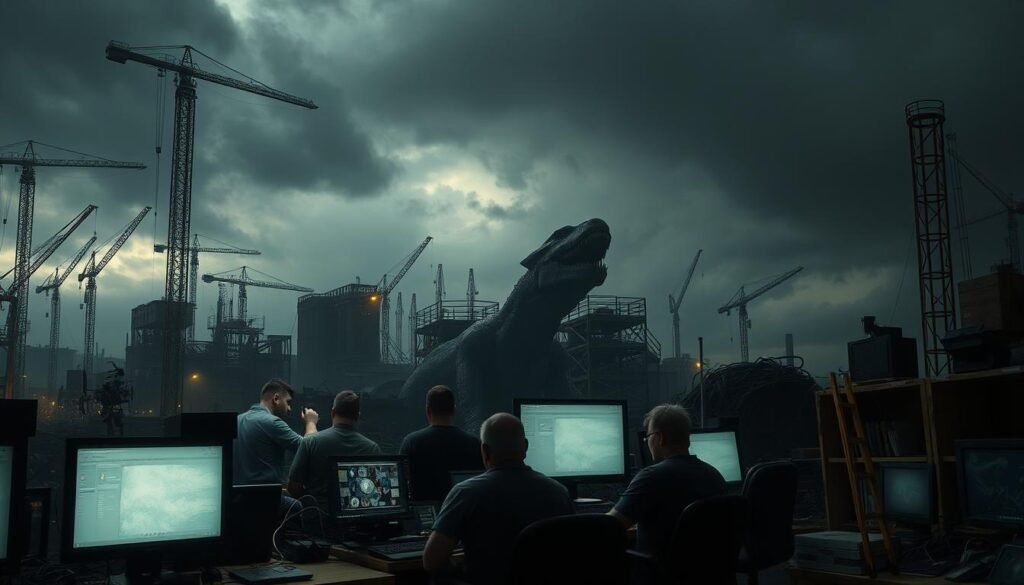
The VFX industry faces many challenges. Studios must balance tight schedules, rising technical demands, and staffing changes. These factors affect creative choices and the cost of visual effects.
Time Constraints and Deadlines
Production calendars are tight, with little room for error. Long render times and complex pipelines can cause delays. Render farms, from AWS to private clusters, are key but can slow down when frames queue for hours.
Small delays can turn into big problems. A missed plate or late editorial change can affect compositing, lighting, and delivery. This shows how quality and time are always at odds in the VFX industry.
Balancing Creative Vision and Budget
Ambitious sequences, like digital armies and sweeping cityscapes, can increase costs quickly. Building a large practical set might be more expensive than a digital one. Yet, digital shots need skilled artists and lots of compute resources.
Early planning helps avoid waste. Script breakdowns, previs, and tools like Filmustage control scope. We focus on shots with high narrative value and use cost-efficient methods without losing impact.
Keeping Up with Rapid Technological Changes
New tools arrive often: real-time engines, AI-assisted denoising, and advanced fluid simulation methods change workflows. Adopting these tools is beneficial but training teams and updating pipelines takes time and money.
Studios must invest in motion capture stages, GPU farms, and software licenses. This investment is part of the challenge of staying current in the special effects industry while keeping projects on track.
Workforce Dynamics and Knowledge Retention
The demand for senior artists at places like Industrial Light & Magic or Wētā Digital is high. Many creatives work freelance or on fixed contracts, leading to gaps in knowledge when teams change.
We suggest cross-disciplinary collaboration. Producers, supervisors, and engineers should share design reviews and post-mortems. Clear documentation and mentorship reduce risk and improve output over time.
Process Optimization to Mitigate Risk
Pipeline automation, standardized asset libraries, and continuous integration for renders reduce errors. We focus on realistic scheduling buffers and phased reviews to avoid last-minute rework.
Addressing VFX technology in movies and the broader VFX industry challenges requires a systems view. Combine talent development, technical investment, and disciplined planning to keep movie visual effects ambitious and achievable.
The Future of VFX in Film
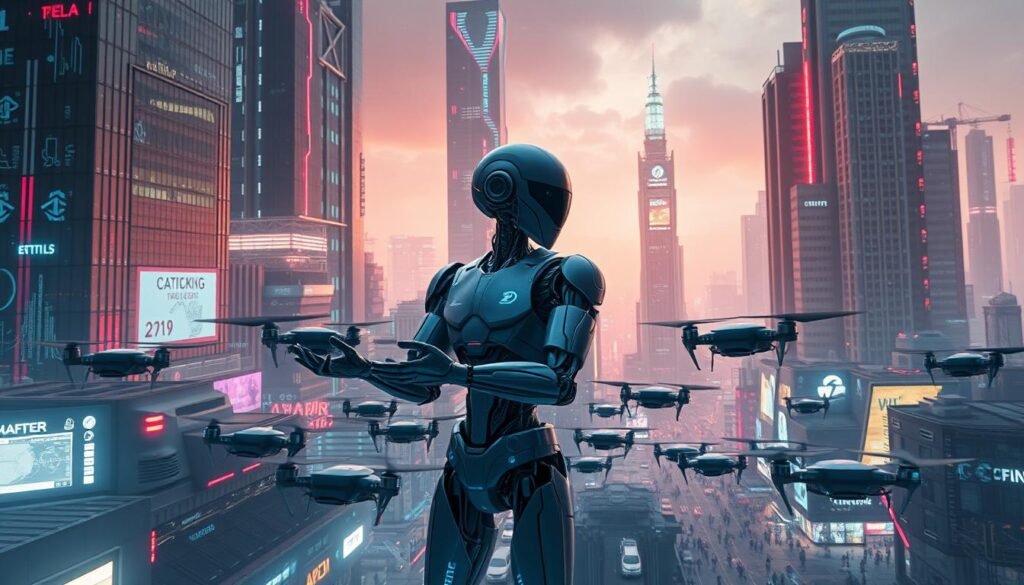
Cinematic visual effects are changing how we tell stories. Tools like Unreal Engine let teams work in real-time. LED volumes, seen in The Mandalorian, blend photography and VFX, speeding up decision-making.
Innovations on the horizon
Real-time rendering is making it easier to go from previsualization to final frames. New systems and pipelines handle complex scenes without slowing down. Studios like Industrial Light & Magic and Weta Digital are making tools that help artists focus on creativity.
The rise of artificial intelligence in VFX
AI is changing VFX workflows. It automates tasks like rotoscoping and texture synthesis, saving hours. Machine learning helps with animation and speeds up the creative process. This combination of human creativity and AI leads to better work faster.
Emerging trends: virtual reality and augmented reality
VR and AR are expanding the possibilities for VFX. They create immersive stories and experiences. Gaming and advertising are also using film-quality effects to enhance realism.
We expect to see more blending of practical and digital methods. Virtual production will offer real-time previews, making creative decisions easier. This will open up high-end tools to more people, making VFX more accessible.
Education needs to keep up with these changes. We support teaching rendering, machine learning, and virtual production. This will prepare engineers and students for the future, leading to more diverse and engaging stories.
| Trend | Primary Benefit | Example Tools or Studios |
|---|---|---|
| Real-time rendering | Instant visual feedback; faster iterations | Unreal Engine, Epic Games, Industrial Light & Magic |
| AI-assisted workflows | Automated rotoscoping, denoise, texture synthesis | Machine learning models, Foundry Nuke, Adobe Sensei |
| Virtual production | On-set photoreal compositing with LED volumes | The Mandalorian pipelines, Stagecraft stages |
| Immersive formats (VR/AR) | New narrative forms and marketing channels | Unity, Oculus, AR toolkits in advertising and games |
| Procedural and node-based tools | Scalable scene creation; repeatable pipelines | Houdini, SideFX, node-based render engines |
How VFX Influences Audience Perception
Cinematic visual effects do more than just add flair. They shape how we accept and feel a story. By blending photorealistic rendering with accurate physics, they help us believe in the impossible.
Sound design, lighting, and the story itself all play a part. They make the extraordinary seem normal. This is how dinosaurs, time-bending stunts, or digital cities become believable.
Consistent visual styles also build brand loyalty. Franchises like Marvel and Star Wars use their own VFX language. This sets clear expectations for their fans.
High-quality trailers and spectacular moments boost ticket sales and social media buzz. They also increase streaming interest. In short, branded visual effects lead to more viewers and a stronger franchise identity.
Audience reactions can make or break a film. Flawless VFX can boost both critical acclaim and box office numbers. But, visible errors can lead to backlash and lost trust.
Groundbreaking VFX moments, like bullet time in The Matrix or lifelike dinosaurs in Jurassic Park, change what we expect from movies. They show how innovation in film VFX can shape popular taste.
Measurable effects include higher opening-week revenue and increased social engagement after VFX reveals. These moments also boost merchandising and streaming revenue.
We see VFX as a powerful tool in films. When used well, it elevates cinema. If you want to learn more about how cinematic visual effects can enhance your project or brand, contact us at info@digiverse.studio for a deeper discussion or collaboration.