
72% of major film and streaming productions now test virtual production workflows before principal photography. This shows a big change in the world of visual effects.
We are both engineers and artists. We see new tools as just another way to create. George Murphy, a DNEG 360 creative director, says that AI and virtual production make stories more real. But, they must always serve the story.
We explore the fast-changing world of visual effects. This includes AI for tasks like rotoscoping and tracking. Also, real-time engines like Unreal Engine and Unity are changing how we make decisions on set.
We look at how CGI and digital effects in film are merging with AR/VR. This is creating new, immersive worlds in movies, games, and TV shows.
We want to inspire and help. We’ll talk about how these tools change how we work, our roles, and our stories. For more information or to collaborate, email us at info@digiverse.studio.
The Evolution of Visual Effects in Film
We explore how visual effects technology has evolved from hands-on craft to digital workflows. Early filmmakers used in-camera tricks and matte paintings to create wonder. This tradition paved the way for digital effects and new storytelling tools.
A Brief History of VFX Technology
Classic-era films relied on painted glass, miniatures, and optical compositing. Artists like those on Steven Spielberg’s Hook extended sets with projected matte paintings. This created the illusion of worlds beyond the camera.
Industrial Light & Magic introduced Unix-based graphics and early digital compositing. This shift moved the craft from batch processes to interactive review. It allowed for more creativity and collaboration.
Jurassic Park was a turning point. It showed the power of CGI with motion-capture and photoreal creature animation. The film proved digital creatures could be as impactful as actors.
Forrest Gump showed digital effects could serve the story, not just the spectacle. The seamless composites tied to character moments won awards. It proved that special effects could enhance the narrative.
Milestones in Visual Effects Innovation
- Projected matte painting: extended sets and created scale without expensive builds.
- Unix-based digital compositing at ILM: introduced efficient pipelines for complex shots.
- Photoreal CGI in Jurassic Park: advanced creature animation and rendering realism.
- Forrest Gump’s digital integration: demonstrated narrative-driven effects.
- LED-stage virtual production, as used on The Mandalorian: enabled real-time backgrounds and on-set interaction.
Each leap in visual effects technology has improved collaboration and reduced turnaround times. Gone are the days of render farms dictating schedules. Now, interactive playback and review speed up decision-making.
| Era | Core Technique | Representative Title | Impact on Production |
|---|---|---|---|
| Classic (pre-1990) | Matte paintings, miniatures, in-camera effects | Hook | Practical craft, long setup times, on-set creativity |
| Early Digital (1990s) | Digital compositing, Unix workflows | Forrest Gump | Integration of effects into narrative, new post pipelines |
| Photoreal CGI (mid-1990s) | Motion-capture, advanced rendering | Jurassic Park | Believable digital characters, heavier compute needs |
| Real-Time/Virtual (2010s–) | LED stages, real-time rendering | The Mandalorian | On-set visualization, faster iteration, cross-department collaboration |
Over the years, the focus on craft has remained constant. Skills like model-making, lighting, and camera language are essential, even with new tools. We see special effects innovation as a journey where storytelling priorities stay the same, despite technological advancements.
The Impact of Artificial Intelligence on VFX
We look at how AI changes the VFX industry. It brings new ways to work but keeps the art alive. We see how teams balance speed, quality, and ethics with new tools.
Automating the Creative Process
Machine learning helps with tasks like rotoscoping and object tracking. This makes work faster. Studios like Industrial Light & Magic and Wētā Digital see big improvements.
Artists now focus on storytelling. They work on color, timing, and emotions. This change is a big trend in VFX because it makes work faster and cheaper.
AI-Driven Animation Techniques
AI creates natural body language and facial expressions. Tools from Autodesk and NVIDIA show how to blend data for realistic movements. This helps in making characters and crowds look real.
Dynamic crowd simulation gets better with AI. Agents in scenes act more naturally. This makes VFX faster and cheaper without losing creative control.
Enhancing Realism with Machine Learning
AI improves textures and frames. It also makes old footage look new. This works with CGI to make scenes look real.
But, we must watch for quality and ethics. AI can have biases and raise questions about ownership. We need to keep artistic intent while using AI.
| Use Case | Technique | Benefit |
|---|---|---|
| Rotoscoping and Tracking | Supervised learning models trained on hand-labeled frames | Faster prep work and reduced manual hours |
| Facial Performance Synthesis | Motion-synthesis networks with blendshape mapping | Natural expressions with fewer takes |
| Environment Creation | GANs and neural rendering for texture and lighting | Photoreal assets generated from limited references |
| Crowd and Behavior | Reinforcement learning agents | Realistic group dynamics at scale |
| Archive Restoration | Frame interpolation and super-resolution | Improved footage quality for modern pipelines |
We follow how AI changes VFX with other trends and CGI advancements. Studios and schools need to update skills for AI tools. For more info, email info@digiverse.studio.
Virtual Production: Redefining Filmmaking
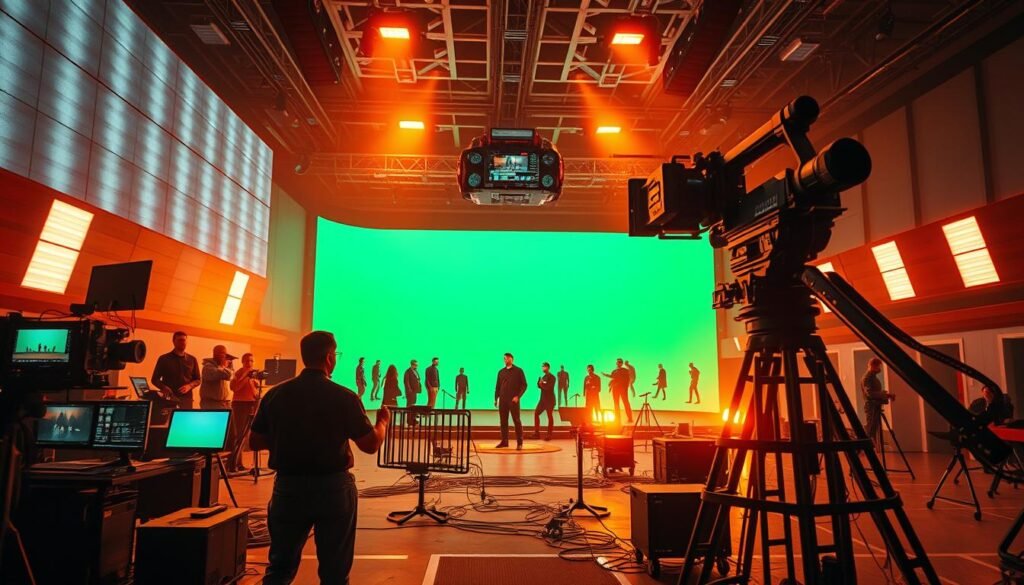
Virtual production combines live-action and computer-generated elements. It uses LED volumes and camera-tracked backgrounds. This method improves actor immersion and speeds up director feedback.
Real-time systems allow teams to make changes on the spot. This means lighting, lens choices, and background swaps can be adjusted instantly. This tight loop between cinematography and visual effects is key, with Unreal Engine playing a big role.
LED volumes and camera tracking are at the heart of modern stages. They link physical lighting to virtual images in real-time. Photogrammetry and 3D scanning provide accurate assets for in-camera use. GPU-driven render pipelines ensure high-quality images without slowing down.
Here are some practical examples. The Mandalorian used LED volumes to create natural lighting for actors. Murder on the Orient Express tested LED car setups for complex scenes. DNEG 360 and others use virtual production for better teamwork between previs, camera, and VFX teams.
Virtual production offers many benefits. It reduces reshoots, shortens schedules, and improves performances. It also cuts down on location costs. But, it requires upfront investment, pipeline integration, and solving sync issues.
Below we outline main components, typical benefits, and common challenges for quick reference.
| Component | Benefit | Common Challenge |
|---|---|---|
| LED Stage Volumes | Realistic lighting, instant background changes, actor immersion | High initial cost, color calibration, refresh sync |
| Real-Time Engines (Unreal, Unity) | Instant creative feedback, faster iteration, procedural tools | Asset optimization, engine-specific training, render consistency |
| Camera & Motion Tracking | Seamless parallax, accurate in-camera compositing | Calibration drift, occlusion handling, latency |
| Photogrammetry & 3D Scanning | Accurate, photoreal assets for virtual sets | Data management, scan time, integration into pipelines |
| GPU Render Pipelines | Sustained frame rates, high-detail shading | Hardware costs, thermal and power planning |
| Cross-Disciplinary Workflows | Faster decisions, fewer creative reworks | Organizational change, new roles and communication paths |
For more information on virtual production, contact info@digiverse.studio. We’re open to collaborating on pilot shoots, pipeline reviews, and training in next-generation visual effects.
Integration of Augmented Reality in VFX
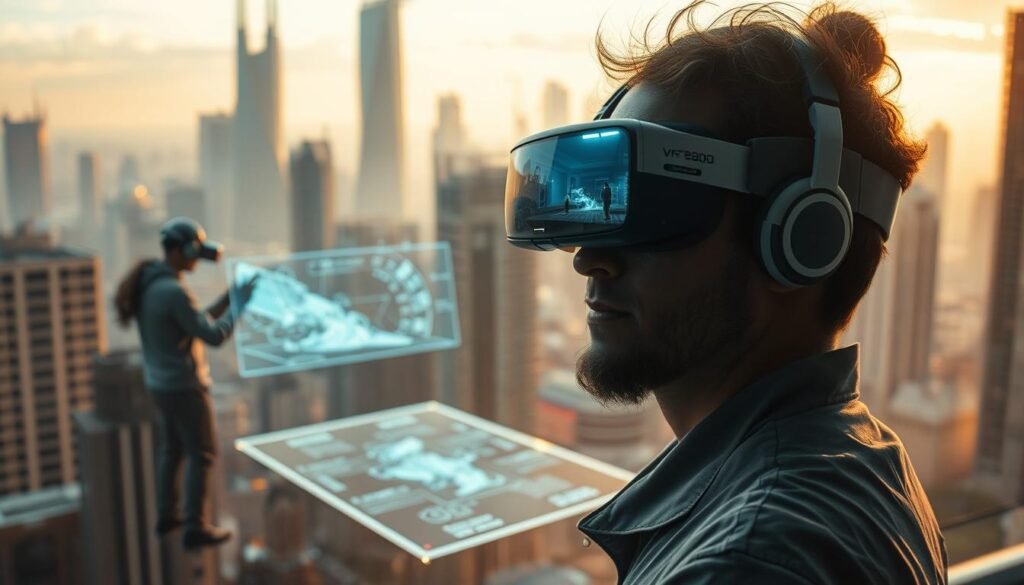
We look into how augmented reality (AR) takes visual effects beyond screens and into real life. AR lets digital elements blend with physical scenes. This includes things like layered annotations, animated models, and interactive characters that react to the viewer.
This change brings immersive VFX experiences. These experiences alter how we learn, shop, and enjoy live events.
Enhancing User Experiences with AR
Design should focus on the story and usefulness, not just tricks. When AR supports the story, users stay engaged and remember more. We aim for simple, consistent interactions that work on phones and tablets.
We use mobile-optimized shaders, real-time tracking, and SLAM. These keep visuals tied to the real world. They also reduce delays and keep the experience immersive.
Popular AR Applications in Media
Brands use AR for marketing, letting customers try products virtually. Museums create interactive exhibits with animated artifacts. Social platforms offer mobile filters that add special effects to faces and scenes.
These AR uses in media follow the VFX industry’s trend toward shareable content.
Future Possibilities for AR in VFX
We envision interactive story worlds in parks, classrooms, and streets. Training platforms will use AR to teach engineering and cinematic skills in real settings. Mixed-reality shoots will combine virtual tools with AR for scenes with both live actors and digital environments.
But, there are challenges: mobile performance issues, hardware differences, and the need for smooth UX. Cloud-based delivery and optimized pipelines help solve these problems, making it easier to scale.
We suggest focusing on narrative utility, ensuring AR assets are culturally authentic, and following accessibility guidelines. These steps help align special effects innovation with inclusive storytelling and current VFX trends.
If you want to learn more or discuss a project, contact us at info@digiverse.studio.
The Role of Real-Time Graphics in VFX
Real-time graphics connect game engines with filmmaking. They render scenes fast, allowing teams to make changes quickly. This makes it easier to see and adjust ideas right away.
Using real-time graphics has many benefits. Directors can test lighting and camera moves instantly. Editors and VFX supervisors can approve shots faster. This way, teams work together better and make fewer mistakes.
Tools like Unreal Engine and Unity are key for creating scenes. NVIDIA and AMD’s GPUs help with fast rendering. Systems like OptiTrack and Vicon make it easier to capture actor movements.
But, there are challenges. Teams must balance speed with quality. This affects how they work and who they need on their team.
Real-time graphics change how we tell stories. Actors can see their surroundings change. Directors can try new things during filming. This makes the story better and more exciting.
Real-time graphics are used in many ways. They’re used for live broadcasts, interactive shows, and even in movies. This shows how they can make things look great and happen right away.
We’ve made a table to help teams decide what tools to use for their project.
| Element | Primary Benefit | Common Tools | Key Consideration |
|---|---|---|---|
| Scene Composition | Fast iteration on layout and framing | Unreal Engine, Unity | Asset management and streaming performance |
| Rendering | Interactive photoreal preview | GPU stacks (NVIDIA, AMD), real-time renderers | Shader optimization for target framerate |
| Motion Capture | Live actor-to-character mapping | OptiTrack, Vicon, live link plugins | Latency and calibration on set |
| Compositing | In-camera VFX and live overlays | Real-time compositors, engine render passes | Color pipeline and plate integration |
| Pipeline Integration | Smoother handoffs across teams | Custom tools, real-time VFX tools, SDKs | Standards for assets and versioning |
If you want to learn more or get a demo, contact us at info@digiverse.studio. We can talk about how real-time graphics can change how you make movies and shows.
Sustainability in Visual Effects Production
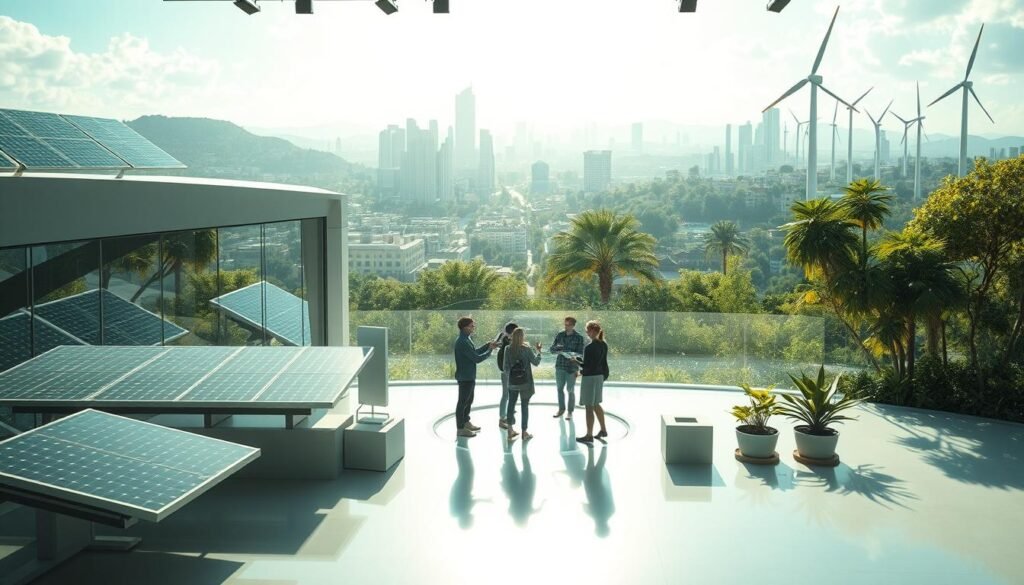
We are at a critical moment in VFX production. We must reduce emissions while keeping quality high. Big render farms, travel, and power-hungry data centers push us to adopt sustainable practices.
Eco-Friendly Practices in VFX
First, we should profile render workloads to find waste. Moving heavy jobs to cloud-based rendering helps. It cuts down on idle server time and reduces costs.
Remote collaboration and virtual production also help. They lower emissions from travel and locations. Companies like Prasad Corp are setting targets and changing their ways to be greener.
Utilizing Technology for Sustainability
We use energy-efficient GPUs when we can. New Nvidia and AMD cards are more efficient. They also use AI for denoising and frame-reconstruction, reducing render passes and hours.
Containerized cloud-based rendering is another tool. It starts up when needed and stops when idle. Neural rendering and algorithms also help reduce complexity and energy use.
The Future of Green VFX
We see a future with standardized carbon accounting and green incentives. There will be scorecards for suppliers and norms for reporting. These steps will guide the industry towards sustainability.
Teams should move workloads to energy-efficient cloud regions. Real-time workflows will also help. Small changes can make a big difference in energy use.
| Area | Short-Term Action | Impact |
|---|---|---|
| Render Management | Profile jobs, use cloud-based rendering windows | Lower idle compute, faster turnaround |
| Hardware | Choose energy-efficient GPUs for farms | Higher frames per watt, reduced electricity |
| Algorithms | Adopt AI denoising and neural rendering | Fewer passes, shorter render times |
| Production | Use virtual production and remote teams | Reduced travel emissions, flexible staffing |
| Operations | Shift to renewable cloud regions and containerized workflows | Lower data center carbon intensity |
For help or to discuss sustainability, contact info@digiverse.studio. We’re here to help teams achieve their sustainability goals in VFX.
Challenges Facing the VFX Industry
The VFX industry is at a turning point. It’s where creativity meets fast-changing technology. New tools like AI, virtual production, and real-time engines offer speed and scale. They can enhance storytelling if used as tools, not the main focus.
Balancing creativity and technology
Keeping creative intent central in every decision is key. Tools can handle tasks like rotoscoping and tracking, freeing artists to focus on the art. At places like Industrial Light & Magic and Weta Digital, clear artistic direction makes automation better.
Design processes should let artists test ideas fast without losing their touch. Quick iteration should enhance, not replace, the human eye.
Addressing labor concerns
Automation changes the VFX labor landscape. Roles that were once repetitive might shrink, while demand for technical directors and real-time artists grows. This shift causes issues like disputes over credits, pay, and unionization in multi-vendor projects.
We support clear crediting and fair contracts. Studios, vendors, and unions must help workers adapt without losing their jobs.
Ethical issues in VFX creation
Deepfakes, recreations of deceased performers, and biased AI training datasets raise big questions. AI ethics in film needs consent, transparency, and a way to attribute work.
Intellectual property rules are being tested by AI-generated assets. Studios and creators should define how assets are used and licensed. Blockchain can help track contributions, payments, and ownership, supporting ethical VFX and protecting creators.
Workload and mental health are also critical. Long hours and crunch culture harm teams and work quality. We need to balance technical efficiency with humane staffing, predictable schedules, and mental health support.
We suggest industry governance: guidelines, laws, and ethical review boards. These can set standards for AI, deepfakes, replica performances, and fair labor practices.
| Challenge | Impact | Practical Response |
|---|---|---|
| Automation of routine tasks | Shifts job roles; speeds delivery | Reskilling programs; clear crediting |
| Labor disputes and pay | Production delays; talent loss | Standardized contracts; union dialogue |
| Ethical VFX and deepfakes | Consent violations; reputational risk | Consent protocols; provenance tracking |
| AI ethics in film | Bias in output; authorship questions | Transparent datasets; review boards |
| Workload and mental health | Burnout; decreased creativity | Reasonable schedules; support services |
| Intellectual property ambiguity | Licensing disputes; payment gaps | Provenance ledgers; clear licensing terms |
We’re open to discussing governance models and practical changes. Contact us at info@digiverse.studio to talk about navigating VFX trends while protecting labor and ethics.
The Future of VFX Employment Opportunities
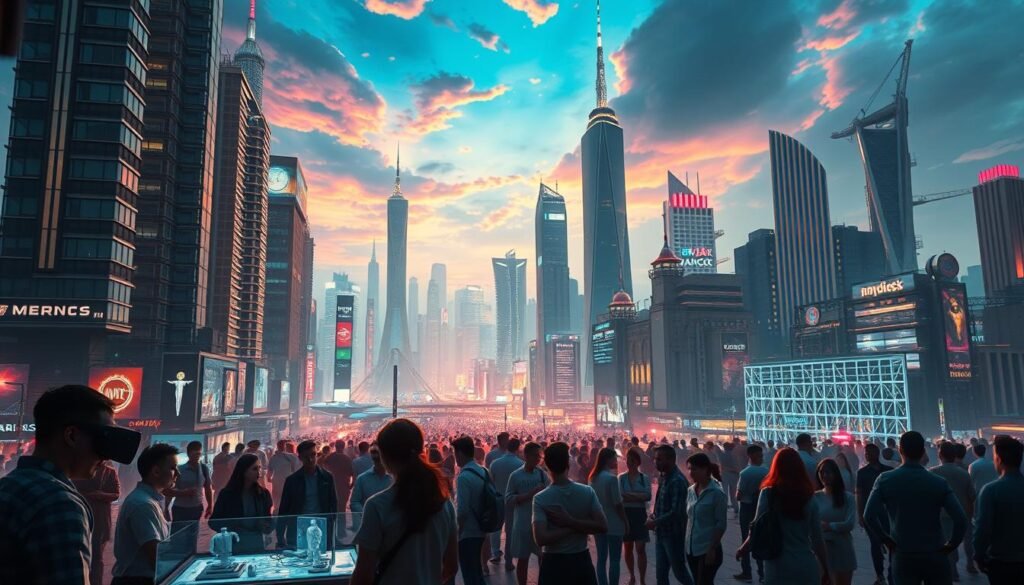
The job market for visual effects is changing fast. Tools like Unreal Engine and Python pipelines are changing how teams work. Now, jobs mix art with code, needing both creativity and technical skills.
New roles need people with both art and tech skills. Real-time technical artists work with Unreal Engine. Virtual production supervisors manage LED stages and camera tracking.
AI/ML specialists work on neural rendering and automated cleanup. Pipeline engineers connect Maya, Houdini, and in-house systems. XR experience designers create immersive experiences for live events. Sustainability coordinators focus on green VFX workflows.
Skills in demand for future VFX artists include practical skills. Employers look for Unreal and Unity skills, Python and C++ for software, and machine learning basics. Knowing photogrammetry, 3D scanning, and color science is also key.
Soft skills are just as important. Being able to work with others and tell stories well is vital. Visual literacy and knowing how to use AI responsibly are also important.
Learning new things is a must. Online courses, studio mentorships, and hands-on labs are good ways to learn. The Second Source says AI and virtual production will create new jobs and keep demand high.
Education should include real-time rendering and neural rendering. It should also mix engineering with creative briefs. Students should have access to cloud GPUs.
For hiring, career guidance, or program partnerships, contact: info@digiverse.studio.
Collaborations Between VFX and Other Disciplines
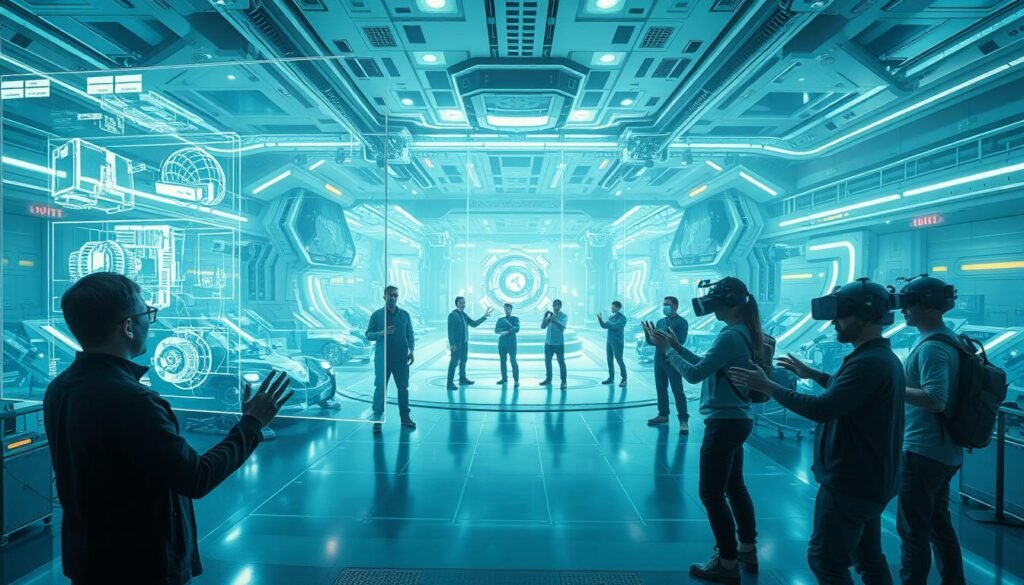
Film studios, game developers, broadcasters, and marketing teams are working together more. This teamwork leads to shared VFX work. They use common pipelines, real-time rendering, and joint libraries to speed up production and cut costs.
Working together brings many benefits. Teams use formats like USD and glTF to move assets easily. Studios also get help from game developers to make scenes work on different platforms.
Cross-Industry Partnerships
We team up with game studios and live-event producers. We use virtual production techniques for both stage and screen. This way, teams can work faster and create interactive experiences that were hard to make before.
Having clear rules for licensing and credits is key. It helps protect IP and opens up new ways to make money, like live content and metaverse events.
The Influence of Gaming on VFX
Game engines like Unreal Engine and Unity are changing how we do VFX. They bring in new ways to optimize scenes and use assets. This is thanks to the gaming world’s influence on VFX.
We’re also using ideas from games to create interactive story worlds. This changes how we develop VFX software. Tools now need to support live interaction, scalable assets, and fast changes for both film and games.
Collaborations in Advertising and Marketing
Advertising teams are using AR and interactive commercials that rely on VFX trends. They need content that fits different platforms and is made quickly. So, studios are working on real-time pipelines and using lightweight assets.
Working with brands lets us create immersive campaigns and measure how well they work. We’re also looking into blockchain and provenance systems to track ownership and revenue in cross-platform projects.
| Area | Primary Benefit | Common Tools/Standards | Typical Partners |
|---|---|---|---|
| Real-time Production | Faster iteration and live feedback | Unreal Engine, Unity, USD | Film studios, game developers, broadcast |
| Asset Interchange | Reusable libraries across projects | glTF, Alembic, PBR materials | VFX houses, game engines, ad agencies |
| Interactive Marketing | Higher engagement and measurable ROI | AR toolkits, webGL, CDN delivery | Brands, creative agencies, streaming platforms |
| Technical Governance | Clear IP and revenue frameworks | Smart contracts, provenance ledgers | Legal teams, producers, studios |
For inquiries or to explore joint projects, contact info@digiverse.studio.
Conclusions: What Lies Ahead for VFX
The future of VFX is exciting, with fast tech progress and wise creative choices. AI and neural rendering will make tasks like denoising and inpainting faster and cheaper. Real-time engines will also become key for final renders.
This change will lead to new visual effects in movies, ads, and live shows. It will make CGI better in many areas.
Predictions for the Next Decade
Virtual production and LED stages will become more common, even for smaller budgets. Studios and marketers will use these tools more.
Sustainability will be a big deal, with tracking carbon and using green tech. We’ll see more stories shared across different media and AR/VR experiences. This will engage more people and create new ways to make money.
Final Thoughts on the Future of Visual Effects
New jobs will emerge, like hybrid artist-engineers and XR designers. George Murphy said AI and virtual production expand what’s possible but don’t replace the need for good storytelling and emotional depth.
It’s important to use these tools wisely and ethically. We need clear rules for AI work and to care for the environment.
By mixing tech smarts with creative thinking, we can innovate in special effects. We can do this while respecting the craft and the planet. For more ideas or to work together, email info@digiverse.studio.