
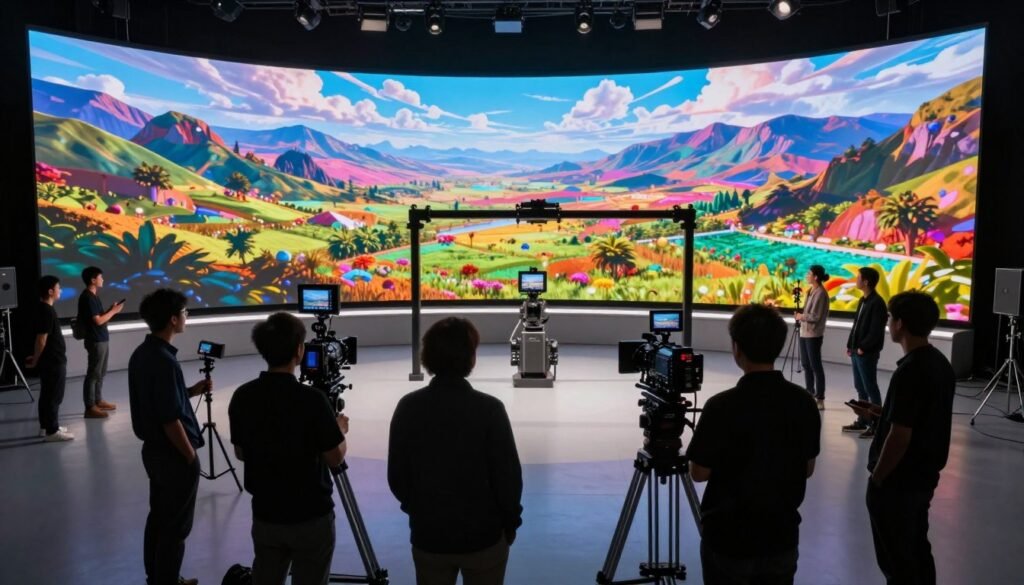
In this guide, we explore virtual production, a new way of making movies. It combines technology and creativity. With tools like LED walls and Unreal Engine, we’re changing how films are made.
From big Hollywood movies to small indie films, virtual production is making a big impact. It brings stories to life in a new, realistic way. Get ready to see how filmmaking is evolving, where tech meets art.
Key Takeaways
- Virtual production integrates technology and creativity for filmmaking.
- LED walls offer a new way to create immersive environments.
- Unreal Engine enables real-time rendering for enhanced visual storytelling.
- This method is reshaping both Hollywood and independent film industries.
- Real-time filmmaking allows for greater efficiency and flexibility during production.
Introduction to Virtual Production
Virtual production is a big leap in filmmaking technology. It changes how we tell stories. It mixes real sets with digital scenes, making stories more real and engaging.
It lets filmmakers blend real actors with digital backgrounds. This creates a unique mix of real and virtual worlds. It’s a new way to tell stories.
This method boosts creative freedom. Filmmakers can now make amazing visuals and settings without limits. It’s all about what they can imagine.
It also makes teamwork better. Different experts can work together more easily. This helps make stories even more powerful.
Exploring virtual production shows its huge impact on movies. It brings new flexibility and creativity. It’s changing how we see and experience films.
Understanding LED Walls
LED walls are key in virtual production, serving as dynamic backdrops. They make stories come alive with stunning visuals. These walls use high-resolution panels to show detailed images, pulling audiences into rich settings.
Building LED walls involves connecting modular panels into a large canvas. This tech lets filmmakers change lighting and visuals in real-time. It makes moving between scenes easy, cutting down on the need for physical sets.
Switching to LED walls brings many benefits. Filmmakers can explore different settings quickly, saving time and money. They can easily adjust lighting and backgrounds, making perfect scenes a breeze. This freedom lets creatives bring their ideas to life in ways they couldn’t before.
As the film industry grows, LED walls are changing the game. They’re not just for visual effects but also for telling stories in new ways. Using LED walls lets filmmakers focus on their creativity, improving the whole production process.
What are LED Volumes?
LED volumes are a big step forward in filmmaking and virtual production. They use lots of LED panels to make 360-degree environments. This lets creators make scenes that feel real, without the usual studio limits.
The Technology Behind LED Volumes
LED volumes work well with cameras and tracking systems. This means they can show environments that really match what’s happening on set. For example, if an actor moves, the background changes right away.
This makes actors feel like they’re really in the scene. It’s a big improvement over old ways of filming.
Advantages Over Traditional Filming
LED volumes have many benefits over old filming methods. They make pictures look better, which means the final movie is more impressive. You don’t need to film in lots of different places, which saves time and money.
Also, you can make changes right away while filming. This makes working together on set easier and more fun. It lets creators try new things and tell stories in new ways.
LED volumes let filmmakers be more creative and take risks. They open up a whole new world of storytelling. This is a big change in how movies are made, using new technology to tell stories.
Unreal Engine: A Game Changer in Filmmaking
Unreal Engine has changed filmmaking in big ways. It started in the gaming world but now helps make amazing visuals for movies. It lets filmmakers mix real scenes with computer graphics smoothly. This tool boosts creativity and storytelling.
Overview of Unreal Engine
Unreal Engine is a powerful tool for filmmakers. It helps create detailed scenes and assets. This tech lets users build worlds that pull viewers in, making every frame tell a story.
It’s not just for big movies. Indie projects also find it useful. In short, Unreal Engine is key for those wanting the latest in virtual production.
Real-Time Rendering Capabilities
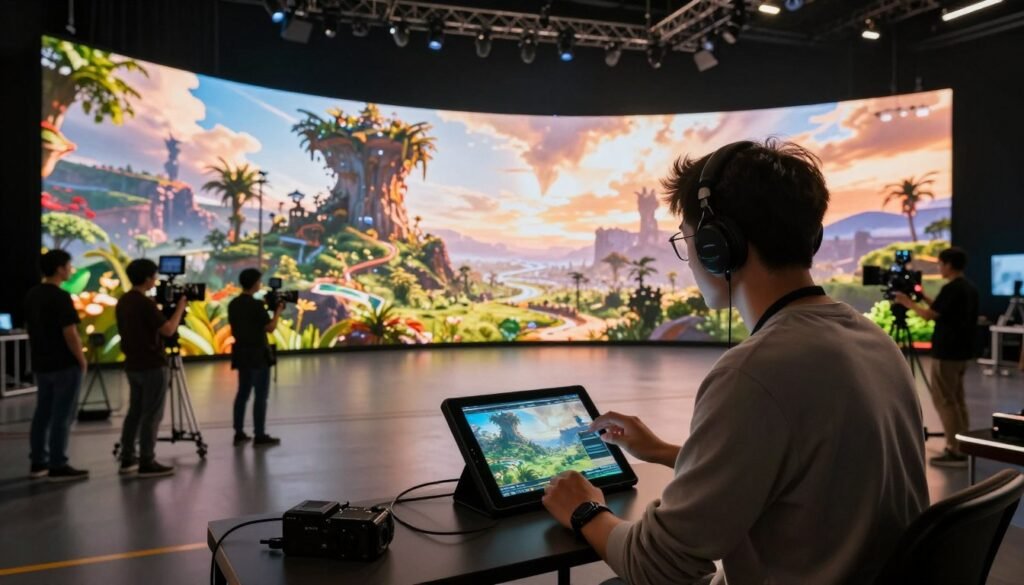
Unreal Engine’s real-time rendering changes filmmaking. It lets filmmakers see changes right away. This makes the filmmaking process more interactive and fast.
Directors and cinematographers can tweak things like lighting and camera angles on the spot. This new way of making movies lets stories grow as they’re filmed.
| Feature | Benefits |
|---|---|
| Real-Time Graphics | Immediate visualization of changes enhances on-set decision-making. |
| Asset Creation | Streamlined process for developing detailed environments and characters. |
| Interactive Storytelling | Engages viewers with dynamic narratives that can shift during filming. |
The Workflow of Real-Time Filmmaking
Starting a virtual production project means you need to know the real-time filmmaking workflow. It’s all about careful planning and new techniques. This way, filmmakers can use LED walls and Unreal Engine to tell stories in a new way.
Pre-Production Considerations
Before you start, you have to plan well. You need to find the right tech that fits your vision. It’s also key to set up a team workflow and make sure everyone knows their role.
Good communication helps the team work together smoothly. This makes the filming process better and ready for any changes that come up.
On-Set Processes
On-set, technology and talent work together in a new way. Virtual production makes filming more flexible. It lets cameras and actors move freely in virtual spaces.
Good communication is vital here. It keeps the team focused on the vision and ready for any changes. This makes the filmmaking process better and more engaging.
The Role of Virtual Production in Cinematography
Virtual production is changing cinematography by mixing advanced tech with creative vision. LED walls and Unreal Engine help cinematographers create detailed and engaging stories. These tools let them mix real and virtual parts smoothly, giving them more control over each shot.
Lighting is key in setting mood and telling stories. LED walls let them change backgrounds quickly to fit the scene’s needs. This freedom lets cinematographers be more creative and precise in their work.
Working together has changed too. Cinematographers now team up with visual effects teams to make quick decisions on set. This teamwork pushes the limits of storytelling, making new and exciting stories for viewers.
Benefits of Using Virtual Production
Virtual production brings big wins for filmmakers. It makes making movies cheaper and helps manage time better. With tech, filmmakers can work smarter, saving money.
Cost Efficiency and Time Management
Virtual production cuts down on costs. It lets filmmakers avoid the high costs of traveling and building sets. With LED walls and real-time tech, teams can adjust things fast.
This makes the whole process more efficient. It helps manage time better in every step of making a movie.
| Traditional Production Methods | Virtual Production |
|---|---|
| High travel expenses | Reduced travel costs through virtual locations |
| Lengthy set construction times | Instant set adjustments with LED walls |
| Extensive schedule delays | Quicker adaptations boost efficiency |
| High production costs | Optimized budget allocation |
Creative Flexibility
Virtual production opens up new creative doors. It lets filmmakers try out bold new ideas. This tech push encourages them to dream big.
It makes the creative process better. It also brings new ideas to the industry.
Challenges and Limitations of Virtual Production
Virtual production is a big step forward in filmmaking, but it has its own set of challenges. The cost of advanced tech like LED walls and powerful computers can be a hurdle. It requires careful budgeting and might limit access for smaller filmmakers.
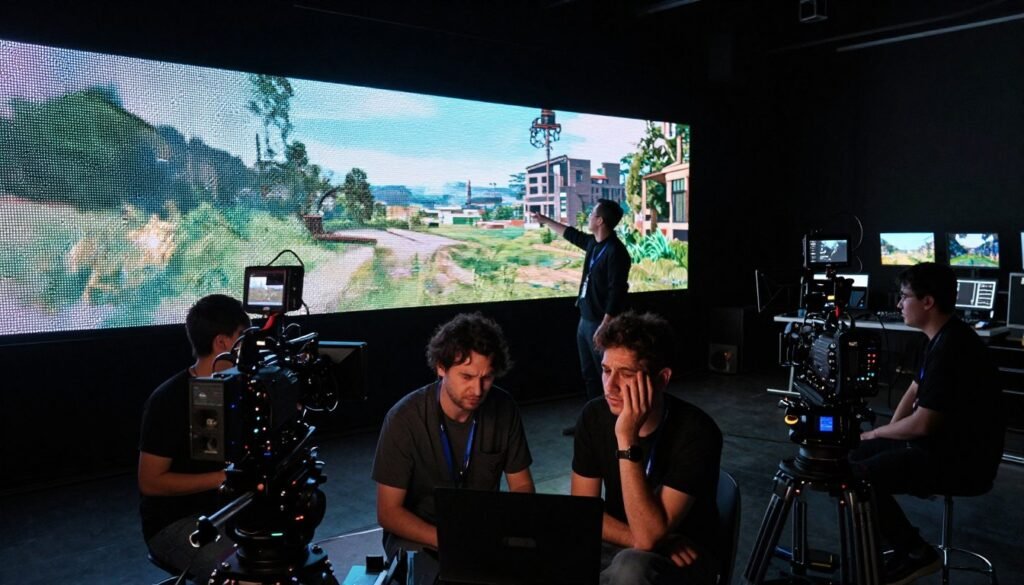
Creating immersive environments with virtual production needs special skills. Teams must mix traditional filmmaking with modern tech. This makes it important to have people who know both well. It also means there’s a steep learning curve, which can slow down projects.
Technical problems can happen during shoots, causing delays. The use of new tech means you need reliable backup systems and quick tech support. This can increase costs. Directors and cinematographers must be ready to solve these issues fast to keep the shoot moving.
Virtual sets have their limits in filmmaking. It’s hard to perfectly recreate dynamic natural scenes digitally. For scenes needing a specific atmosphere or organic feel, old-school filming might be better. This shows the need for a variety of tools in filmmaking.
Knowing these challenges helps filmmakers deal with the changing world of virtual production. It encourages innovation while keeping the heart of storytelling alive.
Case Studies: Successful Use of LED Walls and Unreal Engine
Virtual production has changed the movie world. Big Hollywood movies are leading the way with new techniques. They use LED walls and Unreal Engine to tell stories in new ways.
These technologies show what’s possible in movies. They give viewers experiences that were thought to be impossible before.
Hollywood Productions Embracing Virtual Production
“The Mandalorian” uses LED walls to create amazing scenes. Actors can interact with their surroundings in real time. This makes the movie look better and saves time in editing.
These examples show a new way of making movies. It’s faster and more teamwork-based. It shows that using the latest tech is smart for movie makers.
Independent Filmmakers and Virtual Production
Small movie teams are also using these new methods. They can make great visuals without spending a lot of money. This shows that anyone can tell exciting stories, no matter their budget.
Many interviews and documentaries talk about this change. It’s not just for big movies. It’s for all kinds of filmmakers.
The Future of Virtual Production in the Industry
Innovation is changing filmmaking in exciting ways. New technologies like artificial intelligence are making big changes. AI will help creatives focus more on storytelling, making movies better for viewers.
Virtual and augmented reality are also changing the game. These technologies let viewers dive into movies like never before. Filmmakers using these tools will try new things, pushing the limits of what we see on screen.
The future of filmmaking is about working together. Artists, engineers, and tech experts will team up. This teamwork will lead to new ways of making movies, making them more creative and efficient.
We see a future where filmmakers use real-time graphics and interactive stories. These changes will set new standards in the industry. They will meet the needs of both creators and viewers.
| Aspect | Traditional Filmmaking | Future of Virtual Production |
|---|---|---|
| Workflow Efficiency | Linear processes with distinct phases | Real-time updates and iterative collaboration |
| Audience Engagement | Passive viewing experience | Interactive and immersive experiences through VR/AR |
| Creative Control | Limited by physical sets and locations | Endless possibilities with digital environments |
| Cost Management | High costs and time delays | Reduced costs with efficient resource allocation |
Educational Resources for Virtual Production
Exploring virtual production requires access to good educational resources. Both new and experienced filmmakers can benefit from online courses. These courses help improve skills and understand this new filmmaking method better.
We’ve gathered top platforms for learning materials. They suit different learning styles and levels.
Online Courses and Tutorials
Today, there’s a wide range of online courses and tutorials. Platforms like Coursera and MasterClass offer virtual production courses. They cover everything from virtual environments to technology on set.
Other resources focus on practical projects. They help users gain confidence and skills through hands-on work.
Books and Articles on Virtual Production
Books and articles are also key educational tools. They dive deep into virtual production’s details. Essential texts cover theory, best practices, and case studies.
These resources help you appreciate virtual production deeply. They give readers valuable insights and knowledge to improve their craft.
Conclusion
In this virtual production summary, we look back on a major shift in filmmaking. It combines the latest tech with creative stories. LED walls and Unreal Engine have changed how we make movies, making them better and more possible.
These new tools let filmmakers create worlds that grab and hold our attention. It’s a fresh way to tell stories that excite and move us.
As we move forward, it’s key to keep learning and trying new things. Whether you’re already making movies or just starting, virtual production offers endless chances. By always learning and working together, we can make stories that really touch people’s hearts.
Let’s explore this new world of creativity together. With virtual production, we can inspire a new wave of storytellers. Together, we can change how we watch movies forever.