
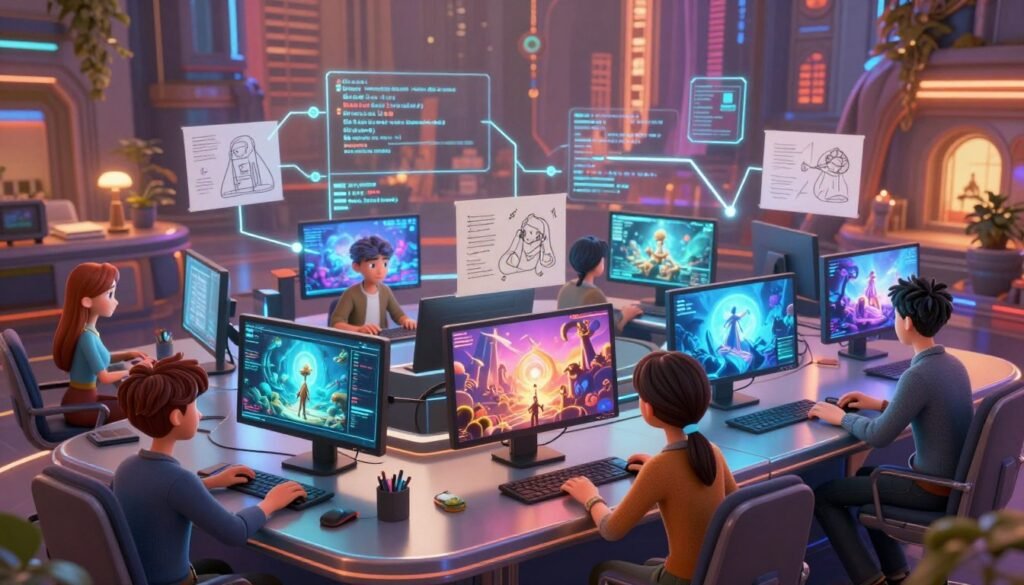
Exploring CGI and 3D animation is key to understanding their roles in storytelling and visual effects. CGI lets creators make amazing visuals that add depth to stories. On the other hand, 3D animation brings characters and worlds to life with movement and sequences.
Both methods are vital in filmmaking, mixing reality and imagination. They make storytelling more engaging, drawing audiences into new experiences.
Key Takeaways
- CGI and 3D animation are essential tools in modern filmmaking.
- Both approaches enhance storytelling by creating immersive experiences.
- Understanding the differences between CGI and 3D animation can guide future projects.
- As technology evolves, so do the possibilities of CGI and 3D animation.
- The blending of simulation and storytelling captivates audiences like never before.
Understanding CGI: Definition and Applications
CGI stands for Computer-Generated Imagery. It’s about making visual content with computer software. Today, CGI is key for creating immersive experiences in media.
This technology includes both 2D and 3D visuals. Creators use advanced software to make detailed environments and stunning effects. These help tell stories in films.
What is CGI?
CGI is more than just graphics. It uses complex techniques to create real-looking scenes and characters. This makes it very useful in many fields.
CGI artists use 3D modeling, animation, and rendering. They bring their ideas to life, making visuals that stick with viewers.
Common Uses of CGI in Filmmaking
CGI changes how stories are told in films. It’s used for many reasons, like showing surreal events and fantastical elements. This makes movies thrilling and engaging.
CGI lets us see the impossible, like flying through the sky or meeting mythical creatures. Films like “Toy Story” and “Avatar” show CGI’s power. It improves both visuals and the story’s emotional depth.
Exploring 3D Animation: Definition and Techniques
3D animation has changed how stories are told in movies and other media. It uses three-dimensional computer graphics to make characters and environments look real. This makes viewers feel more connected to the story.
Knowing the basics of 3D animation is key for those interested in visual effects and animation.
Key Techniques in 3D Animation
Several important techniques are used in 3D animation:
- Modeling: This is where the three-dimensional shapes and characters are created.
- Rigging: Characters need a skeleton or rig to move them around.
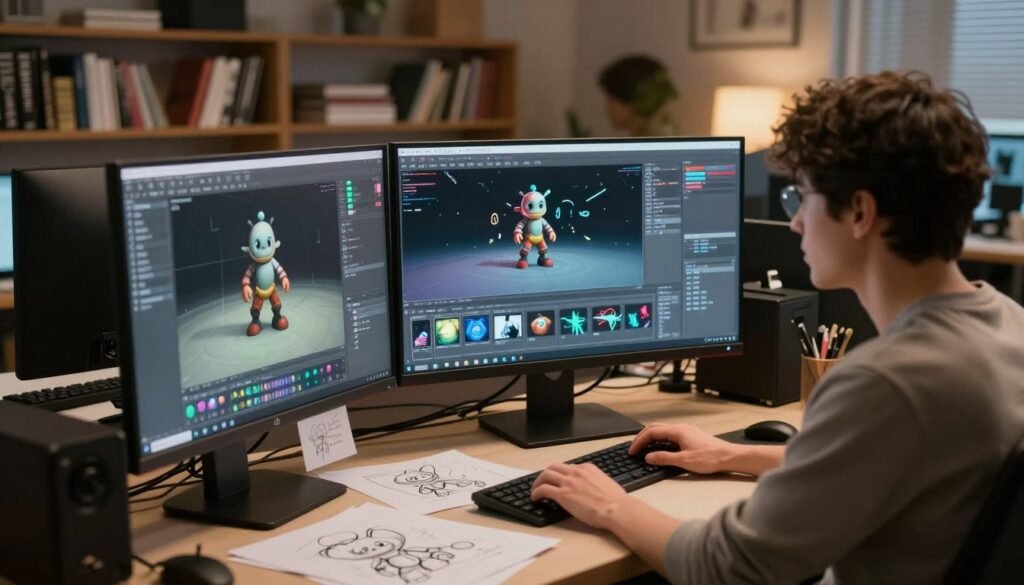
- Animation: This is when characters come to life with movement, using keyframes and interpolation.
- Lighting: Good lighting adds depth and atmosphere to a scene.
- Rendering: This step turns the 3D models and animations into a two-dimensional image or sequence.
The Role of 3D Animation in Modern Visual Effects
3D animation is essential in visual effects. It lets filmmakers create worlds that are truly immersive. Visual effects artists use 3D animation to make stunning visuals that grab the audience’s attention.
This combination not only improves storytelling but also turns simple ideas into amazing movies.
CGI vs. 3D Animation: Key Differences
It’s important to know the difference between CGI and 3D animation for anyone in visual storytelling. CGI stands for computer-generated imagery and includes all digital visuals. This includes static images, special effects, and animations. On the other hand, 3D animation focuses on moving images in a three-dimensional space.
CGI uses advanced techniques to create detailed images, like backgrounds or characters. 3D animation, on the other hand, makes these elements move and change over time. Both are key to telling stories, but they do different jobs. CGI sets the scene, while 3D animation adds the action.
Creators can use both CGI and 3D animation together. For example, a movie might use CGI for stunning landscapes and 3D animation for characters in action. This mix makes the story more engaging and visually stunning. Knowing the difference helps artists and animators create more powerful and immersive stories.
| Aspect | CGI | 3D Animation |
|---|---|---|
| Definition | Computer-generated imagery used for visual effects and images. | Technique creating moving images in a three-dimensional space. |
| Main Purpose | Creation of realistic visuals and effects. | Bringing characters and scenes to life through movement. |
| Role in Storytelling | Sets environments and enhances visual appeal. | Conveys action and emotion through animated sequences. |
| Examples | Visual effects in movies like “Avatar”. | Animated films such as “Toy Story”. |
The Role of Storytelling in CGI
Storytelling and CGI are deeply connected. CGI brings stories to life with amazing visuals. It makes complex emotions and ideas real, touching our hearts.
CGI makes stories more engaging. It uses stunning visuals to draw us into the story. This makes the experience more personal and powerful.
How CGI Enhances Narrative Development
CGI creates worlds that capture our imagination. It uses visual metaphors to add depth to stories. For example, big landscapes can show freedom or loneliness.
CGI also helps build unique worlds. These worlds reflect the characters’ journeys. This visual storytelling enhances the story’s themes.
Case Studies in CGI Storytelling
Looking at famous movies shows CGI’s power in storytelling. In “Avatar,” James Cameron used CGI to create Pandora. This world showed the beauty of nature and the danger of conflict.
“The Lord of the Rings” trilogy also used CGI. It brought Middle-earth to life, with epic battles and stunning landscapes. These films show how CGI turns stories into unforgettable experiences.
The Role of Storytelling in 3D Animation
In 3D animation, storytelling is key. It turns simple visuals into exciting stories. These stories not only entertain but also touch our hearts through characters and themes we can relate to.
Character Development through 3D Animation
Creating characters is at the heart of good storytelling in 3D animation. Animators make detailed models that show what’s inside a character’s mind. They show their personality and how they grow.
Being able to change expressions and movements makes characters seem alive. This makes us feel like we really know them. It shows that stories are more powerful when the characters feel real and we can see ourselves in them.
Emotional Resonance in 3D Animated Stories
Emotions play a big part in how we connect with 3D animated stories. Stories that touch our feelings deeply make us care more. For example, “Toy Story” shows how a well-told story can make us feel deeply invested.
When characters go on journeys that feel like our own, we feel a deep connection. This connection lets us understand and share in their experiences.
Visual Effects: The Bridge Between CGI and 3D Animation
Visual effects link CGI and 3D animation, making movies more engaging. They help create worlds that pull viewers in. This mix of tech and art makes animated scenes feel real.
Integrating Visual Effects into CGI
Combining visual effects with CGI changes how we watch movies. CGI alone might not be enough. Films like “Inception” show how CGI and visual effects work together.
With the right tools and teamwork, filmmakers can create amazing visuals. This takes viewers on an incredible journey.
The Significance of Visual Effects in 3D Animation
Visual effects are key in 3D animation. They add depth and life to animated characters and settings. For example, “The Jungle Book” uses visual effects to make 3D characters seem real.
This approach not only grabs our attention but also makes us feel more connected to the story.
Impact of CGI on Film History
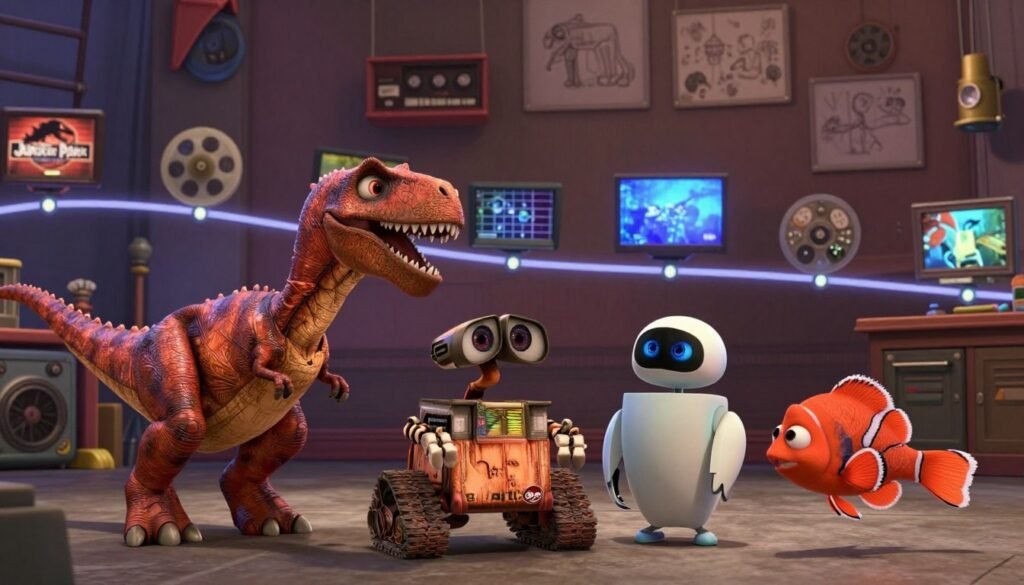
CGI has changed film history a lot. It has changed how stories are told and seen in movies. Films like “Jurassic Park” and “The Matrix” showed what CGI could do. They also made other filmmakers want to try new things with visual effects.
Landmark CGI Films and Their Influence
These films were key in CGI’s growth:
| Film | Release Year | Key CGI Innovations | Impact on Industry |
|---|---|---|---|
| Jurassic Park | 1993 | Realistic dinosaur animations | Set a new benchmark for visual authenticity |
| The Matrix | 1999 | Bullet time effect | Revolutionized action sequences and cinematic techniques |
| Toy Story | 1995 | Fully computer-animated feature | Opened doors for 3D animated films worldwide |
These films used CGI to make amazing worlds and characters. They are famous in film history. Their impact is felt today, encouraging new filmmakers and animators to use CGI creatively.
Impact of 3D Animation on Film History
3D animation has changed film history a lot. It brought new ways to tell stories and see them. Early animation efforts started it all. But big milestones like “Toy Story” really changed the game.
“Toy Story” was the first full CGI film. It showed new ways to tell animated stories for all ages. This film was a big step forward.
After “Toy Story,” we saw a lot of new ideas in films like “Shrek.” “Shrek” mixed humor with deep stories. It showed 3D animation could reach people in many ways.
As 3D animation tech got better, movies got more real and emotional. Films like these became big hits. They set new standards and inspired others to be creative.
Now, 3D animation is in many kinds of movies. From exciting adventures to touching dramas, it’s a big part of film history.
Future Trends: The Evolution of CGI and 3D Animation
The world of CGI and 3D animation is about to change a lot. New technologies are coming that will change how we tell stories. Virtual reality (VR) and augmented reality (AR) are making it possible for us to dive into stories in new ways.
These technologies are mixing reality and fantasy in exciting ways. They create experiences that feel real but are actually part of a story.
Emerging Technologies and Their Effects
New CGI advancements are changing how we create art and technology. Machine learning and AI are making big improvements. They help with tasks that used to take a lot of time, so artists can focus on telling stories.
| Technology | Impact on CGI | Impact on 3D Animation |
|---|---|---|
| Machine Learning | Improves rendering speeds | Automates character movement |
| AI-Driven Animation | Enhances realistic character behavior | Facilitates smoother transitions |
| Procedural Generation | Creates complex environments efficiently | Reduces manual modeling time |
The Role of Virtual Reality and Augmented Reality
VR and AR are big in CGI and 3D animation now. They’re not just for making cool effects. They change how we interact with stories.
In VR, we can step into stories. AR adds digital stuff to the real world. It changes how we see things.
Looking ahead, VR and AR will change storytelling even more. They will offer many new ways to experience stories. This is an exciting time for CGI and 3D animation, mixing tech and art.
CGI vs Animation: An Industry Perspective
The CGI and animation industry is full of opportunities for newcomers. It’s important to understand the job market for those starting out. Both CGI and 3D animation are in high demand, thanks to new tech and the need for visual stories.
The Job Market: CGI vs. 3D Animation Careers
Jobs in CGI and 3D animation are different. CGI focuses on technical skills, like software and rendering. On the other hand, 3D animation emphasizes character design and motion.
| Career Aspect | CGI Careers | 3D Animation Careers |
|---|---|---|
| Skill Set Required | Technical skills in CGI software; Rendering expertise | Character animation; Storyboarding skills |
| Industry Demand | Growing demand in gaming and film | Consistent demand in film and advertising |
| Salary Range | Higher average salaries due to specialization | Competitive salaries with the chance for growth |
Staying updated is key in both fields. The animation world is always changing, with new tools and techniques. For those in CGI and 3D animation, keeping up with education and training can lead to rewarding careers.
Renowned Studios Pioneering CGI and 3D Animation
A few studios lead in CGI and 3D animation, changing the game with new methods and tech. They create amazing stories and push tech limits in animation and film. CGI and 3D animation studios are key in digital content storytelling. Let’s look at some major contributors to these fields.
A Look at Major Players in the CGI Space
Industrial Light & Magic (ILM) is a top name in CGI, making iconic effects for big movies. Founded by George Lucas, ILM has changed how CGI is used in films.
Weta Digital is famous for “The Lord of the Rings” and “Avatar.” They mix CGI with real characters, creating deep stories.
3D Animation Studios Leading the Charge
Pixar Animation Studios shines in 3D animation, making films like “Toy Story” and “Finding Nemo.” Pixar shows that 3D animation can touch hearts and be technically advanced. Their focus on stories and characters is unmatched.
DreamWorks Animation has also made big impacts in 3D animation. With “Shrek” and “Kung Fu Panda,” they prove that humor and relatable characters are key in animation.
| Studio | Notable Works | Contribution to Industry |
|---|---|---|
| Industrial Light & Magic | Star Wars, Jurassic Park | Pioneered CGI technology and visual effects |
| Weta Digital | The Lord of the Rings, Avatar | Innovated CGI integration with live-action |
| Pixar Animation Studios | Toy Story, Finding Nemo | Emphasized emotional storytelling and character development |
| DreamWorks Animation | Shrek, Kung Fu Panda | Combined humor with engaging narratives |
Challenges Faced by CGI and 3D Animation Artists
The world of CGI and 3D animation is full of creativity and innovation. But, it’s not without its challenges. Both CGI and 3D animation artists face many hurdles that affect their work and the production process.
Technical issues often come from software limits and rendering problems. Creative challenges come from telling stories and keeping audiences engaged.
Technical and Creative Challenges in CGI
CGI artists deal with many technical challenges. Software limits can slow down creativity and make artists frustrated. Rendering problems can cause delays, making it hard to meet project deadlines.
Keeping up with fast-changing technology is also a big challenge. It’s hard to stay current with new skills.
CGI artists must find a balance between realism and imagination. Making visuals that connect with viewers is key to storytelling. It’s a delicate balance between creating an immersive experience and avoiding too much detail.
Challenges in 3D Animation Production
In 3D animation, artists face similar challenges. Technical hurdles include complex rigging and character animations, which take a lot of time and skill. This process requires a lot of patience and expertise.
Software issues can also cause problems, leading to constant troubleshooting. It’s a big challenge to keep up with software changes.
Keeping audiences interested is a creative challenge. Creating well-rounded characters and engaging stories is essential. Artists must connect emotionally with their audience to keep them interested.
Understanding the challenges CGI and 3D animation artists face helps us appreciate their skill and dedication. They work hard to create stunning visuals for us to enjoy.
Conclusion
CGI and 3D animation are key tools in storytelling and filmmaking. They offer unique ways to tell stories and connect with audiences. CGI creates realistic visuals, while 3D animation lets us see the world in new ways.
As technology gets better, CGI and 3D animation are becoming more connected. This opens up new possibilities for creators. It lets them explore new ideas and improve how we tell stories.
Looking ahead, we see CGI and 3D animation working together more closely. This will make movies and stories even more engaging. It will also inspire creativity in artists, teachers, and viewers everywhere.