
In our fast-changing digital world, keeping up with UI/UX design is key for better conversions. By 2026, UI/UX will go beyond simple design. It will use advanced methods to improve user experience and keep users engaged. Knowing how to design UI/UX is essential. It affects how users interact with websites and boosts conversion rates.
In this article, we’ll look at practical UI/UX Best Practices. These are based on the latest trends. They aim to help businesses increase their conversion rates.
Key Takeaways
- Importance of user-centered design for engagement
- Consistency in branding enhances trust
- Utilizing data-driven conversion optimization tactics
- Emerging web design trends create fresh user experiences
- Responsive design ensures functionality across devices
- Color psychology significantly influences user behavior
Understanding the Importance of UI/UX in 2026
In 2026, the need for good UI/UX will only grow. A well-designed user experience keeps customers coming back. It makes the difference between loyal customers and those who leave quickly.
Today’s customers want easy-to-use websites and apps. They want them to look good too. Businesses that get this will keep their customers happy and coming back.

Website UI/UX Best Practices
Creating a good website means knowing what users need and what the brand stands for. We focus on designs that put users first and keep branding consistent. This makes the website better for everyone.
Creating User-Centric Designs
User-centric designs put the user’s path through the site first. We use user personas and journey maps to make our site meet their needs. This way, we make a site that users love and use.
Implementing Consistent Branding
Keeping branding consistent is key to a strong brand and trust. Things like logos, colors, and fonts should be the same everywhere. This makes the brand clear and helps it stand out.
The Role of Conversion Optimization in UI/UX
Conversion optimization is key in UI/UX. It helps businesses make designs that sell. By studying how users act, we find out what stops them from buying or signing up. Good UI/UX fixes these problems, making it easy for users to take action.
To get more sales, we need to add conversion optimization to design work. Here’s how:
- Streamlining forms to cut down on user frustration and drop-off.
- Enhancing visual hierarchy to highlight what you want users to do next.
- Incorporating feedback mechanisms to help users understand each step.
By improving UI/UX, we make users happier and more likely to buy. This leads to more sales over time.

Web Design Trends for 2026
As we look ahead to 2026, web design is getting bolder and more interactive. It’s all about creating immersive experiences that grab users’ attention. By keeping up with these trends, we can make our designs stand out and engage users better.
Emerging Visual Styles
Visual styles in web design are changing fast. In 2026, expect to see more vibrant colors, striking fonts, and top-notch images. These elements draw eyes and tell stories. With engaging graphics and video backgrounds, websites are becoming more interactive.
Incorporating Microinteractions
Microinteractions are key to a better user experience in 2026. Small animations, like button clicks and hover effects, give feedback and make interactions smooth. They turn simple actions into fun moments. This makes modern design more effective and engaging.
Essential Usability Factors to Consider
When making a website, it’s key to focus on usability. A clear path for users makes finding things easy. Intuitive links and buttons help users stay engaged without getting frustrated.
Users want to find what they need fast. A smooth experience is what they look for.
Navigation Structure
A good navigation structure is vital in web design. It helps users find their way around easily. To make navigation great, we should:
- Organized Menus: Group related items for quick access.
- Consistent Placement: Put navigation in the same spot on every page.
- Clear Labels: Use names that tell what’s inside.
Following these tips makes browsing easier. This can lead to happier users and lower bounce rates.
Accessibility Guidelines
Adding accessibility to our design is important today. It lets everyone use the web, including those with disabilities. Key points to remember include:
- Keyboard Navigability: Make sure all parts can be reached with a keyboard.
- Screen Reader Compatibility: Use headings and alt texts for images to help screen reader users.
- Contrast Ratios: Keep enough contrast for easy reading, helping those with vision problems.
By following these guidelines, we make our site welcoming to everyone. 
Responsive Design: A Must in 2026
As we move further into 2026, embracing responsive design is key for website development. With more people using mobile devices, making websites mobile-friendly is essential. Our sites need to work well on all screens and resolutions.
Responsive design fixes problems like too much zooming and scrolling. This makes browsing better and keeps users engaged. Search engines also favor mobile-friendly sites, helping businesses stand out online.

In summary, using responsive design helps make websites better for mobile use. It’s important for success in today’s digital world.
How Color Psychology Influences User Experience
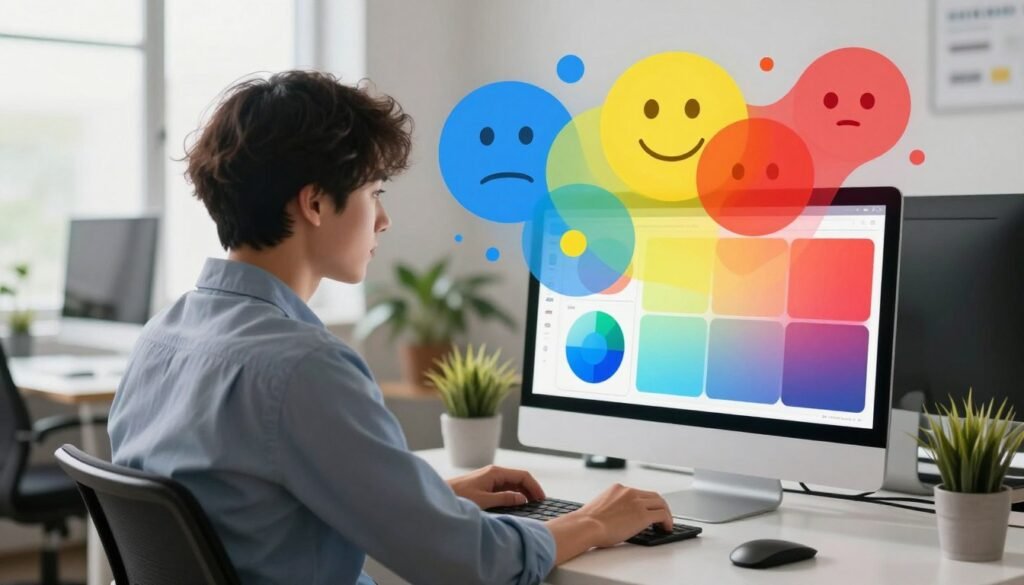
Color psychology plays a big role in how we feel and act online. It’s all about the colors we choose. Warm colors like red and orange make us feel excited and urgent. Cool colors like blue calm us down and make us trust more.
By picking the right colors, we can make our digital spaces better. This way, we connect with our audience in a meaningful way.
The Impact of Color Choices
Choosing colors wisely can make our online interactions unforgettable. Each color makes us feel something different. This feeling can change how happy we are and how much we interact.
For example, Facebook uses blue to feel trustworthy. Target uses red to make us act fast. Finding the right colors for our brand makes everything better for our users.
The Benefits of A/B Testing in UI/UX Design
A/B testing is key for better UI/UX design. It lets us compare two webpage versions to see what users like best. This way, we learn what makes users happy and how to get more of them.
By testing design choices over and over, we get to know our users better. We see how they act and what they like. This helps us make the site better, attracting more visitors and keeping them coming back.
Looking at specific numbers shows how A/B testing works. Here’s a table with some results:
| Design Element | Version A Conversion Rate | Version B Conversion Rate | % Improvement |
|---|---|---|---|
| Call-to-Action Button Color | 3.5% | 5.2% | 48.57% |
| Header Text | 4.0% | 6.1% | 52.5% |
| Image Placement | 2.8% | 4.5% | 60.71% |
Using A/B testing makes our UI/UX design better and boosts conversion rates. It helps us meet user needs better, making every visit count.

Using Analytics to Improve UI/UX
To make a great user experience, knowing how to use analytics is key. By looking at user metrics, we learn a lot about how people use our sites. This helps us find out what works well and what doesn’t.
This info is very important for making our designs better. It helps us reach our goal of improving UI/UX.
Key Metrics to Track
- Bounce Rate: This shows how many visitors leave after seeing just one page. A high bounce rate means we might need to change our design.
- Average Session Duration: This tells us how long people stay on our site. It shows if our content and design are working well.
- Conversion Pathway Analysis: This helps us see where users get stuck. It shows us how to make the user journey smoother.
- Click-Through Rates: Looking at how often people click on calls to action helps us make better design choices.
Enhancing User Engagement with Interactive Elements
In UI/UX design, adding interactive elements is key to getting users involved. Features like quizzes, polls, and personalized content make users want to take part. This makes them feel connected and more interested in what they’re seeing.
By adding these interactive bits, we make the site more inviting. Users who get involved are more likely to come back. They might even tell their friends about it. This helps build a strong online community.
Also, when users feel connected, they’re more likely to buy what you’re selling. This means more sales for you. It’s a win-win for everyone.
Incorporating Feedback Loops in Design
In UI/UX, feedback loops are key for better design. Teams look for user feedback to find what works and what doesn’t. This helps them make products that users really want.
There are many ways to get feedback, like surveys, interviews, and usability tests. These help designers get real-time feedback from users. This feedback loop is important for making things better over time.
Here are some main ways to use feedback loops:
| Strategy | Description | Benefit |
|---|---|---|
| Surveys | Collect quantitative user feedback on specific design elements. | Provides actionable data that can guide immediate improvements. |
| Usability Tests | Observe users interacting with the product to identify pain points. | Highlights areas where user experience can be significantly improved. |
| Interviews | Conduct in-depth discussions to explore user needs and motivations. | Gathers qualitative insights that fuel innovative design solutions. |
Using user feedback in design makes things better over time. Each update makes the product better for users. This way, designs get closer to what users really need.
The Future of UI/UX: Anticipating User Needs
Looking ahead, AI and machine learning will change UI/UX a lot. They can quickly analyze lots of user data. This helps us understand what users like and do.
We can then make experiences that fit each user perfectly. These experiences change as users interact with them. This makes users happier and more involved.
Utilizing AI and Machine Learning
AI and machine learning bring new tools to design. They help us guess what users want. This way, we can make interfaces that not only meet but also exceed user expectations.
This new way of designing will make UI/UX even better. It will go beyond just being fast. It will be truly engaging and fun.
Using AI in design means we can always get better. We can change designs based on what users do and like. Machine learning helps us do this easily. It makes designs that grow and change with user needs.
Conclusion
As we wrap up our look at UI/UX best practices for 2026, we see how key it is to improve user experience. Making user experience better is not just a choice; it’s a must for good digital strategies. By using new design ways that focus on users, we can do better online.
We can change how people use our sites by using what we learned. Making sure our sites look the same everywhere, are easy to use, and work well on all devices is key. We all need to help make these UI/UX best practices happen. This will help us make digital spaces that are easy to use and look great.
Let’s work together to use these strategies. This will help us make digital spaces better for everyone. We can make a future that is more fun and creative for all of us.