

In today’s world, having a strong visual identity system is key to good branding. It’s not just about looks; it’s about creating a unified identity that speaks to people everywhere. A consistent visual identity helps customers know and trust your brand, building strong bonds and loyalty.
In this guide, we’ll dive into what makes a great visual identity system. We’ll see how thoughtful brand assets can boost engagement and make your brand stand out in the market.
Key Takeaways
- A well-structured visual identity is key to effective branding.
- Consistency in brand assets fosters trust and recognition.
- Visual identity systems enhance customer engagement across platforms.
- Your brand’s visual identity should reflect its core values.
- Effective visual identity can drive brand loyalty.
Understanding the Importance of Visual Identity
Creating a compelling visual identity is key to successful branding. It helps companies stand out in a crowded market. Visual identity includes logos, colors, and more, shaping how people see a brand.
Why Visual Identity Matters for Brands
Visual identity is a brand’s first impression. It makes a brand memorable and relatable. Think of Coca-Cola and Apple, their visual identities create strong connections with people.
This connection builds trust and loyalty. These are vital for keeping customers over time.
The Impact of Visual Identity on Consumer Perception
Visual elements shape how we feel about a brand. Colors, for example, can make us feel certain ways. Blue is often seen as trustworthy, while red can be exciting.
Brands use this to their advantage. They choose colors and designs that match their values. This can attract or deter customers, influencing their buying decisions.

Components of a Visual Identity System
Effective visual identity components are key to a successful brand strategy. We focus on logos, typography, and color palettes to create a strong brand presence. Each element is vital for connecting with our target audience.
Key Elements: Logos, Typography, and Color Palettes
Logos are the heart of brand recognition. A good logo captures the brand’s essence, creating an instant connection. Typography adds to the brand’s personality, using fonts to express emotions and character.
Color palettes also play a big role, shaping how people see the brand. The right colors can evoke feelings and create associations. Choosing colors that match our brand messaging helps build emotional connections.
Creating Brand Assets That Align With Your Vision
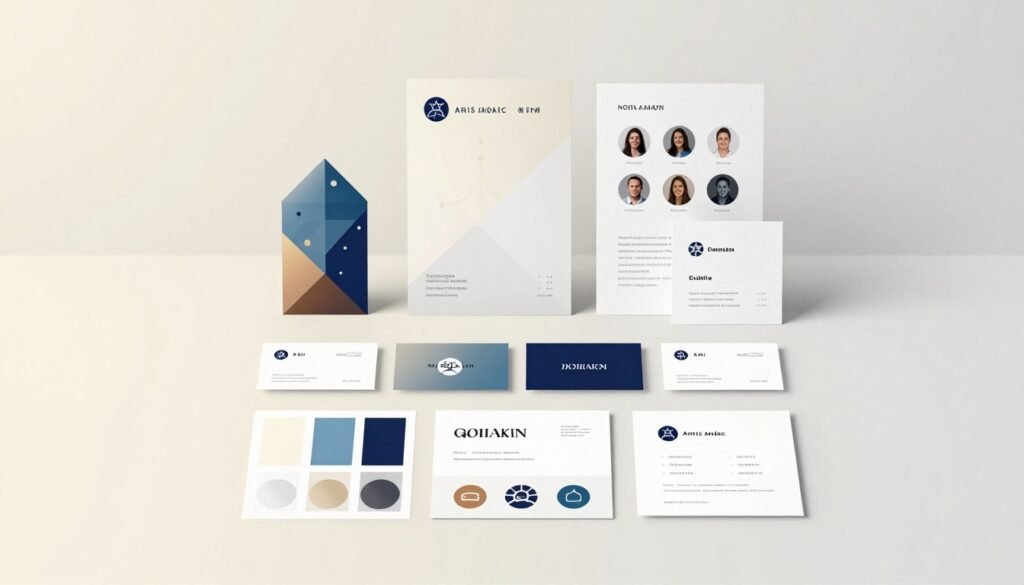
Creating brand assets is essential for a unified visual identity. This includes promotional materials, social media graphics, and business collateral. These must reflect our logos, typography, and color palettes for a consistent image.
Consistency strengthens brand recognition. It helps us communicate better with our audience. By combining all elements thoughtfully, we create a strong and impactful identity.
Defining Your Brand’s Core Values
Understanding your brand’s core values is key to creating a visual identity that connects with your audience. These values shape your mission statement, influencing how people see and experience your brand. A clear mission statement shows your brand’s purpose, linking your goals with your visual identity.
Establishing a Mission Statement
A mission statement outlines your brand’s goals and dreams. It should be simple and true to your brand’s beliefs. By carefully crafting your mission statement, you can truly reflect your brand’s values. This clarity helps build stronger connections with your customers and supporters.
How Core Values Influence Visual Identity
Your brand’s visuals, like colors and images, should match its core values. For instance, a brand focused on sustainability might use green and natural materials. This unity in design makes your brand stand out and leave a lasting impression. By linking your values with your visuals, you create a powerful brand presence that touches people’s hearts.
Visual Identity vs. Brand Identity
Understanding the difference between visual identity and brand identity is key for good branding. Visual identity includes logos, colors, and fonts that make a brand instantly recognizable. Brand identity, though, is about how people feel and think about a brand. Knowing this helps companies create a strong brand strategy that speaks to their audience.
Understanding the Differences
Visual identity is about a brand’s look. It covers colors, logos, and fonts to share a message. Brand identity, though, is the story behind these visuals. It’s about values, mission, and how customers feel.
For instance, Apple’s simple design shows innovation and style. This makes Apple appealing to those who value simplicity and function.
How They Work Together to Enhance Branding
Good branding comes from combining visual and brand identity well. When they match, they send a clear message and make sure experiences match the brand’s values. This builds loyalty, as people stick with brands that show a united image.
Brands like Coca-Cola are great examples. They use their famous logo and colors to bring back happy memories. This makes people feel closer to the brand.

Creating Consistent Brand Guidelines
Creating clear brand guidelines is key for consistent visual communications. These guidelines help everyone create brand assets that truly represent the brand. It’s important for clear communication both inside and outside the company.
Importance of Brand Guidelines
Brand guidelines shape how people see your brand everywhere. They keep the look and message the same, building trust and recognition. With these guidelines, designers and marketers know how to use brand elements right, keeping the brand strong.
Elements to Include in Your Guidelines
A good set of brand guidelines should cover a few important points:
- Logo Usage: Give clear rules on when and how to use the logo, including size and what not to change.
- Color Specifications: List the main and secondary colors with exact codes for consistent use.
- Typography Guidelines: Specify the fonts, sizes, and styles for all brand materials.
- Imagery Style Recommendations: Describe the style and mood of images, like photos and graphics, to match the brand’s personality.

Adaptive Design for Various Platforms
In today’s digital world, brands must focus on adaptive design. This is because each platform—like websites, social media, or print—has its own needs. It’s important to understand these needs to keep our branding consistent and effective everywhere.
Understanding Platform-Specific Design Needs
Every platform has its own challenges and chances. Websites need to be interactive and easy to navigate. Social media is all about quick, visual messages. Print materials focus on clear, static images. We must adjust our designs to fit each platform while keeping our brand’s core intact.
Best Practices for Scaling Visual Identity
- Consistency is key: Keep logos, colors, and fonts the same across all platforms to build recognition.
- Optimize for speed: Make sure images load fast, which is critical for mobile users.
- Create flexible templates: Design templates that adjust to different formats but keep the brand’s look.
- User testing is essential: Get feedback to see how people interact with your brand on different platforms.

By following these best practices, we improve our adaptive design. This lets us scale our visual identity and connect with people in a meaningful way. By understanding and meeting each platform’s needs, we create a unified brand experience that works across all channels.
Visual Identity and User Experience (UX)
Visual identity and user experience are closely linked. A strong visual identity helps represent a brand and shapes how users see and interact with it. When UX design and visual identity work together, they create a great user experience. This leads to happy users and loyal customers.
How Visual Identity Enhances UX
A good visual identity makes user experience better by connecting with the audience. It builds trust and makes navigation easy and fun. Colors, fonts, and images help users find their way around.
For example, when users can spot important features easily, they’re more likely to stay engaged.
Case Studies of Effective Visual Identity in UX
Looking at successful brands shows us how visual identity affects user experience. Here are some examples of how visual identity boosts UX design:
| Brand | Visual Identity Strategy | User Experience Impact |
|---|---|---|
| Airbnb | Consistent iconography and warm color palette | Increased user trust and ease of booking |
| Spotify | Bold typography and vibrant color schemes | Enhanced music discovery and retention |
| Apple | Sleek design with minimalistic visuals | Simplified navigation and increased brand loyalty |
These examples show that a strong visual identity boosts user engagement and improves the overall experience. Learning from these cases helps us design a visual identity that supports user-centered design.

Leveraging Social Media for Visual Identity
Social media is key in today’s world for showing off visual identity. We make assets that grab attention and get shared a lot. Knowing each platform well helps us make visuals that connect with our audience.
Creating Shareable Visual Assets
Creating assets that people want to share is key on social media. We design graphics and videos that fit our visual identity and each platform’s needs. Important things to remember include:
- Visual Appeal: Use bold colors, compelling designs, and clear messaging to attract viewers.
- Format Choices: Select image dimensions and video lengths that suit the platform, whether it be Instagram, Facebook, or LinkedIn.
- Brand Messaging: Ensure consistency in tone and messaging to reinforce brand values and visual identity.
Maintaining Consistency Across Social Platforms
Being consistent on social media is essential for visual identity. A unified presence boosts brand recognition and builds trust. Key strategies for keeping it consistent are:
- Defining guidelines for visuals across platforms.
- Regularly reviewing and updating branding elements as necessary.
- Engaging with audiences using a unified voice that mirrors our visual identity.
By focusing on shareable assets and consistency, we boost our visual identity on social media. This makes our brand recognizable and memorable.

The Role of Color Psychology in Visual Identity
Color psychology is key in creating your brand’s visual identity. Colors make your brand more appealing and shape how people feel about it. Picking the right colors can change how your audience sees your business and its values.
Choosing Colors That Reflect Your Brand
Choosing colors that match your brand’s personality is important. Here are some tips:
- Identify your brand personality: Figure out what makes your brand unique. Are you friendly, professional, or adventurous?
- Study the competition: Look at your competitors’ color schemes. This can help you stand out while following industry norms.
- Test color combinations: The best colors might come from trying different ones. Use surveys or A/B testing to see what works best with your audience.
Understanding Color Associations and Consumer Response
Different colors have different meanings that affect how people see your brand. Here’s a table showing common color meanings and their impact:
| Color | Emotions/Associations | Common Uses in Branding |
|---|---|---|
| Red | Excitement, energy, passion | Fast food brands, entertainment |
| Blue | Trust, calmness, professionalism | Tech companies, financial institutions |
| Green | Growth, nature, health | Organic products, financial services |
| Yellow | Optimism, happiness, warmth | Consumer goods, travel |
| Purple | Luxury, creativity, mystery | High-end products, personal care |
Using the right colors in your visual identity can greatly impact how people feel about your brand. By understanding color psychology, brands can create identities that really connect with their audience.

Typography: A Pillar of Your Visual Identity
Typography is key to any good visual identity. Choosing the right brand fonts is vital. It shows what your brand is all about and makes a strong visual statement. The right typeface can make people feel something, show your brand’s trustworthiness, and make your message stronger.
Selecting Fonts That Represent Your Brand
Think about your brand’s personality and values when picking fonts. Different fonts mean different things to people. For example, serif fonts are often seen as traditional and professional. Sans-serif fonts are more modern and simple.
- Classic Serif Fonts: Ideal for brands stressing tradition and reliability.
- Modern Sans-Serif Fonts: Perfect for a clean, contemporary look.
- Display Fonts: Best used sparingly for headlines or special promotions.
Combining Fonts for Cohesion and Impact
To create a cohesive design, mix fonts that go well together. A good mix keeps things interesting and easy to read. Try pairing a bold headline font with a simpler body font. This balances boldness with clarity.
| Font Pairing | Use Case | Visual Effect |
|---|---|---|
| Montserrat & Merriweather | For tech-oriented brands | Modern yet approachable |
| Playfair Display & Lato | Luxury brands | Elegant and sophisticated |
Creating a Logo That Stands Out
A logo is a key part of a brand’s identity. It needs careful thought to make it memorable. A good logo is simple, relevant, and versatile.
Elements of a Memorable Logo
- Simplicity: A simple design is easy to recognize.
- Relevance: It should show what the brand stands for.
- Versatility: A great logo works well everywhere, from cards to billboards.
- Uniqueness: A unique design helps a brand be noticed.
Testing Your Logo Across Different Contexts
Testing a logo is key to making sure it works everywhere. Designers check how it looks in different places. This includes online and offline uses.
Getting feedback helps make the logo even better. It shows what needs to be changed.
Gathering Feedback on Your Visual Identity
Getting feedback is key when you’re working on your visual identity. Talking to people like employees, customers, and design experts gives you great insights. Their views can make sure your brand connects well with your audience.
Getting feedback doesn’t have to be boring. It can actually make your creative process better.
Importance of Stakeholder Feedback
Feedback from stakeholders helps guide your brand’s visual identity. Each comment can show you new views and where you can get better. When you involve your stakeholders, you build a community and increase loyalty.
This approach leads to smarter design choices. Your visual identity will truly show what your brand stands for.
Gamifying Feedback Collection
Using gamification can make collecting feedback fun. Adding elements like points, rewards, and challenges can get more people involved. This makes it easier for stakeholders to share their thoughts.
Tools like surveys or interactive sites with fun designs make feedback a fun experience. Everyone can join in and share their ideas.
Using these methods for feedback ensures your visual identity is strong and adaptable. By listening to your stakeholders, you can improve your brand’s visual presence in your field.
Maintaining Visual Identity During Brand Evolutions
Businesses often need to check their visual identity as they evolve. This might mean big changes due to market shifts or changes in who they’re trying to reach. Knowing when to make these changes helps keep brands fresh and interesting to customers.
When to Revise Your Visual Identity
There are signs that show it’s time for a change in how you look. For instance:
- Changes in who you’re trying to reach
- Big changes in what’s popular in the market
- When you introduce new products or services
- When people say your branding doesn’t connect with them
Keeping an eye on these signs helps brands make changes before they lose people’s interest.
Strategies for a Smooth Transition
There are ways to make changes smoothly. Here are some tips:
- Tell everyone involved about the changes coming.
- Keep the core of your brand the same, even if you change how you look.
- Ask for feedback on the changes you’re thinking of.
- Roll out changes bit by bit to avoid sudden changes.
Companies like Airbnb and Nike have made big changes well by keeping things clear and consistent. This builds trust and strengthens their brand image.
Case Studies of Successful Visual Identity Systems
Looking at the visual identity systems of top brands offers great insights. We can see how Apple, Nike, and Coca-Cola built their unique looks. Their success comes from more than just looks. It’s about telling stories and sending messages that people love.
Analyzing Leading Brands’ Visual Identity Systems
Apple’s design is all about being simple and classy. Its logo is famous for being both new and old at the same time. Nike uses bold colors and words to push people to be their best. Coca-Cola makes us feel happy with its bright colors and fun vibe.
Lessons Learned from Industry Leaders
There are a few big takeaways from these examples:
- Consistency is key: Great brands keep their look the same everywhere.
- Feelings connect us: Stories and feelings make us remember brands.
- Be ready to change: Even though staying the same is important, brands must also keep up with new trends.
| Brand | Visual Identity Elements | Key Strategies |
|---|---|---|
| Apple | Minimalist logo, clean typography | Focus on innovation and user experience |
| Nike | Dynamic swoosh logo, bold imagery | Empowerment through motivational messaging |
| Coca-Cola | Signature red/white color scheme, vintage script | Emphasis on nostalgia and community |
Conclusion
We’ve looked into what makes a brand’s visual identity stand out. It’s about more than just looks. It’s about how it makes people feel and what they think of it. Good branding is all about having a design that works together well.
Logos, fonts, colors, and design rules are key to connecting with people. They help build trust and loyalty. A strong visual identity can make a big difference in how people see your brand.
Now, let’s think about how we can use these ideas to improve our own brands. Your brand’s look is more than just pretty pictures. It’s a way to make a lasting impression on people. By keeping your design consistent and up-to-date, you can build stronger bonds with your audience.
By focusing on visual identity, you can make your brand truly successful. Let’s work together to create a brand that not only looks good but also inspires loyalty and support.