
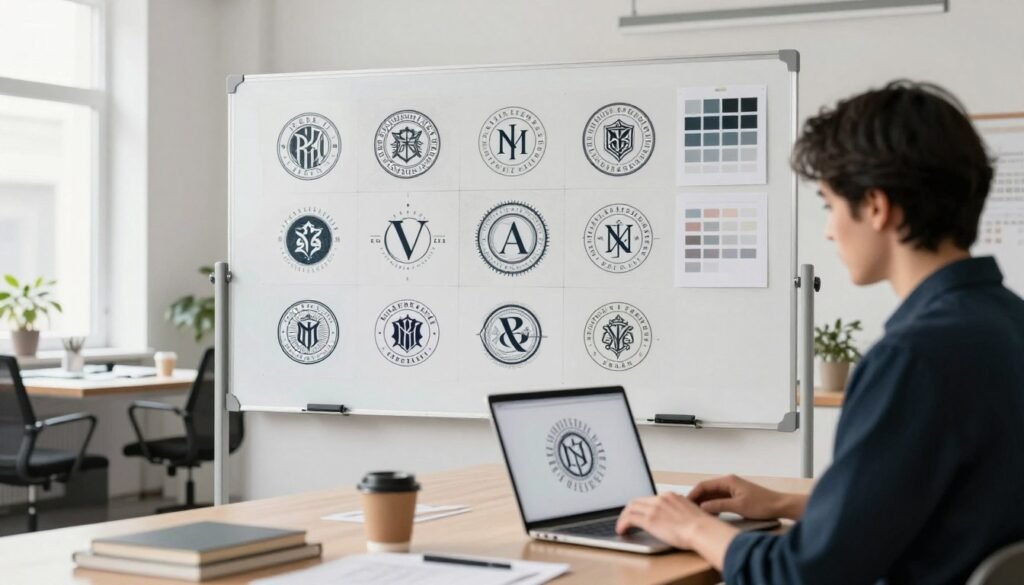
In today’s world, a good logo redesign is very important. It keeps your brand strong and fresh. Your logo is like a symbol of your brand’s mission and vision.
A smart logo strategy can make your brand look new again. It also keeps the values that make your business special.
Knowing how important a logo redesign is helps us make it better. It makes your brand more recognizable and connects with your audience. Let’s see how to redesign your logo well, keeping your brand’s special qualities.
The Importance of a Strong Logo in Branding
A strong logo is at the heart of a brand’s identity. It’s not just about looks; it’s key to making a brand known. Studies show people remember logos more than names or slogans.
This shows how logos connect people with brands right away.
Understanding Brand Recognition
Brand recognition means knowing a brand by its logo. Good logos build trust and loyalty. They are vital for any brand to succeed.
For example, Apple and Nike are well-known. Their logos make people think of new ideas and sports, respectively.
Why Your Logo Matters
A logo is more than just pretty. It shows what a brand stands for and connects with people. A good logo can make people feel confident and professional.

Signs It’s Time for a Logo Redesign
Knowing when to update your logo is key for your brand’s image. We often forget to check our logos regularly. They are the face of our brand. Some signs show it’s time for a change.
Understanding what people think and market trends is also important. It helps us know if our logo is right for now.
Identifying Issues with Your Current Logo
Logos that look old can make your brand seem out of date. Here are some signs you might need a new logo:
- The logo feels too busy or complicated.
- It doesn’t match today’s industry standards.
- The colors don’t grab attention anymore.
- The fonts are old or hard to read.
- The visuals don’t connect with today’s people.
Market Trends and Customer Perception
Brands need to change with the times. Trends are moving towards simple and real designs. What people think of your brand is shaped by these trends.
It’s vital to keep your logo looking good and fresh. Checking it often helps make sure it shows who you are. This way, you can connect well with your audience.
By watching for these signs, we can keep our brand strong and up-to-date. This is important in our changing world.
Logo Redesign Process
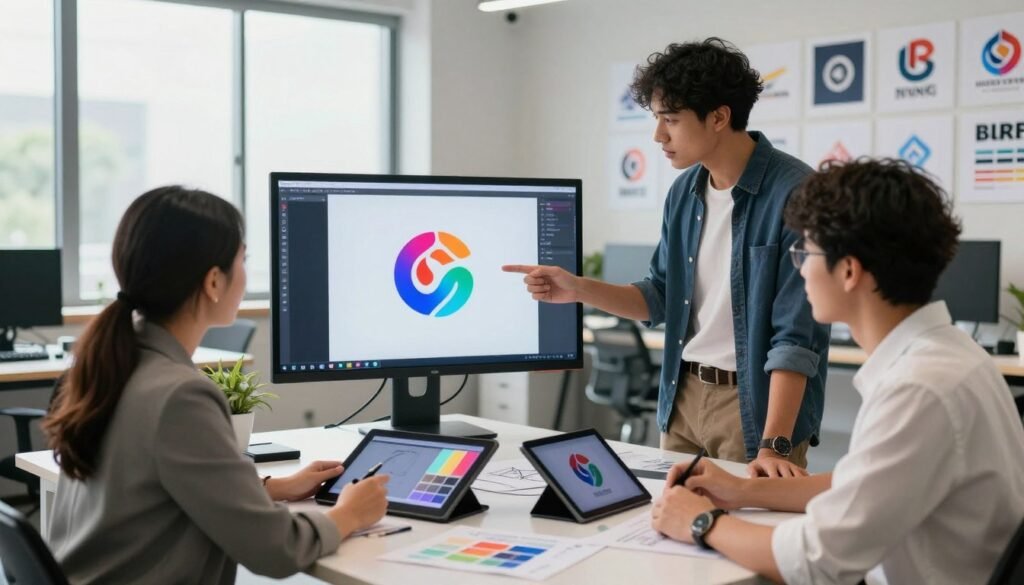
Redesigning a logo is a detailed process. It makes sure the new design shows off the brand well. It starts with brainstorming, where everyone shares ideas. This way, we get many views and keep things creative.
Stakeholders are key in guiding the design. They help shape the direction of the design strategy.
Step-by-Step Approach to Redesigning Your Logo
Here’s how to redesign your logo step by step:
- First, figure out what you want to achieve.
- Then, talk to stakeholders to know what they expect.
- Look at what others in your field are doing.
- Start sketching out ideas.
- Refine those ideas based on what stakeholders say.
- Make digital versions of the designs.
- Test how the designs look in different places.
- After getting feedback, pick the final design.
Involving Stakeholders in the Redesign Process
Getting stakeholders involved makes the design better. Their input helps make sure the design fits with the team and the audience. We have regular meetings to get everyone’s thoughts.
This way, we make a logo that shows what the brand is all about. Feedback helps us keep improving and stay on track.

Researching Your Brand Identity
Before starting any logo redesign, it’s key to do deep brand identity research. Knowing what works in your branding now is very helpful. A detailed look at your current branding shows what’s strong and weak.
Analyzing Your Current Branding Elements
To start a good redesign, we need to check your branding closely. This means:
- Reviewing logos: See if your logo fits your brand values and who you’re trying to reach.
- Collecting feedback: Get opinions from important people and customers to see how they see your brand.
- Comparing competitors: Look at what your competitors are doing to find ways to stand out and improve.
Understanding Your Target Audience
Good branding starts with knowing your audience. Doing surveys and market research helps understand who they are and what they like. We suggest looking at:
- Demographic data: Check age, gender, income, and location to make sure your branding speaks to them.
- Consumer behavior: Find out how people interact with your brand and what makes them buy from you.
- Brand perception: See how your audience sees your brand now and how you want them to see it.

Defining Your Design Goals
Setting clear design goals is key for a logo redesign to succeed. Brands need to state what they want from their new logo. This ensures it connects with both current and future customers. It’s a delicate mix of new and old, keeping the brand’s essence alive.
Setting Clear Objectives for Your Logo
Having clear logo goals is important. It guides the redesign process. Think about these main goals:
- Improving visibility in crowded markets
- Attracting a new market segment
- Revitalizing brand image while keeping core values
These objectives help make decisions and keep the design on track. They link creativity to business goals.
Balancing Modernization with Tradition
It’s tough to mix new with old in logo design. You need to blend today’s trends with the brand’s history. Here’s how:
- Find out what’s important from the original logo
- Add modern looks that appeal to younger people
- Make sure the design tells the brand’s story well
By mixing new and old, brands can update their look. They also keep their roots alive. This builds trust and recognition with many people.
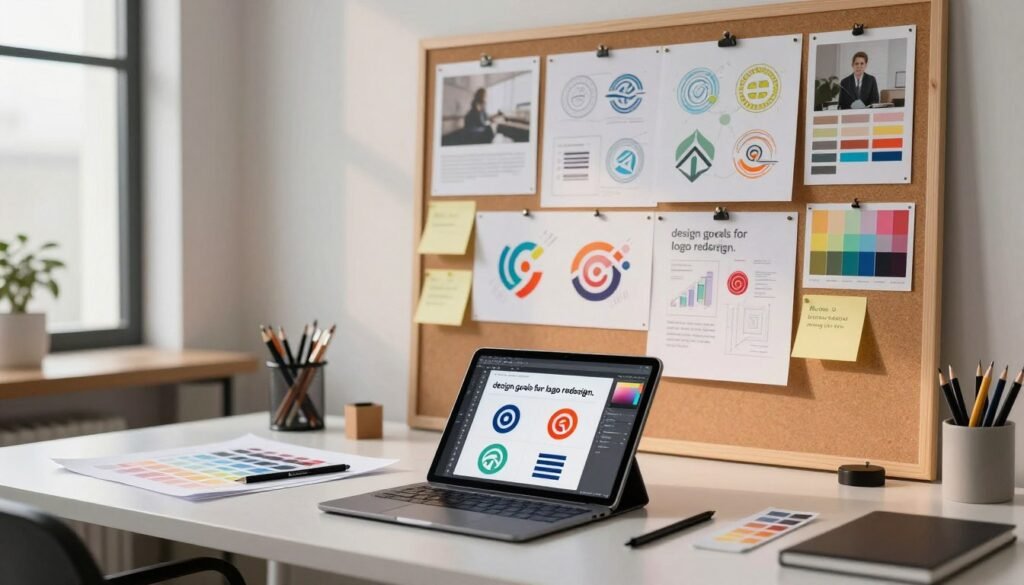
Choosing the Right Design Elements
Good logo design needs the right elements. This includes colors, fonts, and icons. Each part is key to showing what a brand is about and reaching its audience. Knowing these elements helps brands make choices that match their values and goals.
Color Psychology and Its Impact
Colors can make people feel certain ways. For example, blue is often seen as trustworthy, which is why banks use it. Red, on the other hand, can make people feel energetic and excited, which is why it’s used in food and entertainment.
By using color psychology, brands can show their true feelings through their look.
Font Selection Wisely
Picking the right font is very important. Serif fonts are often seen as traditional and reliable. Sans-serif fonts are more modern and simple.
Think about the brand’s personality when choosing a font. Using the same font everywhere helps people recognize the brand more easily.
Iconography: Make It Count
Good iconography adds a lot to a logo. It should be easy to remember and show what the brand is all about. Whether it’s a special letter or symbol, great icons make logos stand out and help people remember the brand.
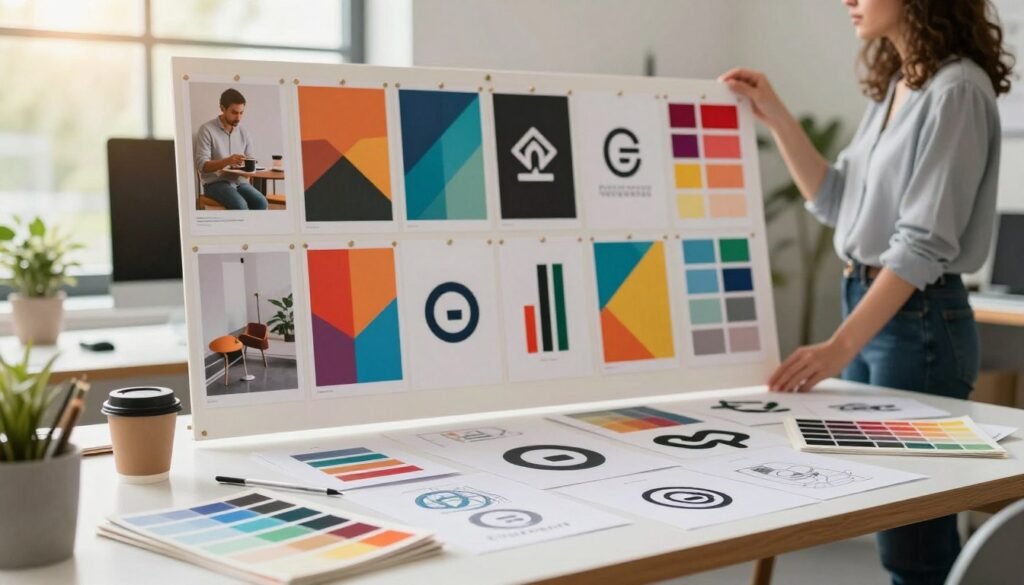
Reviewing Logo Rules for Effective Design
Making a great logo means following key rules and design tips. A good logo shows what your brand is all about. It also needs to last a long time. We’ll share important guidelines and common mistakes to avoid.
Key Guidelines for Logo Creation
- Simplicity: A simple logo is easier to remember and use in many ways. Make sure your design is not too complicated.
- Scalability: Logos should look good in all sizes. They should be clear on a card or a billboard.
- Relevance: Your logo should appeal to your audience and show what your brand is about.
- Timelessness: Try to make a design that won’t go out of style. This helps your brand stay recognized over time.
- Versatility: Create a logo that works in different situations. It should look good in color and black and white.
Avoiding Common Pitfalls
- Overcomplication: It’s easy to add too much to a design. Too many things can make it hard to recognize your brand.
- Poor Font Selection: Using hard-to-read fonts can push people away. Choose fonts that are easy to read.
- Ignoring Color Psychology: Colors can make people feel certain ways. Pick colors that match your brand’s message.
- Neglecting Feedback: Not listening to feedback can mean missing important ideas to make your logo better.

Gathering Feedback on Your Designs
Getting feedback is key in the logo redesign process. It shows us how our designs connect with the audience. Focus groups give us deep insights, helping us see how people react to our designs.
Creating a Focus Group for Testing
We suggest making a focus group that includes many different people. This way, we get a wide range of opinions. Think about who your audience is, like their age and what they like.
A good focus group leads to deep talks about what people like in designs. It helps us understand what they think about your brand.
Using Customer Opinions to Refine Designs
After hearing from focus groups, we can make our designs better. Surveys and questionnaires add more details to what we learn. This way, we make sure our designs meet what people want.
By listening to what customers say, we create something that everyone will love. This makes our audience excited and confident about our work.
Finalizing Your New Logo Design
As we near the end of our logo redesign, it’s key to make final tweaks. These changes come from feedback we’ve gathered. They help make sure everything looks good together and strengthens our brand.
Making the Final Adjustments
Before we launch the logo, we need to check every detail. We might need to:
- Refine color contrast for better visibility
- Adjust typography for easy reading on different sizes
- Ensure scalability for use on everything from cards to billboards
These small changes are big for looking professional. Each tweak should show what our brand is all about. This way, the new logo will connect with our audience.
Preparing for Launch
Now that our design is ready, it’s time to plan the launch. A good plan is key for a great first impression. This might include:
- Choosing the best launch date to match company events or sales
- Creating promotional plans for social media and more
- Telling everyone about the change to our team and customers
With a solid plan, our logo launch will be a hit. It will show off our new look and our dedication to being innovative and quality.
| Launch Strategy | Description |
|---|---|
| Timing | Pick a date that fits with other marketing efforts for more eyes. |
| Promotional Channels | Use social media, email, and press releases to reach lots of people. |
| Stakeholder Communication | Tell our team and partners about the logo change to get their support. |
Implementing the New Logo Across All Channels
Getting a new logo right means having a plan for every part of your brand. The logo should look great on social media, websites, and emails. It should also look good on business cards and product packaging. Each place should show off the new design, making your brand clear to customers.
Updating Digital and Print Media
Changing digital and print media is key to how people see your brand. Here’s what to do:
- Update social media profiles to reflect the new logo.
- Revise website graphics and branding elements.
- Order new business cards and stationery.
- Ensure that marketing materials, such as brochures and flyers, incorporate the updated logo.
Every little thing counts. A full media update builds trust and makes your brand more recognizable.
Internal Communications About the Change
Telling your team about the logo change is important. They need to get why it’s new. Here’s how to make sure they’re all on the same page:
- Organize an internal launch event to unveil the new logo.
- Share the story of the redesign, explaining why changes were made.
- Provide resources and guidelines for employees on using the new logo correctly.
- Encourage employee feedback and suggestions to foster a sense of inclusion.
Keeping the lines of communication open helps your team feel part of the change. It makes the transition smoother and more exciting for everyone.
Celebrating Your New Logo
After redesigning, how we share the news is key to keeping our fans loyal. A good logo announcement helps us connect with our audience. It shows why the change matters. We can use email, social media, and live events to share our joy.
Getting our community involved is important. It makes them feel part of the journey.
How to Announce the Redesign to Your Audience
Using many ways to share the news is important. A good story about the redesign grabs attention. Videos or animations of the new logo can make the announcement exciting.
Sharing what went into the design makes it personal. It shows the hard work that went into it.
Engaging Your Community Post-Launch
After launching, keeping in touch with our community is vital. We can ask for feedback on the new logo. This lets our audience share their thoughts.
Hosting online events or Q&A sessions can help us connect more. It encourages people to talk about the redesign. This builds excitement and makes our fans feel like they belong.
Measuring the Impact of Your Redesign
Knowing if a logo redesign works is key for any brand. We need to measure its impact well. By looking at different metrics, we learn how it changes brand recognition. This change affects customer loyalty and how engaged they are.
Analyzing Brand Recognition Pre and Post-Redesign
To really understand brand recognition, compare what customers think before and after the redesign. We might use surveys and focus groups for this. These tools give us feedback that’s very helpful.
Metrics like brand recall and recognition percentage are important. They show how customer feelings change. Focusing on what people say helps us see how the redesign connects with them.
Utilizing Analytics to Track Success
Using analytics tools helps us track how well the redesign is doing. We watch website traffic, social media engagement, and market share closely. This shows us important trends.
Google Analytics helps us see how the new logo changes online behavior. Social media metrics tell us about engagement. Putting all this data together gives us a clear picture of the redesign’s success in boosting brand presence.
Maintaining Consistency Over Time
In today’s fast world, keeping your brand consistent is key. It helps people recognize and trust your brand. When we plan for the future, we make sure all branding matches our new logo.
We use a careful visual review to keep our brand strong everywhere.
Ensuring Brand Cohesion in Future Designs
Setting clear rules for future designs keeps your brand looking the same. We make a style guide for colors, fonts, and logo use. This makes your brand feel familiar and trustworthy.
It’s important to stick to these rules for new projects.
Regularly Reviewing Brand Visuals
Checking your brand’s look regularly keeps you in touch with trends. We look at your branding, listen to feedback, and make changes if needed. This way, you can change with the times while staying true to yourself.
Conclusion
In this logo redesign summary, we talked about making a brand look modern yet true to itself. We looked at why it’s key to check current branding, know market trends, and set clear design goals. Each step is vital to make sure the new logo shows what the brand stands for.
We also talked about the importance of getting feedback and involving important people in the design. This makes the design more inclusive and connects well with everyone. Using what we learn from testing helps make sure the logo gets the brand’s message across and builds a strong bond with customers.
As we wrap up, we urge brands to think deeply about their logos and how they can change for the better. A great logo is more than looks; it’s a symbol of what your brand aims to do. Let’s seize the chance to grow and be innovative in our branding journey.