
In today’s Visual Effects (VFX), making things look real is a big deal. It’s not just about art; it’s science. Physics simulation is key to making animations look alive. It uses real physics to make things move and act like they do in the real world.
This makes the visuals feel real and pulls viewers into the story. Thanks to new tech, like better physics engines, we can make things look even more real. This lets us create amazing experiences that push the limits of what we can imagine.
Key Takeaways
- Understanding the fundamentals of physics simulation enhances VFX quality.
- Hyper-realistic movements improve audience immersion in visual narratives.
- Physics engines provide a robust framework for lifelike dynamics.
- Creating realistic interactions requires a blend of art and technology.
- Advancements in simulation techniques drive innovation in VFX.
The Importance of Hyper Realistic Movements in VFX
Hyper-realistic movements in visual effects make the audience’s experience better. They show the small details of real life, like a character’s hair moving or liquid splashing. This makes viewers feel more connected to the story.
These movements help people feel real emotions. When they see things that look real, they connect more. This turns watching into an experience where they care about the characters.
Hyper-realistic movements are key in telling stories with pictures. They help tell the story better, making characters and plots more interesting. Every small action tells us something, without needing words. This makes the story more engaging and personal for the viewer.

Understanding Physics Simulation
Physics simulation is a powerful tool for making visual effects better. It lets creators show real-world things in digital spaces. This tech makes objects act like they do in real life, using the rules of motion and interaction.
By understanding this, we can make experiences that are both fun and beautiful.
What is Physics Simulation?
Physics simulation is about making digital models of real systems. It uses things like gravity and friction to make objects act naturally. This makes characters and places feel real and alive.
Key Concepts in Physics Simulation
Knowing the basics of physics simulation helps us use it better. Here are some key ideas that are important for good simulations:
| Concept | Description |
|---|---|
| Gravity | The force that pulls objects toward each other, impacting their movement and collision. |
| Friction | The resistance between surfaces that affects motion, essential for realistic sliding and rolling. |
| Inertia | The tendency of objects to maintain their state of motion unless acted upon by an external force. |
| Collision Detection | The process of identifying when two or more objects interact, vital for creating believable interactions. |
| Soft Body Dynamics | Simulating the behavior of deformable objects, providing insights into realistic movements. |
Knowing these basics lets us use physics simulation to make amazing visual experiences. It makes stories come alive in a way that feels real.
Physics Engines: The Backbone of Realism
Physics engines are key to making visual effects (VFX) look real. They help artists and developers create animations that feel natural. Unity and Unreal Engine are top choices because they’re easy to use and powerful.
Overview of Popular Physics Engines
Unity and Unreal Engine are leaders in physics engines. Unity is great for indie developers and small studios because it’s easy to use. Unreal Engine is for big projects because it has advanced features and stunning graphics.
Both engines have lots of tools for different effects. You can find everything from simple movements to complex water simulations.
How Physics Engines Work in VFX
Physics engines use algorithms to make objects move and collide realistically. They figure out how objects move and react to each other. This makes VFX more real and engaging.
As we learn more about these engines, we can make even more realistic simulations. This will help us tell stories in a more lifelike way.

Cloth Simulation Techniques in Visual Effects
In visual effects, cloth simulation is key. It makes clothes look real when characters move. Many algorithms help make fabric act like it should. This makes scenes look better and tells the story better.
Common Algorithms for Cloth Simulation
Many algorithms help with cloth simulation. They make fabric act like it does in real life. Here are some main ones:
- Mass-Spring Models: These models treat fabric like a network of springs and masses. They show how fabric stretches and folds.
- Finite Element Methods: This method breaks fabric into small parts. Each part follows physical rules, making fabric act real.
- Particle Systems: This uses particles to show fabric points. It makes fabric move and fold in a way that looks real.
Real-World Applications of Cloth Simulation
Cloth simulation does more than just look good. It brings characters and stories to life. Here are some ways it’s used:
- Film and Animation: It makes clothes move like they do in real life. This makes characters seem more real.
- Video Games: It makes games more fun by letting players see clothes move and change.
- Fashion Design: Designers use it to see how clothes will look before they make them. It saves time and effort.
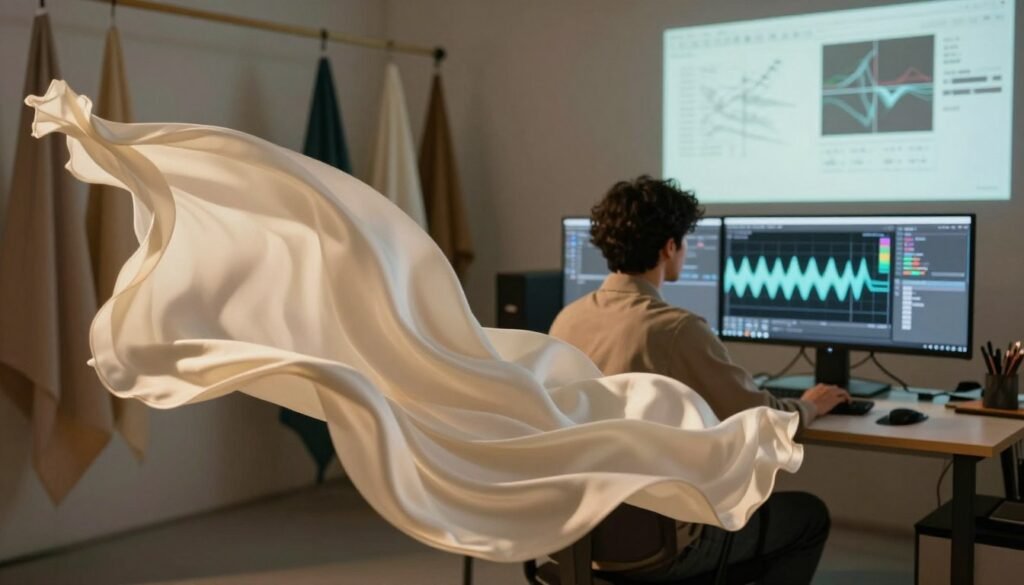
Using these techniques in visual effects makes things look more real. It also makes stories more interesting. As we keep improving, we can do even more creative things in VFX.
Rigid Body Dynamics and Their Role in VFX
Understanding rigid body dynamics is key for great VFX animations. It’s about solid objects that keep their shape, no matter what. In animations, it shows how things move and react, like when they bump into each other.
Artists use this knowledge to make animations look real and natural.
Understanding Rigid Body Physics
Rigid body physics is about how solid objects move and react. It helps us see how they act in different situations. This includes figuring out forces, speeds, and how they turn.
This accuracy is important for making VFX animations that feel real and engaging.
Challenges in Rigid Body Animation
Animating solid objects has its own set of challenges. One big problem is making it look real. If an object acts too strangely, it can pull you out of the animation.
Also, dealing with many objects moving together can be hard. It needs smart tricks to keep the animation smooth and looking good.
Use Cases of Rigid Body in Film and Games
Rigid body dynamics are used a lot in movies and games. In movies, it makes action scenes more exciting. Objects can break and move in cool ways.
In games, it makes playing more fun. It lets players feel like they’re really in the game. Games use it for things like how guns work and how cars drive.
Liquid Sims: Bringing Fluid Movement to Life
Liquid simulations are key in VFX, making liquids look real. They use fluid dynamics to get it right. Knowing about these simulations can make stories more real.
Types of Liquid Simulations
There are two main types used in the industry:
- Particle-based simulations: These treat liquids as particles. They’re great for splashes and explosions, perfect for action scenes.
- Grid-based simulations: This method uses a grid to show liquid volume. It’s good for calm water or flowing streams, showing fluid dynamics well.
Key Considerations for Liquid Simulation
When doing liquid simulations, keep these things in mind:
- Resolution: Higher resolution means more detail, but it uses more computer power.
- Interaction with the environment: How liquids act with surfaces and objects adds to the scene. This can include splashes, drips, or pooling.
- Performance optimization: It’s important to find a balance between quality and speed. This ensures the simulation runs smoothly in VFX.

Integrating Physics Simulation into Your VFX Workflow
Adding physics simulation to our VFX workflow makes scenes look real. It grabs the audience’s attention and makes stories better. To do this well, we need to follow best practices. This makes the process smoother and more efficient.
We should plan carefully and execute with purpose. This way, we match the project’s artistic vision.
Best Practices for Implementation
Starting physics simulations early is key. Here are some important steps to follow:
- Start simulations early to avoid delays.
- Make sure assets are ready for simulation to speed up the process.
- Keep testing and improving animations for better flow and realism.
Tools and Software for Physics Simulation
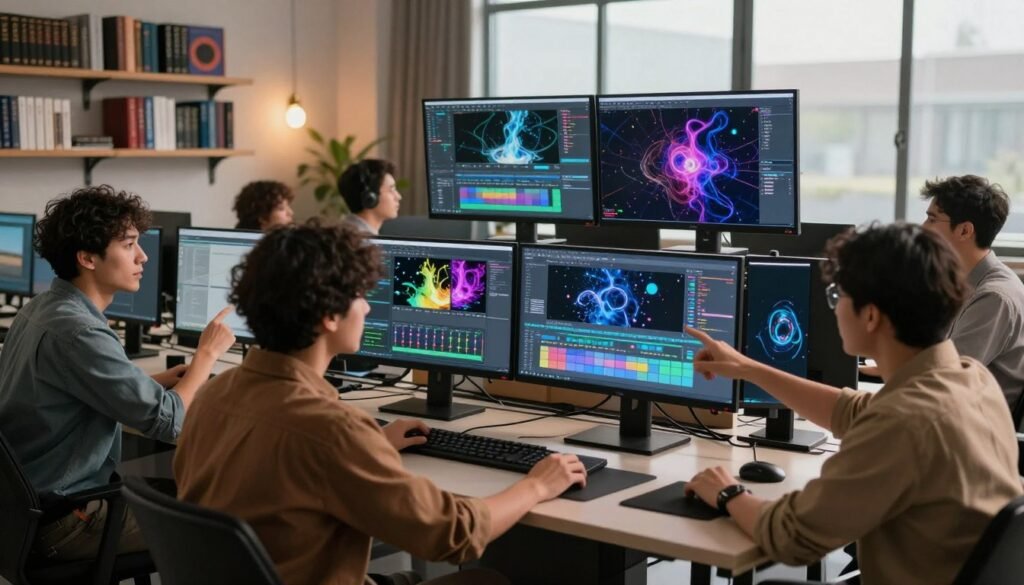
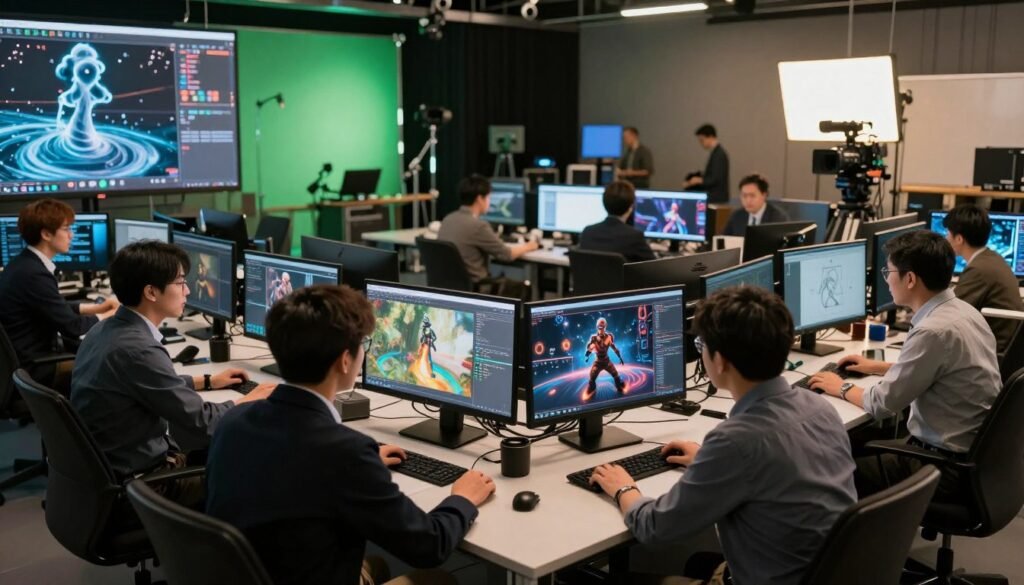
Many tools help us add physics simulation to visual effects. Autodesk Maya and Blender are great for simulating real movements. Unity and Unreal Engine are perfect for real-time simulations in games and interactive media.
Using these tools well lets us create amazing visual effects. It helps us explore new creative ideas.
The Impact of Realism on Audience Engagement
In the world of visual effects, realism is key to keeping audiences hooked. People love experiences that feel real. When visual effects are super realistic, they pull viewers into a world that grabs their attention and feelings.
The effect of realism on our minds is huge. When things look and act like real life, we feel real emotions. This makes us care more about the story and its characters. We remember our experience more because it feels real.
To make a stunning visual world, every detail matters. Things like smooth motion and light and shadow are important. They make the experience feel real and keep us engaged. By focusing on realism, VFX artists make us part of the story, not just watching it.
| Aspect | Description | Impact on Audience |
|---|---|---|
| Realism | Authentic depiction of physical laws and life-like textures | Enhances emotional connection with the story |
| Immersion | Creation of a believable world that transports viewers | Increases viewer investment in the narrative |
| Emotional Response | Audience reactions shaped by realistic portrayals | Fosters deeper enjoyment and lasting memories |
Challenges of Achieving Hyper Realism in VFX
In the world of visual effects, aiming for hyper realism is tough. Artists and engineers face many hurdles. They try to make visuals look real but often hit roadblocks.
Common Pitfalls and How to Avoid Them
One big problem is when visuals take over the story. This can make the tale hard to follow. To fix this, we need to blend stunning visuals with a strong story.
Our animations should help tell the story, not get in the way. This way, the visuals and story work together perfectly.
Technological Limitations and Solutions
Technology can also hold us back in achieving hyper realism. Issues like slow processing and limited simulation power are common. To overcome these, we use new tech and smart workflows.
For example, using GPUs can make complex scenes look real fast. This helps us create amazing visuals without waiting too long.
The Future of Physics Simulation in the VFX Industry
The world of physics simulation in VFX is changing fast. New tech means we can expect even better simulations soon. Real-time simulations are getting closer thanks to faster computers. This will let creators make animations and effects that look very real.
Emerging Trends in Physics Simulation
New trends are changing physics simulations in VFX. Here are some big ones to watch:
- More use of real-time rendering.
- Tools that make VFX work easier.
- Cloud computing for more power.
- More realistic fire and water effects.
The Role of AI in Enhancing Physics Simulations
Artificial Intelligence (AI) is key to the future of physics simulations. AI helps make simulations more real by understanding complex interactions. As AI gets better, it will change how we do physics simulations in VFX:
| AI Contribution | Description |
|---|---|
| Automated Simulation Process | AI makes tasks easier for artists, letting them be more creative. |
| Predictive Modeling | AI helps make simulations more accurate and realistic. |
| Enhanced Learning | AI learns from past simulations, making it better over time. |
In short, the future of physics simulation in VFX looks bright. New trends and AI will keep pushing the limits of what’s possible. We’ll see even more realistic movements, amazing audiences like never before.
Case Studies of Successful VFX Projects Using Physics Simulation
Many famous projects show how physics simulation makes visuals pop. In “Gravity,” the movie’s space scenes felt real thanks to physics simulation. It made the zero-gravity parts look amazing.
The team used special techniques to make characters and objects move smoothly. This made the movie’s visuals stunning.
Disney’s “Frozen” is another great example. Physics simulation helped bring snow and ice to life. It made the characters’ interactions with their world look real and beautiful.
These examples show physics simulation’s power. It makes movies look better and tells stories in new ways. It shows how tech and creativity can work together.
Conclusion
Physics simulation is changing VFX in big ways. It lets us make movements look super real. This makes our stories more engaging and shows we understand the world better.
It also makes scenes feel real and immersive. This is thanks to advanced physics techniques.
Even though we face challenges, the future of physics in VFX is bright. We can keep improving and setting new standards. Working together and being creative will help us overcome hurdles.
Physics simulation will become even more important in VFX. We can keep learning and making experiences that amaze and inspire people. Together, we can achieve great things.