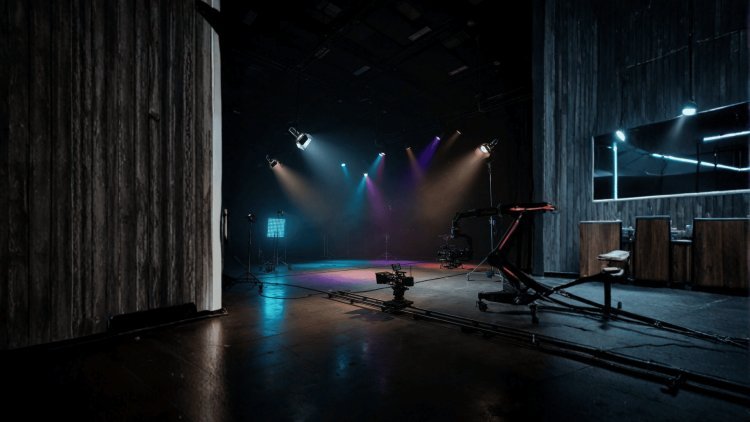
Legacy Production Model
The "Old Guard" Production Challenge
For decades, professional video production was constrained by three immovable realities: high costs, long timelines, and large crew requirements. Producing premium content demanded significant financial investment, weeks of coordination, and extensive human resources. While this model delivered quality, it simply could not keep pace with the speed and scale demanded by modern digital audiences.
Core Bottleneck
Scaling Was Structurally Impossible
Traditional production workflows were not designed for rapid iteration. Every new audience segment, language variation, geographic market, or campaign concept required additional filming, editing, approvals, and budget allocation. Brands operating in fast-moving digital environments often found themselves producing content at quarterly-campaign speed while consumers expected fresh content daily.
The Cascading Consequences
01. High production costs prevented many small and mid-sized brands from creating premium video content consistently.
02. Long production timelines made it difficult to react to trends, breaking news, and cultural moments in real time.
03. Creative teams frequently reused proven formats to control costs, reducing originality and experimentation.
04. Geographic production limitations restricted the ability to localize content efficiently across multiple markets.
05. Multi-layer approval processes introduced delays that often reduced campaign relevance by launch day.
Industry Reality
The traditional production model created a system where only the largest brands could consistently afford premium video content. Even then, production cycles were too slow for a digital-first world. As audience expectations accelerated, the gap between content demand and production capability became impossible to ignore, setting the stage for the AI-powered transformation of video creation.
The Power of the AI-First Workflow
The emergence of AI-driven production tools has not merely optimised the old process — it has fundamentally restructured what is possible. Brands that have made the shift to AI-first workflows are reporting outcomes that would have seemed implausible just three years ago. The numbers tell a compelling story of transformation at scale.
50%
Faster Production
AI-assisted workflows compress multi-week production timelines into days, enabling brands to respond to market opportunities in near real-time without sacrificing creative quality.
60%
Lower Costs
By eliminating or dramatically reducing crew costs, location fees, equipment hire, and manual post-production labour, brands are reinvesting savings directly into strategic creative output.
10x
More Creative Variants
Rapid AI iteration allows creative teams to generate, test, and refine ten times more variants than was previously feasible — unlocking data-backed insights that sharpen campaign performance.
The Strategic Shift
The machine handles execution.
The human handles meaning.
The transition from manual labour to AI-augmented production is not merely a technical upgrade — it is a philosophical reorientation. Creative directors are no longer spending their bandwidth managing logistics, coordinating shoots, and wrangling post-production queues. Instead, they are focusing on what they do best: strategic vision, emotional storytelling, and brand judgment. This division of labour is producing both better creative output and significantly healthier margins.
AI
Who Is Winning Right Now
Velocity, volume, and quality are no longer competing priorities.
Early adopters of AI-first production pipelines — spanning direct-to-consumer brands, performance marketing agencies, and global media houses — are compounding their advantages rapidly. They are producing more content, testing it faster, learning from audience data more efficiently, and iterating at a velocity that traditional competitors simply cannot match. In the attention economy, speed and creative volume are as important as quality — and AI delivers all three simultaneously.
Brief to Broadcast
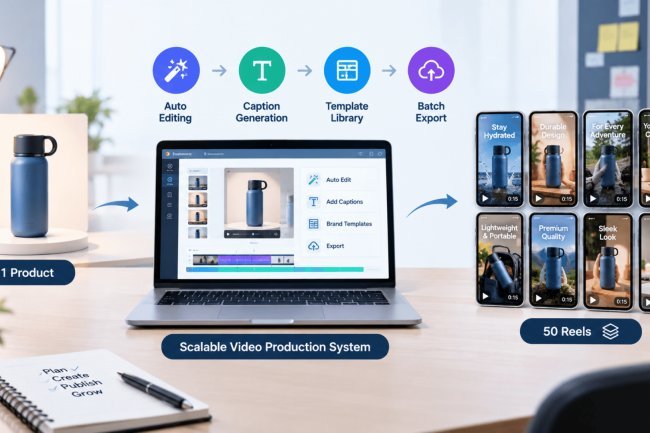
The modern AI video production stack has matured into a remarkably cohesive end-to-end pipeline. What once required dozens of specialists across months can now be orchestrated by a lean creative team working across three tightly integrated phases.
Phase 1 — Scripting
ChatGPT & Claude generate scripts, angles, and shot lists. Midjourney builds photorealistic storyboards — eliminating weeks of back-and-forth.
Phase 2 — Generation
Runway Gen-4, Sora, and Kling AI produce cinema-quality footage — landscapes, product shots, and performances without cameras or crews.
Phase 3 — Post-Production
DaVinci Resolve & Topaz AI automate grading, audio cleanup, and 4K/8K upscaling — delivering broadcast-ready assets at unprecedented speed.
Future of AI Video
The New Frontier: Hyper-Personalisation
If lower production costs and faster timelines represent the efficiency benefits of AI-powered video creation, hyper-personalisation represents its most transformative creative opportunity. The era of producing a single commercial for a mass audience is giving way to a model where content dynamically adapts to each viewer, creating more relevant, engaging, and effective brand experiences.
Personalised TVCs at Scale
AI production systems can generate thousands of variations of a single commercial from one master creative template. Messaging, product visuals, demographics, languages, locations, and even emotional tone can be tailored to specific audience segments. Every viewer receives a version that feels more relevant to their context, transforming advertising from broad broadcasting into personalised communication.
The Human-AI Symbiosis
The most important insight to emerge from the AI video production revolution is this: the technology does not replace human creativity — it liberates it. The brands and agencies that are thriving are not those that have automated themselves out of creative involvement. They are those that have made a deliberate and strategic decision about where human talent is most irreplaceable, and where AI can carry the load.
What AI Does Best
Scale Without Fatigue
•
Executing at scale without fatigue or inconsistency
•
Generating and testing creative variants at machine speed
•
Performing technically complex post-production tasks algorithmically
•
Adapting content across languages, formats, and audience segments simultaneously
•
Processing performance data and feeding insights back into the creative cycle in real-time
H
What Humans Do Best
Create Meaning
•
Articulating the emotional truth and brand soul behind a campaign
•
Making nuanced judgment calls about cultural sensitivity and brand appropriateness
•
Crafting the strategic narrative that connects a product to a human need
•
Building genuine relationships with talent, clients, and creative collaborators
•
Providing the moral and aesthetic compass that guides AI output toward meaning
The Integrated Future
The machine handles execution. The human directs meaning.
The trajectory is clear: fully integrated AI pipelines where creativity is no longer constrained by budget, location, crew availability, or production timelines are not a distant aspiration — they are the present competitive reality for leading brands. The question is no longer whether AI will transform your video production capability. It already has. The question is whether your brand will be leading that transformation or reacting to it.
Start Today
Audit Your Workflow
Identify the three most time-consuming and cost-intensive stages and research the AI tools already solving for each one. Begin with a single pilot project.
Scale Intelligently
Train the Creative Team
Build your AI production stack incrementally. Train your creative team to direct AI tools with the same rigour and intention they would bring to directing a human crew on set.
Build the Engine
Architect Scalable Storytelling
Stop just producing individual videos. Start architecting a scalable, AI-powered storytelling engine that compounds learning, accelerates output, and amplifies your brand's voice across every channel, market, and moment.