Creator Briefs That Convert: A Framework for Better UGC Ads
Most brands obsess over ad spend, targeting parameters, and platform algorithms — yet the single most overlooked lever in performance marketing is the document that sets everything in motion: the creator brief. A poorly written brief produces inconsistent creative, wasted budget, and missed opportunities. A well-engineered brief, by contrast, transforms a diverse pool of creators into a precision-guided creative system. This presentation breaks down the exact framework behind briefs that consistently generate high-converting UGC ads — from defining your audience truth to building scalable visual hook systems.
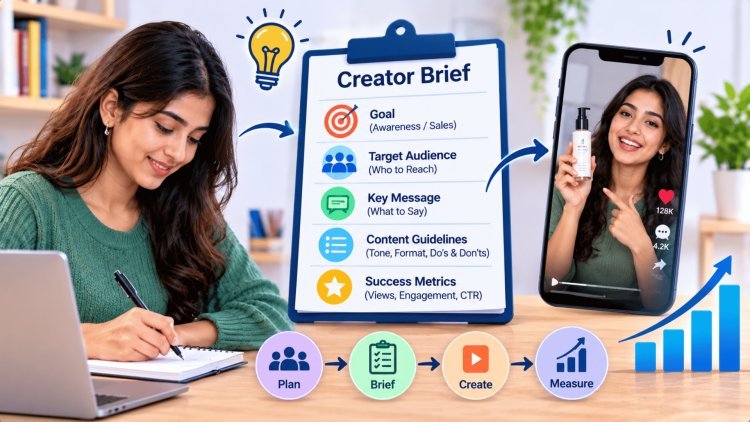
The Anatomy of a Winning Brief
The best-performing UGC campaigns don't happen by accident — they're engineered from the top down, starting with a brief that acts as a creative blueprint rather than a vague wishlist. The shift from scripted perfection to structured creative systems is the fundamental mindset change every performance marketer needs to make.
When you over-script a creator, you strip away the authenticity that makes UGC work in the first place. When you under-brief them, you get random output with no strategic direction. The winning zone lives in between: a brief that provides clear structure without crushing creative voice.
It's tempting to attribute campaign results entirely to budget allocation or audience targeting — but those are downstream variables. The brief determines what creative actually enters the system.
A weak brief guarantees weak creative, regardless of how efficiently it gets distributed. Before increasing ad spend, audit the quality of your briefs. The leverage is there, and it costs nothing to fix.
Target Audience
Not just demographics — psychographics, pain points, and the specific emotional state your ad needs to meet them in. Explore Digiverse's expertise areas to understand how audience mapping feeds creative direction.
Product Truth
The single most honest, compelling thing you can say about your product. Not a tagline — a truth that a real person would say to a friend.
Hook Territories
Pre-defined thematic zones for the opening 3–5 seconds. Each territory represents a different emotional entry point — curiosity, relatability, controversy, transformation.
Beyond Audio: The Visual Hook Revolution
For years, UGC testing focused almost exclusively on varying voiceovers, captions, and spoken hooks — the assumption being that what people hear in the first few seconds is what drives scroll-stopping performance. That assumption is increasingly outdated. As social feeds become more saturated and viewers become more sophisticated, the visual environment of the first frame has emerged as the dominant hook mechanism. The question is no longer just "what does the creator say?" — it's "what does the viewer see before a single word is spoken?"
Briefing Three Distinct Visual Worlds
Rather than asking multiple creators to deliver the same script in different voices, structure your brief around three visually distinct scenarios — what we call "visual worlds." Each world establishes a unique environmental context, lighting mood, setting, and physical presentation that signals a different emotional tone before any audio plays. This approach is central to the Andromeda creative testing system, which treats visual variation as a firstclass performance variable. For example:
Each of these worlds can carry the same verbal hook, but the visual context changes what the audience feels before they consciously process the words.
Escaping the Polish Trap
High-production studio ads look expensive because they are. But in the UGC ecosystem, polish is often a liability, not an asset. When a viewer subconsciously recognizes that a video was produced by a brand, the trust signal collapses. Authentic, slightly imperfect, unscripted-feeling content consistently outperforms its polished counterparts — not because audiences don't appreciate quality, but because they've been conditioned to distrust it in a social feed context.
Your brief should explicitly give creators permission to be imperfect. Encourage natural pauses, genuine reactions, and unpolished backgrounds. The brief's job is to point the camera in the right direction — not to control every pixel of what it captures.
Three Principles for Visual Hook Testing
First-Frame Priority
Design the visual hook before writing a single word of script. The first frame must earn the next two seconds entirely on visual merit.
Three-World Testing
Brief three visually distinct environments per campaign. Test them simultaneously to identify which visual context resonates most with your audience segment.
Authenticity Over Production
Actively resist the urge to over-direct. The messiness of real life is what makes UGC convert. Brief for genuine, not glamorous.
Drive Growth Through Content Systems
The most sophisticated UGC programs don't treat each creator brief as a one-off exercise — they treat it as an input into a continuously improving performance engine. The goal is to move from reactive creative production (briefing creators when you need new ads) to a proactive, test-informed content system that generates compounding returns on creative intelligence over time.
From Individual Briefs to a Performance Engine
Every brief you write, every piece of creative you produce, and every ad you test generates data. The question is whether that data feeds back into your next brief — or disappears into a spreadsheet no one reads.
A true performance engine systematizes this feedback loop: winning hook territories inform the next round of brief templates, visual worlds that over-index on watch time get expanded, and failing creative angles get retired quickly rather than recycled. This is how brands stop guessing and start building compounding creative advantage.
Stop Guessing — Start Testing Intentionally
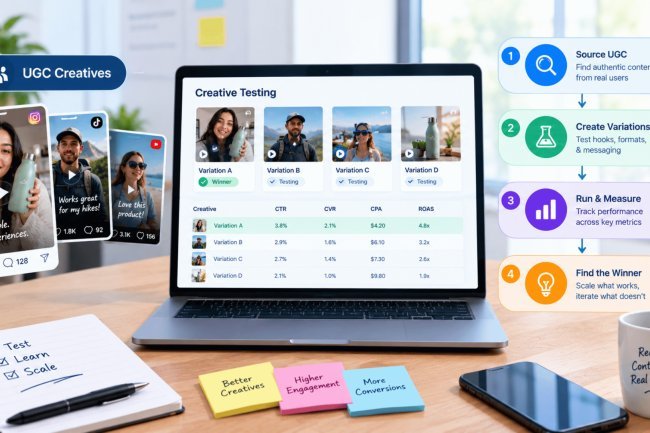
The difference between brands that scale UGC successfully and those that don't often comes down to test design. Random creative variation produces random data. Structured variation — three distinct visual hooks, two distinct hook territories, one consistent CTA — produces actionable signals.
Each test should be designed with a specific hypothesis: "We believe Visual World B will outperform A for cold audiences because the outdoor setting mirrors our target customer's aspirational identity." That specificity transforms a creative test into a learning asset.
Audit Your Current Creative Pipeline
Review the last 10 briefs you sent to creators. How many defined a specific hook territory? How many specified visual worlds? How many gave explicit guardrails without over-scripting? Score your current brief quality honestly — most brands discover that their briefs are either too vague or too prescriptive, leaving enormous creative leverage on the table.
Commit to Three Visual Hooks Per Campaign
Starting with your next campaign, mandate a minimum of three visually distinct hook scenarios. Brief each one separately, with its own visual world description and emotional tone anchor. Run them simultaneously against the same audience and let performance data — not internal opinion — determine which direction to scale. This single discipline shift can transform your creative learning velocity.
Build a Living Brief Template Library
As winning brief patterns emerge, codify them into reusable templates. A brief template library becomes one of your brand's most valuable creative assets — a document of tested, proven creative directions that new campaigns can build from rather than starting from scratch.
Connect this library to your hybrid AI analysis workflow so it updates automatically as new performance data comes in. Explore how structured UGC systems can power your content strategy at scale.
Unstructured Testing
Opinion-Led Decisions
Repeated Mistakes
Slow Learning
Structured Experiments
Data-Led Decisions
Reusable Learnings
Compounding Performance
What's Your Reaction?