The Digital Atelier: How Luxury Brands Master CGI
From hand-stitched couture to pixel-perfect virtual worlds, the most prestigious names in fashion have quietly revolutionized how they communicate desire. This is the story of how CGI — and now AI — became the invisible artisans behind luxury's most seductive imagery.
The Foundation: Communicating the Dream
Before a single pixel was rendered, luxury brands understood one fundamental truth: their product was never merely the object itself — it was the mythology surrounding it. The digital age did not invent this principle; it simply gave it a new canvas.
Foundation 01
The Original Mission
Luxury digital strategy emerged as a deliberate extension of brand mythology beyond the physical store. Long before e-commerce was viable for high-end goods, maisons like Louis Vuitton and Chanel invested heavily in digital experiences designed not to sell, but to seduce — to make the viewer feel the weight of heritage, the whisper of exclusivity, the allure of aspiration.
Early digital efforts were painstakingly crafted to replicate the sensation of stepping into a flagship on the Rue du Faubourg Saint-Honoré. Web experiences featured hand-coded animations, bespoke typefaces, and richly layered visuals that took considerable time to load on dial-up connections — yet consumers waited, because the experience felt worth it.
Foundation 02
Storytelling as Strategy
The core mission of luxury digital communication has remained unchanged across three decades: build desire through storytelling and cultivate exclusivity through controlled scarcity of experience. Whether rendered by a human photographer in the South of France or by a machine-learning model processing billions of image parameters, every visual must answer the same question: does this make the viewer want to belong to this world?
The Essential Question
Does this make the viewer want to belong to this world?
Foundation 03
The Mythology Imperative
Brand mythology is not accidental — it is engineered with precision. Each visual touchpoint, from the color temperature of a campaign photograph to the shadow cast by a product on a digital surface, is a deliberate act of authorship. CGI simply gave these brands a new instrument to compose with, one capable of notes no camera lens had ever played.
The Luxury Creative Language
Heritage + Storytelling + Exclusivity + CGI = Brand Mythology
The Rise of CGI: Bringing the Impossible to Life
Photography could capture the world as it is. CGI allowed luxury brands to show the world as it should be — or perhaps as it could only ever exist in the most rarefied imagination. This was a seismic creative shift.
The Creative Shift
From capturing reality to constructing aspiration.
✦
Creative Advantage 01
Surreal World-Building
Traditional photography, no matter how talented the team, is constrained by the physics of reality. CGI dismantled those constraints entirely. Brands could place a handbag inside a shattered crystal palace, suspend a fragrance bottle in a zero-gravity void of gold dust, or drape couture across landscapes that no geographer has ever mapped. The viewer's subconscious registers these impossible scenes not as deception but as aspiration — proof that the brand operates in a dimension beyond the ordinary.
Creative Advantage 02
Unparalleled Creative Control
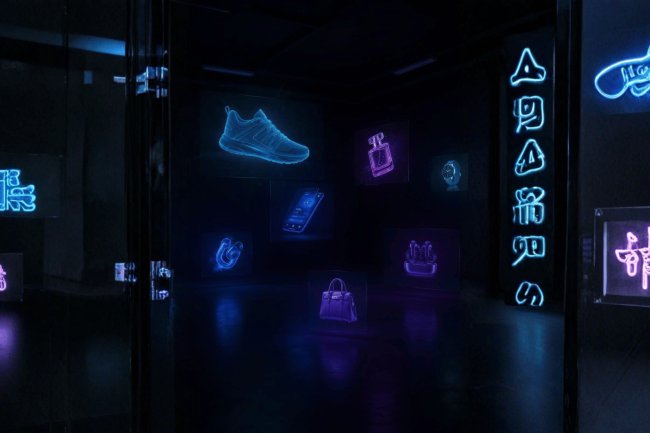
MCM Worldwide became one of the most cited case studies in luxury CGI strategy, building immersive, architecturally impossible worlds that no traditional location scout could ever source. Their CGI campaigns placed signature leather goods inside kaleidoscopic environments — mirrored corridors, neon-lit geometric voids — communicating newness, energy, and global cultural fluency simultaneously. The brand could iterate on light, color, and composition in hours rather than weeks, while maintaining absolute product fidelity in every frame.
◆
Creative Advantage 03
Setting the Brand Apart
In an increasingly crowded premium market, CGI became a powerful differentiator. Brands that mastered it could signal technological sophistication alongside artistic ambition — a combination that resonates powerfully with younger, digitally native luxury consumers. The medium itself became a message: if a house invests this level of craft and innovation into its imagery, imagine what it invests into its product.
What CGI Made Possible
Impossible
Environments
Rapid
Iteration
Product
Fidelity
Technological
Sophistication
Strategic Takeaway
The medium became the message.
CGI gave luxury brands a way to make aspiration visible — combining artistic ambition, precise control, and a clear signal of innovation.
The 2025 Inflection Point: The AI Extension Layer
By 2025, leading luxury houses had established a hybrid production model that preserves human creativity at the center while using AI to scale content around it. The result is a workflow that is simultaneously more efficient, more scalable, and more creatively ambitious.
HERO → HALO
The Hero-and-Halo Workflow
Human photographers create the hero image. Every creative decision, from light quality to styling nuance, remains guided by artistic judgment. AI enters after the masterpiece exists, expanding that single hero asset into a network of supporting visuals for digital campaigns, regional adaptations, email marketing, and social media deployment.
Hero Campaign
Social Variants
Regional Adaptations
50%
Cost Savings
Reduction in production spend through AI-assisted asset generation.
10-20
Derivative Assets
Extended campaign assets generated from one hero visual.
The Economics of Extension
Instead of funding multiple shoots for social, regional, and digital content, brands can execute a single flagship production while AI creates the supporting ecosystem. Cost reduction becomes budget reallocation, enabling greater investment in premium creative direction.
Pioneering Houses
JIL SANDER • BURBERRY
Early luxury adopters demonstrated that AI extension works best when it serves an established creative vision. Burberry's atmospheric environment generation enabled market-specific storytelling while preserving the same visual language, emotional mood, color palette, and brand grammar established by the hero campaign.
Strategic Shift
Human creativity creates the masterpiece.
AI scales its influence.
The Effort Paradox: Why Authenticity Matters
Luxury consumers are among the most perceptive audiences in commerce. Decades of connoisseurship — of training their eyes to distinguish genuine craftsmanship from its imitation — means they apply the same scrutiny to imagery as they do to a hand-stitched seam or a hand-buffed edge. The moment AI-generated content feels like a shortcut rather than a creative choice, the brand's entire value proposition is imperiled.
The Consumer Perception Problem
Rigorous consumer research published in the lead-up to 2025 delivered an uncomfortable finding for brand strategists: luxury consumers do not simply object to AI-generated imagery on aesthetic grounds. They object to it on moral grounds. When AI is perceived as a mechanism for replacing human effort and expertise — the very qualities that justify luxury price points — consumers respond with a measurable decline in brand favorability, purchase intention, and emotional connection.
This is not technophobia. Many of the same consumers who react negatively to perceived AI shortcuts are enthusiastic early adopters of AI tools in their own professional lives. The distinction they draw is between AI as an amplifier of human vision and AI as a substitute for human effort. Luxury, in their understanding, is a covenant: the brand promises exceptional human investment, and the consumer pays a premium for it. Break that covenant — or appear to break it — and the premium erodes.
The Valentino Warning
Valentino's 2025 AI-generated handbag video became the industry's most discussed cautionary tale — not because the imagery was technically flawed, but because it felt effortless in the wrong way. The brand was transparent about the use of AI, which the team believed would preempt criticism. It did not.
The Future: Craftsmanship in the Age of AI
The luxury industry's relationship with AI will not be defined by the technology itself, but by the discipline with which each house chooses to deploy it. The brands that will thrive are those that understand a foundational truth: AI does not create luxury — human vision does. AI can scale, extend, and multiply that vision, but it cannot originate it.
The Foundational Truth
AI scales luxury expression. Human vision creates luxury meaning.
01
Creative Discipline
The Codes-First Discipline
Before a single prompt is typed into an AI system, the creative team must define with absolute precision the visual codes that constitute the brand's identity: the quality and direction of light, the curated palette of primary and accent colors, compositional framing conventions, textural vocabulary, and the rhythm of negative space. Only when these codes are documented with the rigor of a brand constitution does the AI workflow begin.
AI should act as an instrument playing a pre-written score — not as a composer inventing its own music.
Human Foundation
Human Touch as the Irreplaceable Core
The fundamental definition of luxury — exceptional human investment, expertise, and artistry translated into an object or experience — has not changed and will not change. What AI offers is the ability to scale the expression of that investment without diluting the investment itself.
The hero campaign image remains a testament to human artistry: the photographer's eye, the art director's vision, the stylist's instinct, the model's presence, and the lighting director's craft. AI generates supporting assets that carry that moment to consumers across markets while preserving the same visual integrity and emotional precision.
02
03
Quality Standard
The Indistinguishability Standard
The benchmark by which luxury brands will ultimately be judged in the AI era is demanding: AI-generated assets must be indistinguishable in discipline and quality from the campaigns they extend. Not merely similar. Not “close enough for social.” Indistinguishable.
This standard demands that the codes-first discipline be executed with the same rigor that a master craftsman applies to every stitch. Brands that hold to it will find that AI becomes their most powerful creative ally. Those that treat it as a shortcut risk exposing a gap that luxury consumers are trained to recognize.
The Luxury Codebook
Light
Direction
Color
Palette
Texture &
Composition
Negative
Space
The Bottom Line
In the digital atelier of the future, the most powerful tool is not the AI model — it is the human vision that knows exactly what to ask of it.