Why AI Search Needs Brand Reputation Beyond Traditional Backlinks
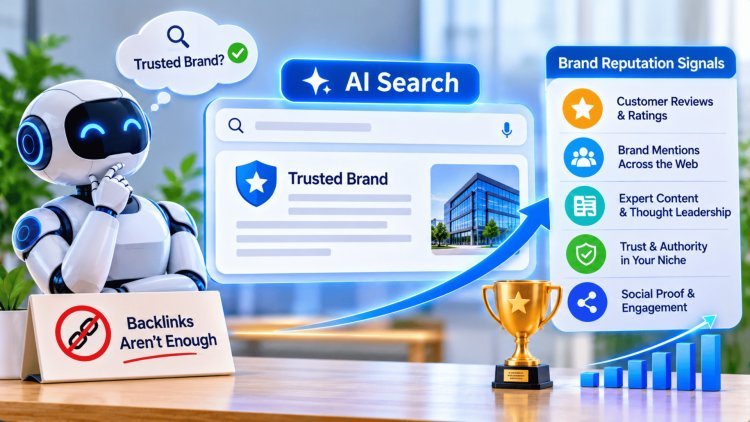
The rules of search are being rewritten. As AI-powered engines like Google's Search Generative Experience, Perplexity, and ChatGPT's browsing mode reshape how users discover content, the old playbook of backlink accumulation is no longer sufficient on its own. Brand reputation, authoritative mentions, and digital trust signals have emerged as the new currency of AI search visibility.
The Limits of Backlinks in an AI-Driven World
Backlinks were the backbone of PageRank-era SEO — a democratic votecounting system where every inbound link transferred authority. This model worked brilliantly for traditional search engines, but AI-driven retrieval operates on fundamentally different logic. AI models are trained on massive corpora of web content, structured data, and human-validated signals. They learn which brands are cited as sources of truth, which entities are referenced in expert contexts, and which names appear consistently in credible conversations — not merely which domains hold the most links.
Consider how an AI engine surfaces answers: it identifies the most reliable, well-contextualized information and attributes it to recognized entities. A backlink from a mid-tier directory does nothing to establish that recognition. What matters instead is whether your brand is mentioned, discussed, quoted, and referenced across forums, news outlets, podcasts, academic contexts, and social platforms. This is the signal landscape AI systems actually read.
AI search engines evaluate entities holistically — your brand's presence in the broader web conversation matters more than raw link count.
What AI Search Engines Actually Evaluate
Reputation is no longer just a brand asset — it is the primary signal AI retrieval systems use to decide which entities to surface, cite, and recommend. The tactics below form a practical architecture for making your brand machine-readable, authoritative, and consistently present across the surfaces that matter in the AI search era.
Implement Organization, Person, and BreadcrumbList schema markup to help AI engines precisely understand who you are, what you do, and how your content is structured. Structured data is the clearest signal you can send to machine-learning retrieval systems about your entity’s attributes.
Brands that appear in Wikipedia or Google’s Knowledge Graph carry dramatically stronger entity authority. Earning this presence requires genuine notability — third-party coverage, verifiable facts, and a track record of credible citations across the open web.
Name, Address, and Phone (NAP) consistency across all directories, social profiles, and business listings reinforces entity clarity. Inconsistencies create ambiguity for AI models attempting to consolidate your brand’s information into a coherent profile.
Active, helpful brand participation in Reddit threads, LinkedIn groups, Slack communities, and niche forums generates authentic unlinked mentions in contexts that AI models scan deeply. Genuine helpfulness — not promotional noise — is the goal.
Traditional SEO metrics like Domain Authority and backlink count are insufficient proxies for AI search performance. Sophisticated strategies require tracking a new set of signals:
Track unlinked and linked brand mentions monthly across news, blogs, forums, and social platforms using tools like Brand24, Mention, or Google Alerts.
Manually audit how frequently your brand appears in AI-generated answers on ChatGPT, Gemini, Perplexity, and SGE for key target queries.
Monitor the aggregate sentiment of brand mentions. Negative or polarizing coverage — even at high volume — can suppress AI recommendation frequency.
Track how your brand’s Knowledge Panel, featured snippets, and “People Also Ask” appearances evolve over time as reputation signals accumulate.
Explore Digiverse.studio’s digital visibility solutions to build a measurement framework tailored to AI-era search performance.
Building an AI-Ready Reputation: Tactical Playbook
Reputation Architecture Tactics
Schema & Structured Data
Wikipedia & Knowledge Graph Presence
Consistent NAP & Brand Signals
Community & Forum Presence
Measuring AI Search Reputation Impact
Digital reputation is no longer a soft marketing metric — it is core technical infrastructure for AI search visibility. Invest in it with the same rigor applied to on-page optimization and link building.
A brand that is mentioned across news media, review platforms, forums, podcasts, and social channels builds a multidimensional authority profile that AI systems find highly legible and trustworthy.
AI search is entity-first. Your brand must be recognizable as a coherent, well-defined entity with clear attributes, consistent information, and verifiable credibility across the open web.
Unlike a backlink campaign that can show results in weeks, reputation-building compounds over months and years. The brands investing in this shift today will command AI search visibility that latecomers cannot easily replicate.
The transition from link-centric to reputation-centric search optimization is not a distant future scenario — it is the present reality for any brand competing in AIaugmented discovery. Backlinks remain a component of a healthy strategy, but they are no longer the ceiling of what's possible. The brands that will dominate AIgenerated results are those that have invested deliberately in being trusted, cited, recognized, and respected across every corner of the digital ecosystem.
Visit Digiverse.studio to explore how our integrated digital strategy services can position your brand for the AI search era.
The Future Belongs to Brands
That Are Trusted, Not Just LinkedKey Takeaways for AI Search Leaders
Reputation is Infrastructure
Diversify Your Signal Portfolio
Think in Entities, Not Just Keywords
Start Now — Reputation Takes Time
Ready to build an AI-ready brand reputation?
What's Your Reaction?