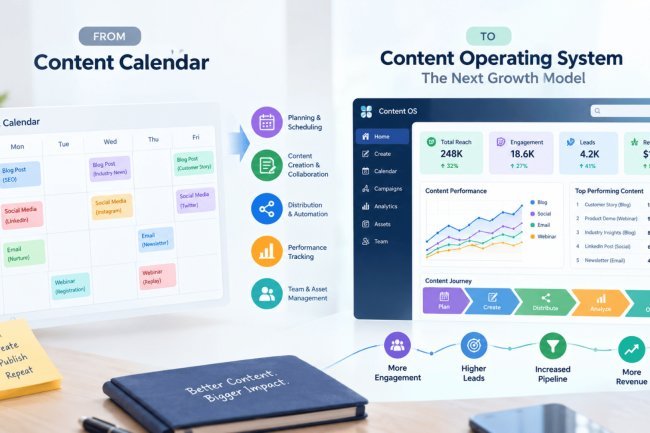
Marketing Asset Management: Organizing Creative Files for Faster Campaigns
The real drag on campaign speed isn't a shortage of design talent—it's the invisible chaos lurking inside your file system. Missing approvals, unclear version histories, and uncertain usage rights silently erode the momentum of even the most capable creative teams. When a campaign needs to launch in 48 hours and no one can confirm which logo is current or whether a video has licensed music, the bottleneck isn't creativity—it's infrastructure. Marketing Asset Management (MAM) is the discipline that eliminates this friction, turning scattered files into a streamlined, search-ready creative supply chain that accelerates every campaign from brief to publish.

The Cost of Chaos in Creative Operations
Disorganized creative files aren't just an inconvenience—they're a measurable tax on your team's output. When assets live in scattered drives, shared inboxes, and personal folders, every campaign carries hidden costs that compound over time. The symptoms are familiar: designers editing the wrong version, stakeholders approving outdated visuals, and launches delayed because no one can locate the final approved file. Understanding where the friction originates is the first step toward eliminating it.
Version Confusion & Rework
Duplicate uploads and ambiguously named files— logo_final_v3_REAL_USE_THIS.png— create a minefield for designers. Without a single authoritative source, teams frequently edit stale assets, only discovering the error after a client review or, worse, after publishing. The resulting rework eats hours that should go toward new creative work, and each correction cycle risks introducing new inconsistencies across channels.
Slow Retrieval Breaks Campaign Momentum
of their time searching for existing assets rather than creating new ones.
Studies consistently show that marketing professionals spend 30–50% of their time searching for existing assets rather than creating new ones. When a social media manager needs a resized banner for a time-sensitive promotion, a 20-minute search across four shared drives kills the urgency. Retrieval friction turns routine updates into multi-hour delays, compressing timelines and forcing rushed decisions that undermine quality and brand consistency.
Review Steps Get Skipped Under Pressure
Without enforced workflow rules, approval gates become optional when teams move fast. A designer under deadline pressure uploads directly to the campaign without legal sign-off. A contractor repurposes an asset outside its licensed territory. Without a governance layer, these shortcuts are invisible until they create a compliance issue, a brand inconsistency, or an IP dispute. Speed without structure doesn't save time—it generates expensive cleanup work downstream.
Creative chaos compounds quietly. By the time the cost becomes visible, months of efficiency have already been lost to rework, retrieval delays, and skipped approvals.
From Intake to Approval to Reuse — The Full Workflow Loop
A sustainable MAM system isn't a one-time upload event—it's a living loop that every asset passes through, from first draft to final archive. Defining this lifecycle explicitly is what separates teams that consistently launch on time from those that perpetually scramble. The key insight: different file types serve different lifecycle stages, and treating a compressed export the same as a master source file is a primary cause of quality degradation and rework.
Ingest & Intake
Every new file enters through one standardized intake process. Owner, origin, campaign tag, and rights metadata are captured at upload—never retroactively.
Enrich & Tag
Assets are enriched with taxonomy metadata: channel, format, campaign, status, and expiry. AI-assisted tagging accelerates this step at scale.
Review & Approve
Routed through defined approval gates—creative director, legal, brand—before any asset is marked "approved" and made available to the wider team.
Distribute & Reuse
Approved assets are distributed to the right channels. Reuse is encouraged via clearly tagged templates and usage rights, cutting redundant production.
Define Asset Types by Lifecycle Stage
Establish four distinct file categories to prevent misuse and quality loss:
Original raw files (PSDs, AI, uncompressed video). Never distributed directly.
Active editing files, version-controlled and team-accessible during production.
Flattened or compressed versions shared with stakeholders for feedback rounds.
Final export files optimized for specific channels. Clearly labeled as output, not originals.
Version History & Usage Tracking
A robust MAM system maintains a full audit trail for every asset: who created it, who approved it, which campaigns used it, and when rights expire. Version history ensures teams always operate on the current approved iteration—not a file someone downloaded six months ago and re-uploaded without checking for updates.
Usage tracking surfaces underperforming assets and identifies evergreen creative that consistently drives results, feeding that intelligence back into future production briefs. This closes the loop from distribution back to intake, making the system smarter with every campaign cycle.
Knowing the framework is one thing—operationalizing it at speed and scale is another. The goal is to treat your creative assets not as individual deliverables but as a reusable supply chain: source → produce → distribute → reuse. Each stage should hand off cleanly to the next, with metadata and approvals traveling alongside the asset so no team member ever has to chase context or permissions. This model cuts production waste, reduces redundant creative work, and dramatically shortens the time from brief to live campaign. When assets are organized, governed, and findable, your creative team spends its energy on innovation—not administration.
Brief, concept, and raw creative production with clear ownership records
Structured workflow through intake, enrichment, and multi-gate approval
Channel-optimized delivery from a single approved library
Template-driven repurposing with rights and version confidence
Each loop iteration feeds performance data back into the brief stage, so creative strategy improves with every campaign—not just creative execution.
Digiverse operationalizes this exact model for brands that need to move fast without sacrificing quality or brand integrity. By building AI-first content systems across short-form video, GEO/AI SEO, motion branding, and CGI/VFX, Digiverse ensures that approved assets travel from creation to activation with minimal friction. AI-assisted metadata tagging, automated versioning, and integrated approval workflows mean your library stays organized even as content volume scales. Rather than hiring more coordinators to manage a growing asset backlog, you build a system that scales itself—so your creative team can focus on what it does best: making content that performs.
Explore more on how to build efficient content operations without inflating production costs in Scaling Content Without Increasing Costs, or dive deeper into the technical side with the Digital Asset Management Workflow Guide. The infrastructure for faster campaigns already exists—the opportunity is in implementing it deliberately.
AI-driven production pipelines for reels, shorts, and social-first video content at campaign speed.
Generative Engine Optimization strategies that ensure brand content surfaces across AI-powered search and discovery platforms.
Animated brand identity systems with approved master files ready for multi-channel deployment and version control.
High-production visual assets with structured source file management so renders and exports never get confused with originals.
Make It Practical With a Growth-Ready Creative System
The MAM Supply Chain Model
Source
Produce
Distribute
Reuse
How Digiverse Builds AI-First Content Systems
Content Systems Across Four Disciplines
Short-Form Video
GEO / AI SEO
Motion Branding
CGI / VFX
What's Your Reaction?