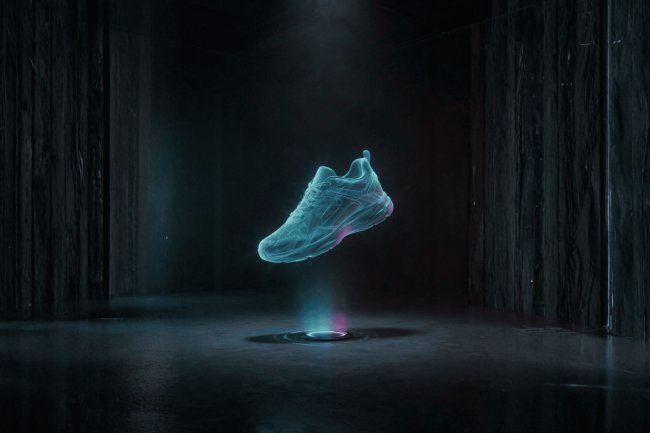
Virtual Showrooms: Creating Interactive 3D Product Experiences

The next frontier of digital commerce is here — where customers don't just browse products, they step inside the brand experience. Virtual showrooms fuse cutting-edge 3D technology with intuitive interactivity to transform how the world shops, explores, and connects with products.
Virtual Showrooms: Creating Interactive 3D Product Experiences

Beyond the Static Catalog

For decades, e-commerce has relied on a fundamentally limited model: isolated product images set against white backgrounds, accompanied by bullet-point specifications and customer reviews. While functional, this "brochure" approach creates a passive, one-dimensional experience that fails to replicate the richness of standing in a physical store, turning a product over in your hands, or visualizing how it fits within your space.

Commerce Experience Evolution
Static Catalog
→
Interactive Discovery
→
Immersive Shopping
→
Virtual Showroom
OLD

The Old Model

Static images and flat catalogs give shoppers limited context. Products appear disconnected from real-world settings, leaving customers uncertain and hesitant to commit to a purchase — directly inflating return rates and reducing lifetime value.

Isolated product photography
No real-world context or scale
Passive, one-way browsing
High return rates due to unmet expectations
NEW

The Virtual Showroom Advantage

Virtual showrooms transform digital storefronts into fully interactive, branded 3D environments. Customers can walk through curated digital spaces, explore product groupings, and engage with merchandise exactly as they would in a premium retail location — without leaving home.

Immersive 3D branded environments
Real-world context and spatial awareness
Active, conversational exploration
Reduced returns and higher buyer confidence
Traditional Catalog
Static Photography
Limited Context
Product Isolation
Passive Browsing
Purchase Uncertainty
Virtual Showroom
Interactive 3D Experience
Spatial Understanding
Real-World Context
Active Exploration
Buyer Confidence
Beyond Product Display

Virtual showrooms are not simply product catalogs in a different format. They create branded environments that communicate product relationships, lifestyle context, and purchasing confidence in ways static pages cannot. The experience becomes part of the brand itself.

Digital Brand Amplification

Discover how AI-Powered Video and Motion Branding keeps your brand visible, dynamic, and deeply engaging across every digital touchpoint. Seamless movement, immersive storytelling, and interactive experiences combine to strengthen buyer engagement throughout the customer journey.

Strategic Conclusion

Virtual showrooms don't replace your store — they amplify it, turning passive browsers into confident, committed buyers.

Context → Exploration → Confidence → Conversion

Anatomy of an Immersive Experience

A well-engineered virtual showroom is far more than a 3D render dropped on a webpage. It is a carefully orchestrated system of interactive layers, each designed to deepen engagement, reduce friction, and guide the customer naturally toward a purchase decision. Understanding the core components helps brands invest wisely and build experiences that genuinely convert.

01 / INTERACTION ◈

Real-Time 3D Interaction

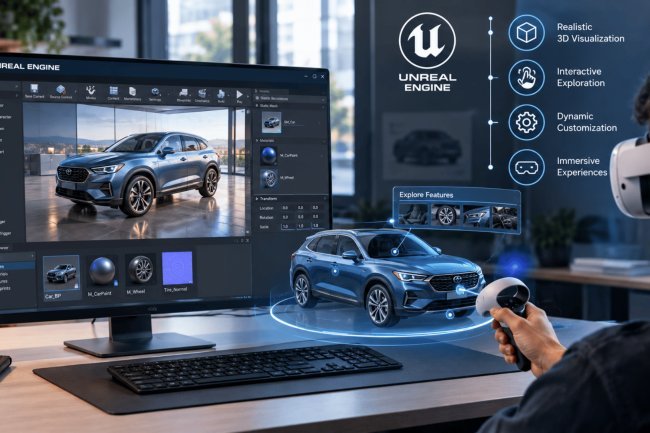
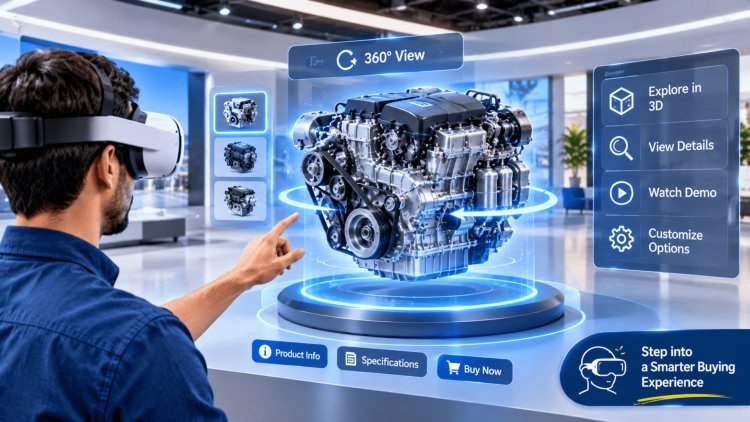
Shoppers can rotate, zoom, and inspect products from every angle in real time. Whether examining the stitching on a leather bag or the finish on a piece of furniture, 3D interaction delivers tactile-level confidence that static images simply cannot match. Material and color customization further empowers customers to see their ideal configuration before committing.

02 / DISCOVERY ⌖

Hotspot Discovery Anchors

Strategically placed hotspots act as intelligent discovery anchors embedded within the 3D scene. A tap or click reveals rich content layers — product specifications, embedded video demonstrations, material breakdowns, and direct-to-cart purchasing options — all without breaking the immersive flow of the experience.

03 / STORYTELLING ✧

Cinematic Visual Storytelling

Beyond interactivity, the aesthetic quality of a virtual showroom signals brand credibility. Explore Premium CGI and VFX Product Commercials that layer photorealistic rendering with motion and narrative — elevating product presentation to the level of a cinematic brand film.

The Mechanics of Engagement

Building an effective virtual showroom requires more than visual flair — it demands engineering sophistication that makes complex 3D experiences feel effortless. The best implementations balance creative ambition with technical accessibility, ensuring no customer is left behind by hardware limitations or software barriers. [682][683][692]

3D Configurators & Bundling
Let customers
complete the room.
The Digital Design Consultant

Advanced 3D configurators let customers build coordinated product sets — a full living room with customized sofa fabric, rug pattern, and coffee-table finish — simulated at true scale. This “complete the room” mechanic mirrors an in-store design consultant and can increase average order value and cross-sell opportunities. [685][681][692]

What a Strong Configurator Enables
Build Bundles
In Real Time
Simulate
True Scale
Increase
AOV
Replicate
Consultative Retail

Bundle-based selling lets customers explore curated room setups, arrange multiple products in one interactive space, and customize them before purchase. One furniture-retailer case study reported a 20% increase in average order value and an 18% cross-sell uplift from full-room visualization. [685][681][692]

Browser-Based Accessibility
No downloads.
No headsets.
No barriers.
Universal Access

High-fidelity 3D tours should render across desktop, tablet, and mobile using WebGL and WebXR — with no app downloads, VR headsets, or plugins required. Every customer, regardless of device, should receive the same premium experience; provide performance-optimized loading and a 2D fallback for lower-capability devices. [682][683][692]

Reported Performance Benchmarks
40%
Reduction in returns reported for products using 3D visualization, reflecting stronger buyer confidence. [679][680][691]
3×
Longer dwell time reported for interactive 3D experiences versus static product pages. [679][690][691]
94%
Higher conversion lift reported for interactive product views versus flat imagery in cited Shopify-linked research. [679][680][688]

These figures are reported benchmarks rather than universal guarantees. Validate them against your own category, device mix, traffic quality, and baseline conversion rate before using them as planning targets. [679][688][693]

Discovery Layer
Make the showroom
discoverable.
GEO + AI SEO

Pair interactive content with GEO and AI SEO strategies so virtual showrooms are discoverable across modern AI-powered and traditional search platforms. Provide clear product context, structured metadata, captions, transcripts, and crawlable supporting content alongside the 3D experience. [620][623][633]

The Bottom Line
A virtual showroom succeeds when immersion is matched by accessibility.
Build complete-room confidence, remove device friction, and make the experience discoverable across both traditional and AI-powered search.
Virtual Showrooms

The Future of Digital Sales

Virtual showrooms are not simply a visual upgrade — they are a strategic business intelligence platform. Every interaction a customer has within a 3D environment generates rich behavioral data that brands can leverage to sharpen their merchandise strategy, optimize their product mix, and personalize future experiences at scale.

From
A passive display
→
To
An active, learning sales engine

This transforms the showroom from one into the other.

Actionable Engagement Data

Track what customers actually do

Which products
Receive the most interaction
Which configurations
Are most frequently built
How long
Customers spend in specific zones
At what point
They convert — or abandon

These insights allow brands to continuously refine their virtual environment based on real customer behavior rather than guesswork, creating a feedback loop of perpetual improvement.

Real customer behavior → Refine the environment ↺ Perpetual improvement
Bridging Physical & Digital Commerce

The most forward-thinking brands are using virtual showrooms not as a replacement for physical retail, but as a powerful complement. A customer can explore an entire product line digitally, configure their ideal setup, and then choose a path:

Step 1
Explore an entire product line digitally
→
Step 2
Configure their ideal setup
↓   then either   ↓
Path A
Visit a flagship store with confidence
Path B
Complete the purchase entirely online

This seamless omnichannel continuity fosters deeper brand loyalty and dramatically longer customer lifetime value.

Turning Visibility Into Measurable Growth

The ultimate promise of a virtual showroom is a content ecosystem that works continuously:

Attract
Attracting visitors through optimized discovery
Engage
Engaging them through immersive experience
Convert
Converting them through frictionless purchasing
Start your journey today: build a content system with Digiverse Studio that turns visibility into measurable sales, sustainable growth, and a brand presence that stands apart in an increasingly competitive digital landscape.
Ready to build your virtual showroom?

The brands winning tomorrow's digital commerce are investing in immersive, data-driven experiences today.

The technology is here — the opportunity is now.

What's Your Reaction?

like

dislike

love

funny

angry

sad

wow