The End of the Lightbox: Why 3D Visualisation is Replacing Traditional Photography
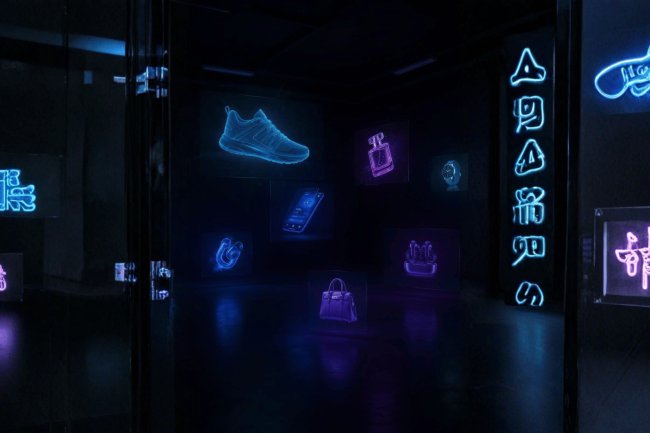
For over a century, product photography has been the gold standard for showcasing goods to consumers. But a quiet revolution is underway — one that is fundamentally reshaping how brands create, scale, and deploy visual content. This presentation explores why 3D product visualisation is not merely an alternative to traditional photography, but its inevitable successor.
The Era of the Studio: A Century of Constraints
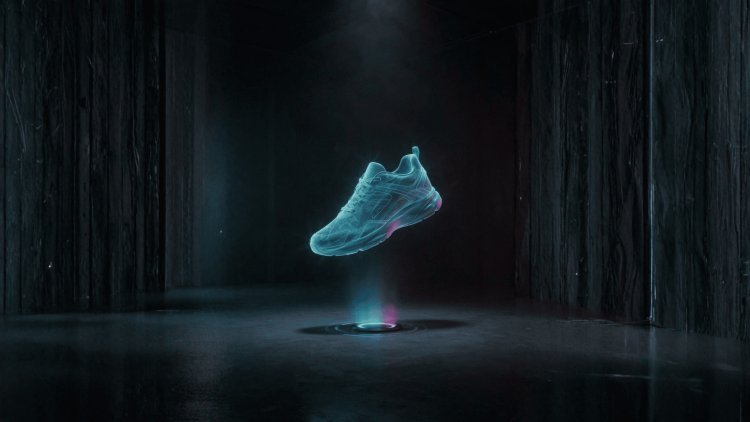
Traditional product photography was built on a formula that has remained largely unchanged for decades — and it is beginning to buckle under the weight of modern e-commerce demands. The economics are unforgiving, the timelines are slow, and the creative ceiling is frustratingly low.
The Legacy Workflow
The Traditional Formula
Every shoot requires assembling a complex web of resources: physical prop sourcing, studio bookings, professional lighting rigs, stylists, photographers, and post-production editors. A single product variant — say, a sneaker in five colourways — can require five entirely separate shoots. The logistical overhead is enormous, and the margin for error is costly.
Props Studio Lighting
The Digital Pivot: Why Brands Are Switching
The shift to 3D product visualisation is not driven by novelty — it is driven by a fundamental incompatibility between the limitations of traditional photography and the demands of modern e-commerce. Forward-thinking brands have identified three transformative advantages that make 3D visualisation not just competitive, but categorically superior.
∞
Advantage 01
Infinite Flexibility
With a 3D model, changing the colour of a product from midnight black to ivory cream is a parameter adjustment — not a reshooting exercise. Materials, textures, finishes, and even the environmental backdrop can be swapped instantly. A single base model can generate thousands of unique, photorealistic image variants without a single physical product needing to exist. This is transformative for categories like furniture, apparel, and automotive accessories, where colour and material options are enormous.
=
Advantage 02
Mathematical Consistency
Human photographers, however skilled, introduce subtle inconsistencies — slight shifts in angle, minor variations in shadow depth, or imperceptible differences in colour temperature. Across a catalogue of 10,000 SKUs, these imperfections compound into a visually incoherent brand experience. 3D rendering applies mathematically identical lighting, camera angles, and reflections across every single product image, delivering pixel-perfect visual consistency at catalogue scale that simply cannot be replicated by human hands.
⚡
Advantage 03
Speed to Market
Traditional photography pipelines involve weeks of coordination — product sourcing, travel, studio booking, shooting, retouching, and approval rounds. 3D renders, by contrast, can be delivered in as little as 24 to 72 hours once a model exists. For brands launching new collections, responding to seasonal trends, or managing rapid product iteration cycles, this speed advantage is not merely convenient — it is a decisive competitive differentiator that directly impacts revenue capture at launch.
The Catalogue Production Shift
Traditional Photography
Physical product required
Reshoots for colour and material changes
Manual lighting and camera adjustments
Weeks of coordination and approvals
3D Visualisation
Variants generated digitally
Parameter-based material changes
Mathematically consistent rendering
24–72-hour delivery after modelling
The Bottom Line
3D visualisation turns product imagery from a fixed production cost into a flexible, scalable digital asset.
More variants, tighter consistency, and faster launches give digital-first brands a measurable advantage at catalogue scale.
The ROI Reality: From Cost Centre to Content Engine
The shift from photography to 3D is not an expense. It is an investment in a perpetual content engine. While model creation requires upfront effort, the economics become increasingly favorable as content needs, product variations, and distribution channels expand.
6×
Cost Reduction
Additional renders, angles, and variants can be produced at near-zero marginal cost.
360°
Perpetual Assets
One model powers imagery, video, AR, product spins and future experiences.
40%
Conversion Lift
Rich interactive visuals improve purchase confidence and buying decisions.
35%
Fewer Returns
Customers understand the product better before purchase.
The Compounding Advantage
Photography scales linearly with every new SKU. 3D workflows become more efficient with volume. As product catalogs expand and teams mature, cost per asset declines dramatically while production capacity accelerates.
Eliminating the Hidden Tax
Reshoots, retouching cycles, file management, production delays, and launch bottlenecks are drastically reduced. Assets become version-controlled, reusable, and instantly deployable across channels.
Strategic Takeaway
A photograph is an output.
A 3D model is an asset factory.
The longer a brand uses its 3D infrastructure, the greater the economic advantage becomes.
The Modern Frontier: Immersive Commerce
3D visualisation's most profound impact is not on the product page of today — it is on the commerce experience of tomorrow. As consumer technology matures and spatial computing moves from novelty to mainstream, the brands that have built robust 3D asset libraries will find themselves holding the keys to the next era of retail engagement.
01
Immersive Commerce
Beyond the Static Image: AR Try-Before-You-Buy
Augmented reality commerce is rapidly moving from experimental feature to table-stakes expectation. Platforms like Apple's App Store and Google's Shopping already surface AR product previews natively. Shoppers can place a sofa in their living room, try on a pair of sunglasses through their phone camera, or visualise a watch on their wrist — all before adding to cart. Brands leveraging 3D assets for AR experiences report dramatically higher engagement metrics and a significant reduction in purchase hesitation, particularly for high-ticket items where buyer uncertainty is greatest.
02 / Personalisation
Interactive 3D Configurators: Selling the Dream
Product configurators powered by real-time 3D rendering allow customers to build their ideal product — selecting materials, colours, sizes, and finishes — and see the result rendered instantaneously in photorealistic quality. This capability is already transforming industries such as automotive (custom car configuration), luxury goods (personalised bags and watches), and home furnishings. The conversion impact of configurators is profound: when customers co-create a product, their emotional investment and purchase intent increase dramatically.
Materials
Colours
Sizes
Finishes
03
Unlimited Creative Space
The Digital Twin: Rendering the Impossible
Perhaps the most extraordinary capability unlocked by 3D visualisation is the ability to render products in environments that do not yet physically exist — or that would be impossibly expensive to create. A new sneaker can be photographed on the surface of Mars. A luxury watch can be showcased in an architectural interior still under construction. A furniture brand can style a product in a dream home that exists only in a 3D environment. This creative freedom allows marketing teams to tell stories and build brand worlds that physical photography could never achieve.
PRODUCT
Sneaker
Surface of Mars
PRODUCT
Luxury Watch
Future Interior
PRODUCT
Furniture
Virtual Dream Home
04 / The Next Interface
Future-Proofing for Spatial Computing
The launch of spatial computing devices — from Apple Vision Pro to Meta Quest and beyond — signals the beginning of a new content paradigm. In spatial computing environments, products will need to exist as dimensional, interactive objects rather than flat images. Brands building 3D asset libraries today are not just solving for today's e-commerce — they are pre-loading the content infrastructure for the spatial commerce era. Every 3D model created now is a future-ready asset for a world in which the digital and physical will be indistinguishable.
The Immersive Commerce Asset Loop
3D Asset → AR → Configurator → Digital Twin → Spatial Commerce
The Future is Dimensional: A Call to Action
The transition from traditional photography to 3D product visualisation is not a distant disruption on the horizon — it is happening now, across every product category and every tier of the market. The question for brands is no longer whether to adopt 3D-native workflows, but how quickly they can make the shift before competitors claim the advantage.
01
Infrastructure Investment
Stop Treating Imagery as a One-Time Expense
The legacy mindset of commissioning photography per launch cycle, then discarding the assets, is financially corrosive at scale. Begin investing in 3D model creation as the foundation of a permanent, reusable, and continuously expanding visual asset library. Every model built is an infrastructure investment — not a line-item cost. Prioritise high-volume SKUs and hero products first, then systematically expand coverage across the catalogue.
Operating Model
Embrace the Hybrid Workflow
3D visualisation does not need to eliminate photography entirely to deliver transformative value. The most sophisticated brands are adopting hybrid workflows: traditional photography for human-centric, emotion-driven lifestyle content where authentic faces and genuine interactions matter, and 3D visualisation for product-isolated imagery, variant generation, AR assets, and interactive experiences. This combination delivers the best of both worlds — authenticity and scale — without compromise.
02
03
Competitive Advantage
Act Now to Dominate the Digital Shelf
The brands that adopt 3D-native workflows today are building compounding advantages that will be difficult for late movers to close. Faster time-to-market, richer consumer experiences, lower content costs, and higher conversion rates — these gains accumulate with every product cycle. The transition is inevitable: consumer expectations for interactive, immersive product experiences are rising, and the technology to deliver them is already mature, affordable, and proven. The only remaining variable is the speed of your commitment.
The Hybrid Workflow
Traditional Photography
Human-centric lifestyle scenes
Emotion-driven storytelling
Authentic faces and interactions
Community and brand culture
3D Visualisation
Product-isolated imagery
Colour and material variants
AR and interactive experiences
Scalable catalogue production
First
Model Hero Products
Then
Cover High-Volume SKUs
Finally
Expand Across the Catalogue
The Bottom Line
Brands that build 3D asset libraries today are not just investing in better product images — they are constructing the content infrastructure for the next decade of commerce.