The CGI Revolution: How Digital Artistry is Redefining Marketing
From impossible environments to scroll-stopping viral moments, computer-generated imagery is no longer a production shortcut — it is the new creative language of modern brand storytelling. This presentation explores how CGI product commercials are fundamentally transforming the economics, creativity, and future of marketing.
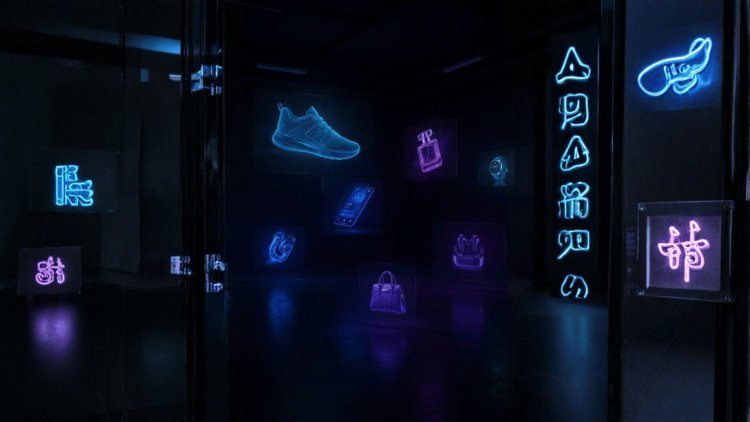
Digital Production Revolution
The End of Physical Constraints
Traditional advertising was always a negotiation with reality. Every campaign demanded physical sets, travel logistics, props, lighting rigs, talent schedules, and post-production corrections, all of which drove costs skyward and capped creative ambition. A product could only exist where a camera could physically go.
The Old Way
Production Bound by Reality
Brands invested enormous budgets in physical production,Brands invested enormous budgets in physical production — location
scouts, international shoots, bespoke set construction, and real product
samples that might never survive a single shoot day. The result was high
expenditure with limited visual flexibility and a rigid, linear production
process that left little room for creative iteration.
The CGI Shift
Today, a single 3D asset unlocks infinite creative possibilities. Brands like
IKEA now produce over 75% of their catalogue visuals entirely via CGI —
a decision driven not by budget cuts, but by the superior quality, flexibility,
and speed CGI affords. Products can be placed in environments that have
never existed: the surface of Mars, inside a human bloodstream, or atop a
skyscraper mid-storm.
Viral CGI Marketing
The Viral Era: When Reality Blurs
The most powerful CGI campaigns of the past decade share a common quality: they make viewers question what they are seeing. This deliberate ambiguity creates a tension between reality and impossibility that fuels conversation, engagement, and organic sharing.
Maybelline
Lash Sensational
An oversized mascara wand sweeping across London commuters transformed an everyday train journey into a surreal spectacle. By blending authentic city footage with flawlessly rendered CGI, Maybelline created a moment so believable that audiences couldn't resist asking: "Is this real?"
60M+
Social Views Generated
Jacquemus
Giant Handbags in Paris
Jacquemus turned luxury fashion into a visual illusion by placing gigantic handbags on Parisian streets. The absurd scale felt impossible, yet the integration looked authentic enough to trigger instant curiosity and discussion.
+300%
Brand Mention Growth
The Scroll-Stopping Formula
Reality + Impossibility = Viral Curiosity
The strongest CGI campaigns place impossible objects inside familiar environments. The viewer's brain simultaneously recognizes the scene as real while rejecting what it is seeing. That cognitive conflict creates a moment of delighted confusion, forcing attention and driving organic sharing. London streets, Parisian boulevards, and other recognizable settings become the foundation for experiences that feel impossible to ignore.
The Efficiency Engine: Scalability and ROI
Beyond creative spectacle, CGI's most compelling business case is rooted in hard economics. For marketing and production teams managing global campaigns across dozens of markets, formats, and platforms, the scalability of digital assets represents a transformative operational advantage — one that simultaneously reduces costs, accelerates timelines, and shrinks environmental impact.
Economic Advantage 1
Asset Reusability
A single high-fidelity 3D product model, once created, becomes a perpetual asset. The same file powers social media ads in multiple aspect ratios, e-commerce product pages, interactive AR experiences, trade show displays, and broadcast commercials — all without reshoot costs. Colour variants, finish changes, and new configurations are a matter of hours, not weeks. Brands that invest in a robust 3D asset library are building a depreciating-cost creative infrastructure.
Economic Advantage 2
Speed to Market
In traditional production, campaigns are constrained by the physical product timeline — you cannot shoot what does not yet exist. CGI removes this bottleneck entirely. Marketing teams can now develop, test, and launch full campaign visuals months before a product rolls off the manufacturing line. This pre-launch capability is particularly transformative for automotive, consumer electronics, and luxury goods industries, where design finalisation and campaign launch must happen in parallel.
Economic Advantage 3
Sustainability Gains
BMW, along with a growing cohort of global brands, has made the elimination of physical production sets and international crew travel a cornerstone of their sustainability strategy. CGI production eliminates flights for talent, equipment freight, location fuel consumption, and physical material waste from set construction. For brands with ambitious ESG commitments, CGI is not a compromise — it is an alignment between creative quality and corporate responsibility that they are proud to communicate publicly.
75%
IKEA Catalogue
Share of product visuals now produced entirely through CGI
300%
Mention Boost
Increase in online brand mentions for Jacquemus following their CGI handbag campaign
60M+
Views
Social media views generated by Maybelline's CGI train campaign without a traditional media buy
Strategic Takeaway
CGI turns creative into scalable infrastructure: lower marginal cost per asset, faster global launches, and measurable sustainability benefits.
The New Creative Standard: AI and Immersive Tech
CGI's evolution from a post-production tool to a real-time creative platform has been accelerated dramatically by artificial intelligence and next-generation rendering technologies. The gap between a rendered frame and a live photograph has effectively closed — and the implications for marketing extend far beyond the screen.
Creative Shift 01
Real-Time Photorealism
Tools like Unreal Engine 5 and NVIDIA Omniverse have democratised cinematic-quality rendering, enabling creative teams to produce photorealistic product environments in real time rather than through overnight render farms. This shift compresses creative iteration cycles from days to minutes, empowering directors and designers to make lighting, material, and composition decisions with immediate visual feedback. AI-assisted texture generation, physics simulation, and scene lighting are now standard features, not premium add-ons.
01
Unreal Engine 5's Lumen and Nanite systems deliver film-quality lighting and geometry
02
NVIDIA Omniverse enables multi-team real-time collaboration on shared 3D scenes
03
AI texture synthesis reduces asset creation time by up to 70%
04
Real-time rendering eliminates overnight compute costs
Creative Shift 02
Beyond the Screen: Immersive Commerce
The CGI assets built for marketing campaigns are now the same assets powering the next generation of consumer commerce experiences. A product modelled for a social media ad becomes the foundation for an AR try-on experience, a virtual showroom visit, or a metaverse brand activation. This convergence means that investment in high-quality CGI is no longer siloed to a single campaign — it compounds in value across every consumer touchpoint.
01
AR try-ons for beauty, eyewear, and apparel driving purchase confidence
02
Virtual showrooms enabling global product launches without physical events
03
Metaverse brand stores creating owned experiential retail environments
04
CGI assets feeding both marketing and direct commerce simultaneously
Creative Shift 03
The Hybrid Authenticity Strategy
As CGI quality has reached photorealistic parity, a counterintuitive creative movement has emerged: the deliberate, strategic blending of CGI with genuine, lo-fi, real-world content. Brands increasingly recognise that pure CGI perfection can feel sterile and emotionally distant to audiences accustomed to the raw authenticity of user-generated content. The hybrid approach — combining a flawlessly rendered product with handheld, naturalistic camera work and real environments — has become the signature aesthetic of the most trusted and engaging campaigns. It signals: "Our product is perfect; our brand is human."
Digital Precision
Photorealistic
CGI
+
Human Authenticity
Real-World
Content
"Our product is perfect; our brand is human."
The Future: Storytelling Over Spectacle
As CGI tools become more accessible and AI lowers the barrier to photorealistic production, competitive advantage will no longer belong to the brands with the largest visual effects budgets. The future belongs to brands that use CGI not to impress audiences, but to communicate meaning.
Strategic Reframe
CGI is no longer a production technique.
It is a creative language.
CGI as a Creative Language
Modern brands must treat CGI as foundational infrastructure rather than a campaign-by-campaign tactic. The winners will build digital-first identities, asset libraries, and workflows where CGI becomes inseparable from how the brand thinks, creates, and communicates.
Narrative Must Lead
Unreal Engine, CGI pipelines, and AI-driven workflows now make extraordinary visuals accessible to almost everyone. The challenge has shifted. Brands no longer compete on capability alone.
The New Rule
Spectacle earns the click.
Story earns the loyalty.
Digital-First Imperative
Build long-term 3D asset libraries. Embed CGI and AI into concept development from day one. Design campaigns to live across screens, immersive environments, and future experiences simultaneously.
The Ultimate Opportunity
CGI's greatest promise is not showing the impossible.
It is telling the true story of a brand with the full, unbounded power of human imagination.